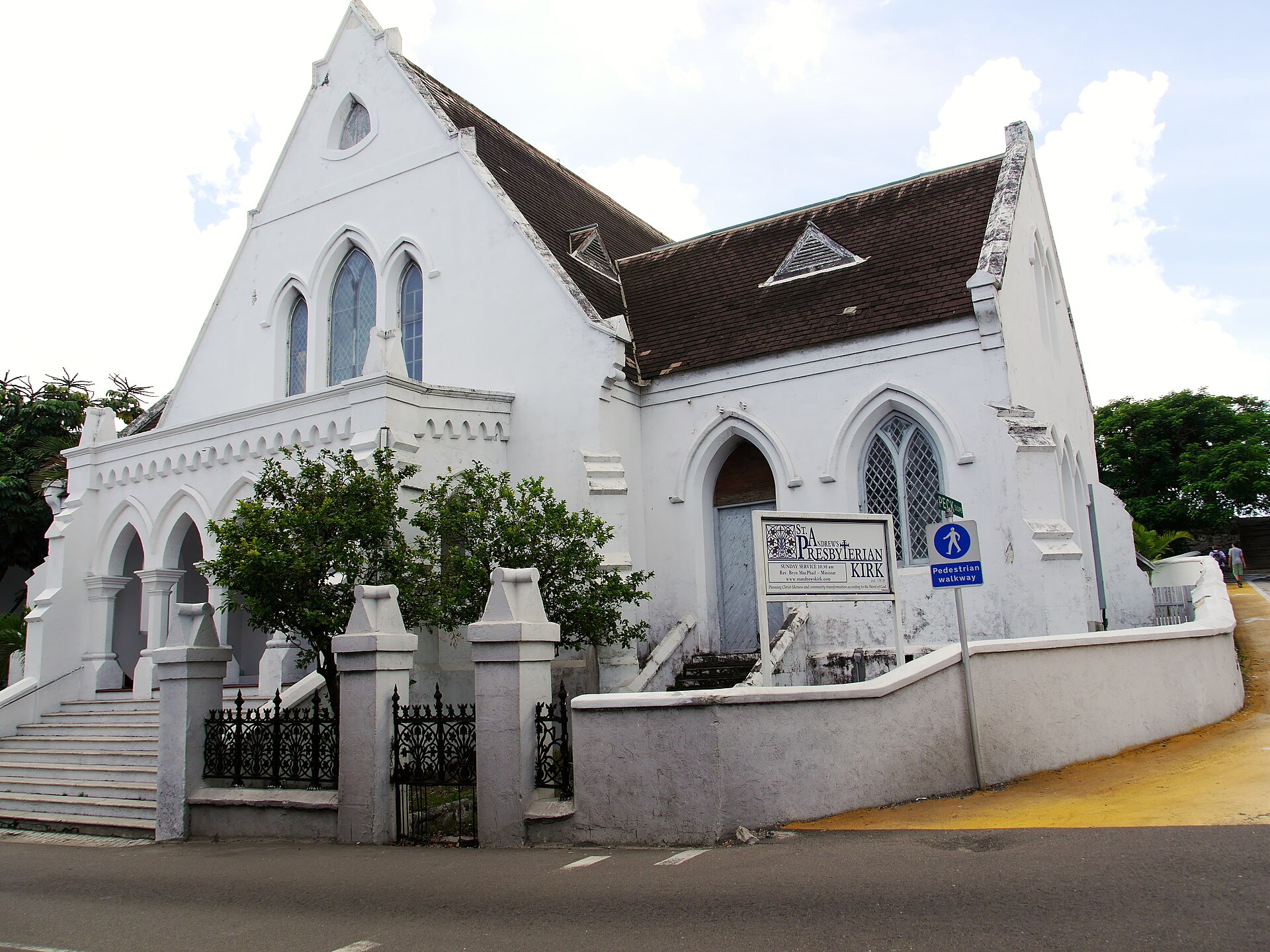
Nassau moves to its own rhythm—one of clattering horse-drawn carriages, the rustle of palm fronds in the salt air, and the distant chatter of market vendors. Amid the pastel facades and the hum of modern tourism, St. Andrew’s Presbyterian Kirk stands quietly on the corner of Shirley and Charles Streets, its weathered limestone walls holding stories that most visitors overlook. This isn’t a place of grand monuments or dramatic legends, but rather a quiet witness to the everyday lives of those who shaped the Bahamas, long before cruise ships and luxury resorts became the island’s defining features.
The church’s origins trace back to the early 1800s, when the Bahamas were still a British colony and Nassau served as a modest but strategic port between Europe and the Americas. The first Presbyterians to settle here were mostly Scots—traders, administrators, and soldiers who arrived seeking opportunity or simply following duty. They brought with them more than just their faith; they carried a need for community, a place to gather in a land that must have felt both promising and isolating. The original wooden structure didn’t survive, but the current building, erected in the mid-19th century, has endured, its sturdy walls a testament to the determination of those early settlers.
There’s nothing ornate about St. Andrew’s Kirk. Its architecture is straightforward, almost austere, in keeping with Presbyterian traditions. The building is constructed from local coral limestone, a material so common in Nassau’s older structures that it almost blends into the surroundings. The thick walls keep the interior cool, while tall windows with wooden shutters filter the sunlight into a soft, diffused glow. A modest pediment and a small bell tower mark the facade, though the bell that once called worshippers to service is long gone. Inside, the space feels intimate—wooden pews, a simple altar, and a balcony running along the perimeter. There are no gilded altarpieces or stained-glass windows, just an unassuming warmth that invites reflection rather than awe.
What makes St. Andrew’s Kirk particularly significant is its role in the social fabric of 19th-century Nassau. By the time the current building was constructed, slavery had been abolished in the Bahamas, but deep racial and class divisions persisted. The church became one of the few places where people from different backgrounds could come together on equal footing. Wealthy merchants, freed Africans, and even former slaves found themselves sharing the same pews, united by faith rather than divided by circumstance. In a society still grappling with its past, St. Andrew’s offered a rare space where old hierarchies softened, if only for an hour on Sunday.
Today, the church remains an active part of Nassau’s community. Sunday services draw a mix of descendants of the original Scottish settlers, local Bahamians, and the occasional visitor who stumbles in out of curiosity. The atmosphere is welcoming, unpretentious—no one asks why you’re there or where you’re from. You can sit in the back, listen to the organ or the choir, and let the quiet settle over you. It’s easy to imagine the generations who have done the same, their voices now part of the building’s very bones.
Outside, a small garden wraps around the church, where bougainvillea spills over stone walls and the shade of tropical trees offers respite from the midday heat. If you linger, you might hear snippets of conversation—stories of hurricanes weathered, of economic hardships endured, of the slow, steady changes that have shaped both the church and the island. These aren’t the polished tales of guidebooks, but the kind passed down in hushed tones, a living history that refuses to be confined to plaques or exhibits.
St. Andrew’s Kirk isn’t the kind of place that makes it onto postcards or tourist itineraries. There are no crowds, no souvenir stands, no grand narratives to consume in a hurry. That’s precisely what makes it worth visiting. Here, the Bahamas reveal themselves not as a backdrop for vacation photos, but as a place with layers—of struggle, resilience, and quiet faith. The church doesn’t demand attention; it simply offers a moment of stillness, a chance to step out of the sun and into a slower, deeper current of time. You might come looking for history, but you’ll leave with something less tangible: the sense that some places aren’t meant to be seen, but felt.