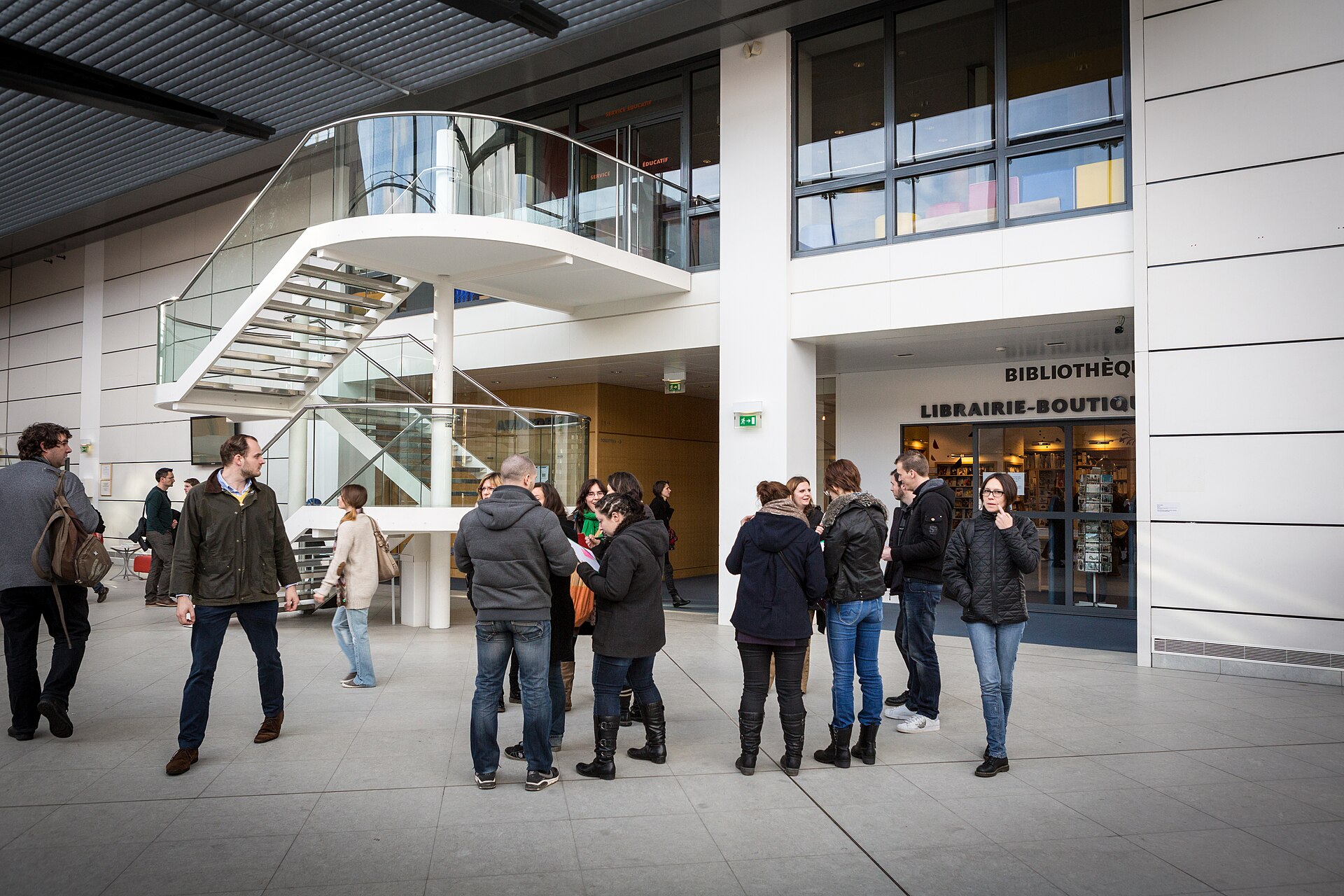
Strasbourg’s Museum of Modern and Contemporary Art, known locally as MAMCS, sits where the city’s layered history meets its present. The building itself is a quiet statement along the Ill River, its glass facades and asymmetrical volumes catching the light in a way that makes it seem almost weightless against the water. Inside, the spaces are designed to let natural light shape the experience, shifting with the time of day and drawing attention to the works on display. It’s a place where the architecture doesn’t compete with the art but instead frames it, creating a dialogue between the two.
The museum’s origins reflect Strasbourg’s unique position as a crossroads of cultures. After the Second World War, the city found itself at the heart of Europe’s rebuilding, both physically and intellectually. The idea for a space dedicated to modern and contemporary art took shape in the 1960s, though it wasn’t until the 1990s that the museum finally opened. Its collection spans from the late 19th century to today, offering a glimpse into how art has evolved alongside the rapid changes of the modern era—from the brushstrokes of Impressionism to the digital experiments of the 21st century.
Some of the most compelling works here are tied to the region itself. Gustave Doré, born in Strasbourg, is represented by his dramatic engravings, which once redefined how the world saw Dante’s *Divine Comedy* and biblical scenes. Max Ernst, another artist with roots in Alsace, bridges Surrealism and abstraction in ways that still feel unsettling and fresh. The museum doesn’t aim to be exhaustive; instead, it presents fragments of artistic movements, allowing visitors to piece together their own understanding of how these works connect across time.
A significant part of the collection explores Alsace’s cultural identity. Local artists have long drawn inspiration from the Vosges mountains, Strasbourg’s medieval streets, and the region’s shifting borders. Temporary exhibitions often delve into this theme, showing how art responds to societal changes—whether the industrial revolution, the upheavals of war, or the complexities of globalization. The museum also embraces newer forms of expression, from photography and video art to interactive installations that invite visitors to engage rather than just observe.
The building, designed by architect Adrien Fainsilber, is as much a part of the experience as the art it houses. Its design balances openness and intimacy: vast galleries with soaring ceilings allow large-scale works to breathe, while smaller rooms offer quiet corners for closer inspection. The central atrium acts as a hub, connecting the different levels and drawing the eye upward. Floor-to-ceiling windows frame views of the river and the old city, a reminder that art doesn’t exist in isolation but is shaped by its surroundings.
Beyond the permanent and temporary exhibitions, the museum fosters a sense of community. Lectures, workshops, and artist talks provide deeper context for the works on display, while the library offers a quiet space for research. The café on the ground floor is a natural gathering spot, where visitors can linger over coffee and conversations about what they’ve seen. In the summer, the inner courtyard becomes an open-air venue for film screenings and performances, adding a layer of spontaneity to the museum’s offerings.
MAMCS isn’t just for art enthusiasts. Its location makes it a natural stop on a walk through Strasbourg. The Petite France district, with its half-timbered houses and canals, is just a short stroll away, while the European Quarter, home to EU institutions, lies in the opposite direction. The museum sits at the intersection of these worlds—the historic and the contemporary—acting as a bridge between them. It’s a place where the past isn’t just preserved but actively engaged with, where the questions raised by art feel as relevant as the city’s medieval streets or its modern political debates.
What lingers after a visit isn’t just the memory of specific works but the sense of having been part of a conversation. The museum doesn’t dictate how to interpret what you see; it leaves room for curiosity, disagreement, or even indifference. Some pieces might provoke strong reactions, while others invite quiet contemplation. That openness is what makes MAMCS feel alive—it’s less about answers and more about the questions art has always asked, the ones that don’t have easy resolutions. In a city where history is never far from the surface, the museum offers a space to reflect on how that history continues to shape the present.