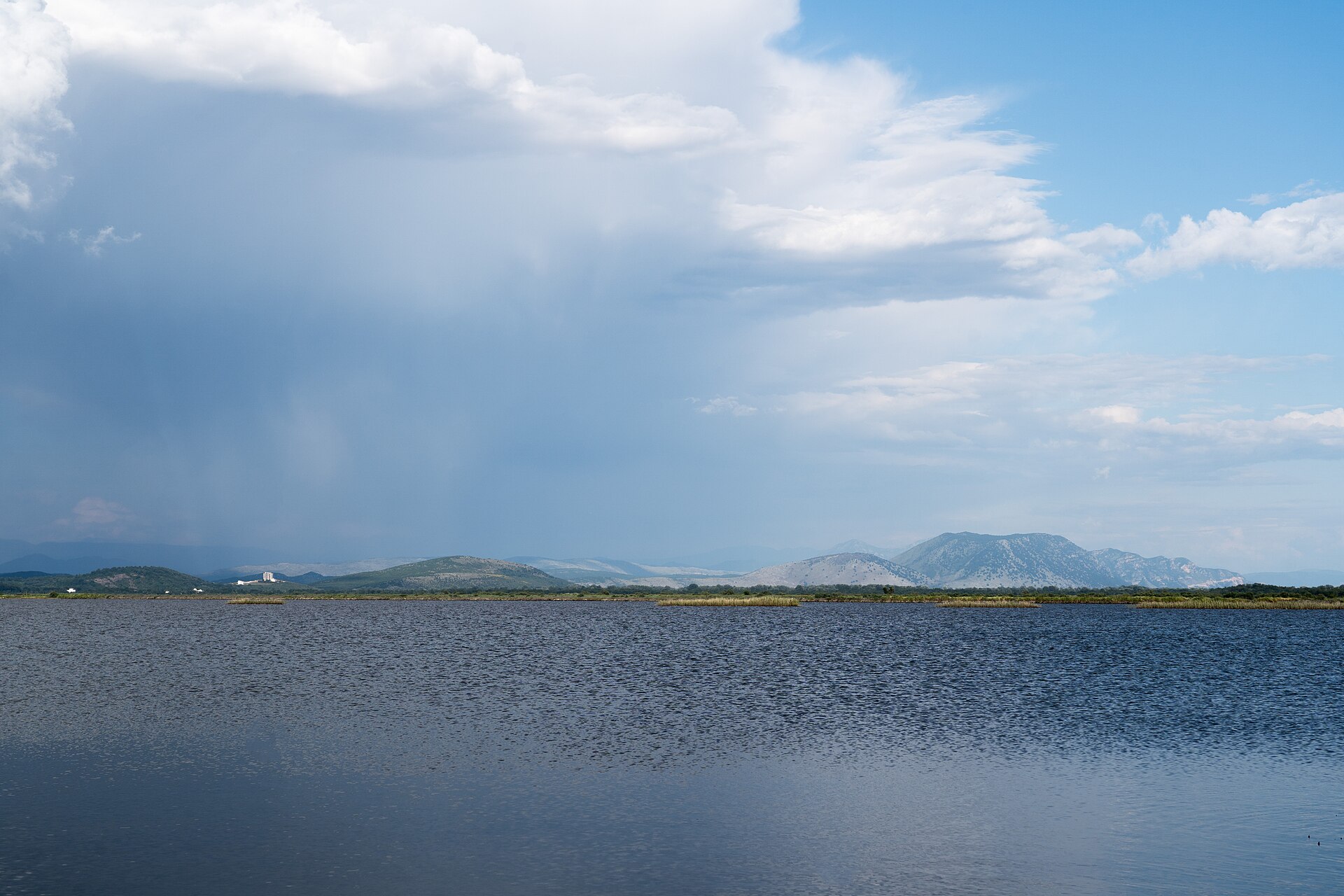
Ulcinj’s salt pans are one of those rare places where human effort and nature have shaped something enduring, almost timeless. Stretching along the Adriatic coast near Montenegro’s southern border with Albania, these vast, shallow basins form an intricate network of water channels and glistening salt crystals. The air carries the scent of the sea mixed with the sharp tang of salt and the faint aroma of wild herbs growing along the shore. There’s a quiet rhythm here—the slow evaporation of water under the sun, the gentle lapping of waves against the dikes, the occasional cry of a gull overhead. Unlike typical tourist attractions, the salt pans are still very much alive, a working landscape that offers a glimpse into how people once lived in harmony with their environment.
The history of salt production in Ulcinj reaches back centuries, to a time when the town was a key trading hub on the Adriatic. Salt was once as valuable as gold, not just as a food preservative but as a form of currency, a commodity that shaped economies and even sparked conflicts. Venetians, Ottomans, and local rulers all vied for control of these lands, recognizing their strategic importance. Today, the salt pans continue to operate, though on a smaller scale than in their heyday. Workers still harvest salt by hand, following methods passed down through generations, a living connection to the past.
The architecture of the salt pans is simple and purposeful, yet there’s a certain beauty in its functionality. Low dikes and canals divide the fields into neat rectangles, guiding seawater through a system of sluices before the sun evaporates the water, leaving behind layers of salt. Narrow paths wind between the basins, worn smooth by the footsteps of workers over the years. In places, old wooden shelters stand as silent witnesses to the labor that once took place here. The entire process moves at nature’s pace—the tide fills the pans, the sun dries them, and the workers complete the cycle, gathering the salt by hand. Even now, modern technology hasn’t entirely replaced traditional methods, and in some corners of the pans, the old ways endure.
Beyond their economic value, the salt pans are a vital ecosystem, a haven for wildlife in an otherwise developed coastal region. The shallow waters and salt marshes attract dozens of bird species, many of them rare or endangered. Flamingos, herons, and gulls gather here, especially during migration seasons, turning the pans into a vibrant, ever-changing spectacle. The best times to observe them are at dawn or dusk, when the light paints the sky in soft hues and the birds move in graceful formations across the water. Locals have long coexisted with this wildlife, and visitors who tread quietly may find themselves immersed in a scene that feels almost untouched by time.
There’s a profound stillness to the salt pans, a sense of time moving differently here. Unlike the bustling beaches and crowded streets of nearby resorts, the pans remain a place of quiet industry and natural beauty. The sounds are simple—the rustle of wind through the reeds, the distant call of a bird, the occasional splash of water. Even in the height of summer, when the coast is alive with tourists, the salt pans offer a retreat, a chance to step away from the noise and simply be. Some locals bring their families here, showing children how salt is harvested or spending a quiet afternoon by the water. For visitors, the pans are open, but it’s important to remember that this is still an active workplace, not a museum. Respect for the land and those who tend it goes a long way.
The salt pans are more than just a relic of the past; they remain a vital part of Ulcinj’s identity and economy. While salt no longer holds the same economic weight it once did, it still plays a role in local culture. The pans produce not only table salt but also therapeutic varieties used in cosmetics and traditional remedies. Artisans craft souvenirs from the salt—scented blends, lamps, and decorative items—while some restaurants in Ulcinj use it to enhance their dishes, giving food a subtle, briny depth. For many in the community, the salt pans are more than a job; they’re a link to their heritage, a reminder of the skills and knowledge passed down through the years.
For travelers who venture beyond Montenegro’s beaches and historic sites, the salt pans can be an unexpected discovery. There are no grand monuments or dramatic landscapes here, just the quiet beauty of a place shaped by human hands and natural forces working in tandem. Walking along the dikes, watching the birds, or chatting with the workers offers a different kind of experience—one that feels authentic, unfiltered by tourism. It’s the kind of place that lingers in the memory, not for its spectacle, but for its sense of continuity, a reminder that some traditions endure because they’re worth preserving.
The salt pans of Ulcinj are a place where time seems to slow down, where the past and present coexist without fanfare. They’re not for those seeking excitement or luxury, but for those who appreciate the quiet poetry of a landscape shaped by labor and nature. Whether it’s the sight of flamingos wading in the shallows, the taste of salt on the breeze, or the stories of the people who still work here, the pans offer something rare—a connection to a way of life that has endured for centuries, untouched by the rush of the modern world.