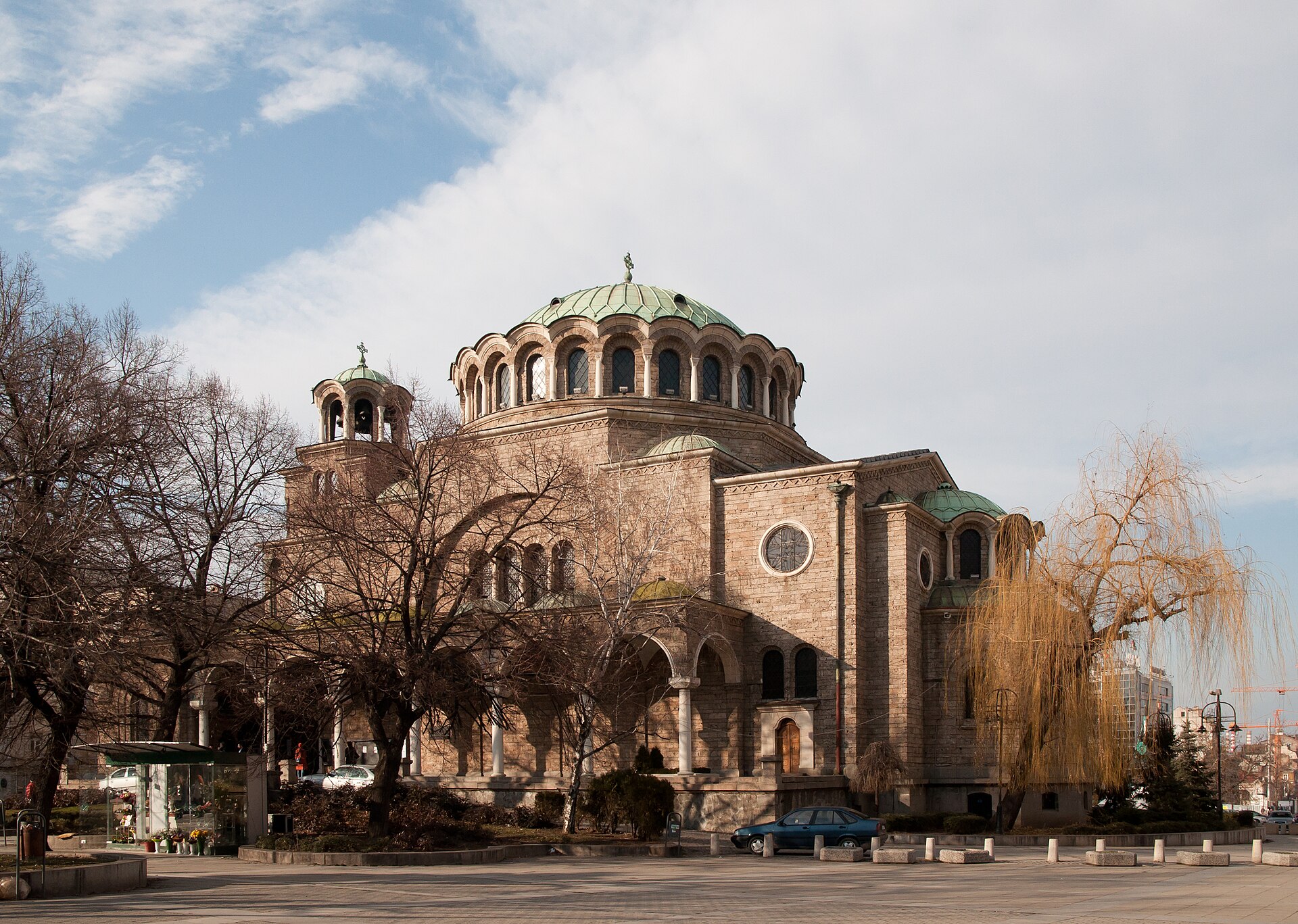
The Church of St. Nedelya stands quietly in the heart of Sofia, a city where layers of history press against each other like pages in an old book. It’s not the grandest cathedral in Bulgaria, nor the most ornate, but it carries a weight that goes beyond its size. For centuries, it has been a place where the sacred and the everyday intersect, where emperors, revolutionaries, and ordinary worshippers have left their mark in ways both visible and unseen.
The church’s origins trace back to the 10th century, though little remains of its earliest form. Like many buildings in Sofia, it has been rebuilt, expanded, and reshaped by the hands of time and the whims of rulers. The Ottomans, who governed the city for nearly five centuries, left their imprint here too. During their rule, the church was known as the Church of the Holy King, a nod to the medieval Bulgarian tsar Stefan Uroš II Milutin, whose relics were once kept within its walls. The name St. Nedelya itself is a Slavic variation of the Greek *Kyriaki*, meaning "Sunday," a day of rest and reflection that has long been central to Christian tradition.
What you see today is largely the result of a reconstruction in the 1920s and 1930s, following a devastating attack in 1925. That April, a bomb exploded during a funeral service, killing over a hundred people, including high-ranking military and political figures. The blast destroyed much of the church, leaving only fragments of its former self. The rebuilding was careful, aiming to restore not just the structure but the sense of continuity that had been so violently interrupted. The result is a blend of old and new, with the low, whitewashed walls and red-tiled roof giving it a modest, almost unassuming presence in the city center.
Step inside, and the atmosphere shifts. The interior is dimly lit, the air thick with the scent of wax and incense. Frescoes cover the walls, their colors muted by time but still vivid in places. Scenes from the Bible unfold in quiet detail, each figure telling a story that has been repeated here for generations. The iconostasis, a wooden screen adorned with icons, separates the nave from the altar, a tradition that dates back to the earliest days of Orthodox Christianity. The icons themselves are not just religious objects but historical artifacts, some of them centuries old, their faces worn smooth by the touch of countless hands.
The church’s bell tower rises above the surrounding buildings, a slender finger pointing toward the sky. It was added during the reconstruction, a practical and symbolic gesture. Bells have long been a part of Sofia’s soundscape, their peals marking the hours and calling the faithful to prayer. From the tower, you can see the city spreading out in all directions—modern office buildings jostling with Ottoman-era mosques, Soviet-era monuments standing beside crumbling Roman ruins. It’s a view that reminds you how much Sofia has endured and how much it has absorbed.
St. Nedelya is not a museum, though it could easily be one. It remains an active place of worship, where services are held regularly and the rituals of Orthodox Christianity continue as they have for centuries. On Sundays, the church fills with the sound of chanting, the flicker of candlelight reflecting off the icons. During major religious holidays, like Easter or Christmas, the atmosphere is especially charged, the air humming with a sense of shared history and faith. Even on quieter days, there’s a sense of life here, a pulse that connects the present to the past.
Outside, the city moves at its own pace. Cafés spill onto sidewalks, trams rattle past, and the occasional street musician adds a layer of sound to the urban symphony. The church sits at the edge of Sofia’s main square, a space that has seen protests, celebrations, and everything in between. It’s a reminder that while St. Nedelya is a place of refuge, it’s also very much a part of the world around it. The cobblestones beneath your feet have been walked by countless others—merchants, soldiers, pilgrims, and dreamers—each leaving their own invisible trace.
If you visit, you might find the church doors open, or you might not. There’s no set schedule for when it welcomes visitors, no grand entrance fee or guided tour. That’s part of its charm. It exists as it always has, not for the sake of spectacle but for the people who need it. Whether you come for the history, the art, or simply a moment of quiet in a busy city, St. Nedelya offers something rare: a sense of timelessness in a place that is always changing.