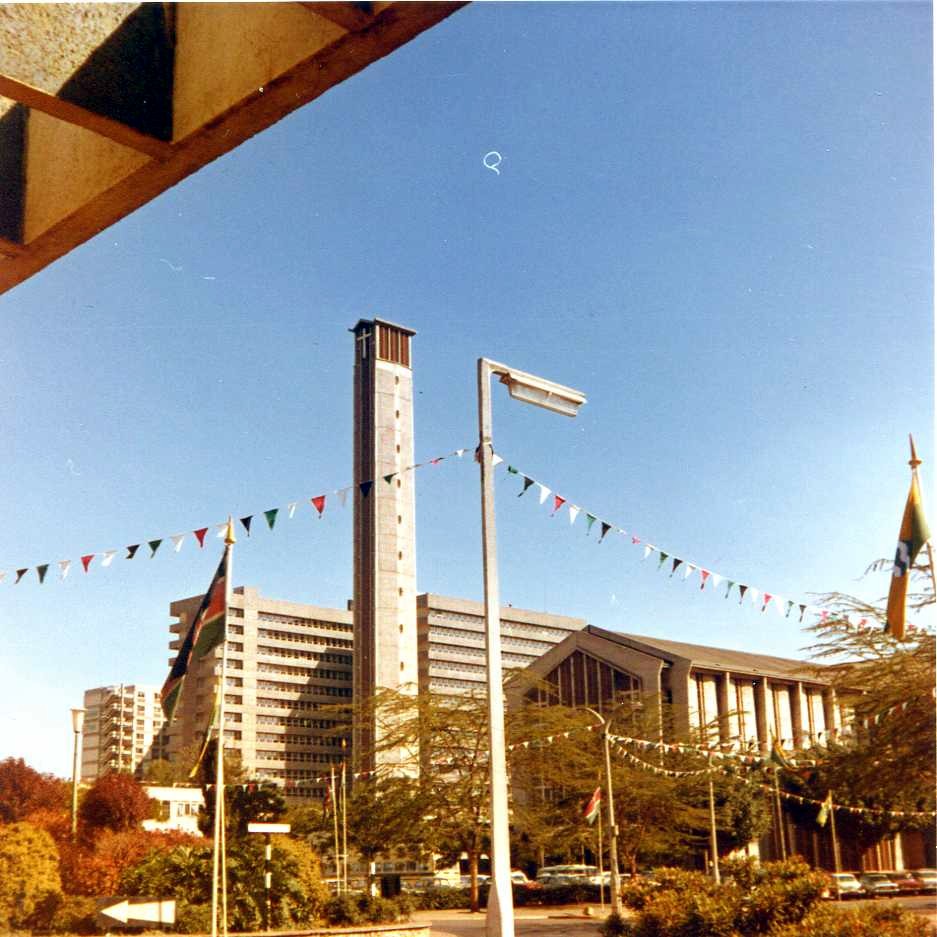
Nairobi’s Cathedral of the Holy Family is one of those places that quietly anchors the city, its presence so familiar that it often goes unnoticed—until you pause to consider what it represents. Built in the early 20th century, when Kenya was still under British rule, it was the first Catholic cathedral in the capital, a city that was itself still taking shape. At the time, Nairobi was little more than a railway outpost, a dusty settlement growing into something larger. The cathedral’s construction marked a turning point, not just for the city’s religious life but for its identity, reflecting the changes already stirring in the air.
The building’s architecture bridges two worlds. Designed in the neo-Gothic style popular in European church construction of the era, it carries the hallmarks of that tradition—tall, pointed arches, sturdy columns, and stained glass—but with subtle adaptations that ground it in its African setting. The structure doesn’t feel out of place among Nairobi’s mix of old and new, its stone façade weathered by time yet still imposing. Inside, the space is uncluttered, functional, and free of excessive ornamentation, a reflection of its origins as a place built for worship rather than display.
Beyond its religious role, the cathedral has long been a gathering point for the city’s community. During the colonial period, it drew not only Catholics but also people of other faiths, as well as European settlers seeking a familiar refuge in an unfamiliar land. After Kenya gained independence, the cathedral retained its significance, evolving alongside the city. It became a spiritual and cultural hub for Nairobi’s growing Catholic population, hosting not just services but also concerts, charity events, and community meetings. Even now, it remains a place where people come together, whether for prayer, reflection, or simply a moment of quiet in the midst of urban life.
The area around the cathedral offers a glimpse into Nairobi’s layered history. The neighborhood is a patchwork of old and new—colonial-era buildings stand alongside modern offices and shopping centers, while narrow streets give way to broad avenues. The cathedral itself sits on a slight rise, its steps offering a view of the city’s ever-changing skyline. Unlike much of central Nairobi, the surroundings are unexpectedly green, a small oasis of trees and gardens that softens the noise of nearby traffic. It’s a place where the past lingers, even as the city rushes forward.
The cathedral’s story is intertwined with Kenya’s own. When construction began in the 1920s, the country was in the midst of transformation. The railway linking Mombasa to Uganda had turned Nairobi into a vital hub, drawing people from across East Africa. The cathedral was one of the first major buildings erected not for colonial administrators but for the local population, a sign of the growing Catholic community that included converted Africans, European immigrants, and Indian settlers. Its presence spoke to the shifting dynamics of a city—and a nation—on the cusp of change.
Today, the Cathedral of the Holy Family is more than just an active place of worship; it’s a piece of Nairobi’s living history. It may not attract the same crowds as the city’s more famous landmarks, but for those curious about Kenya’s past, it offers a quiet, unfiltered perspective. There are no tour groups here, no hurried snapshots—just the chance to step inside, sit in the cool stillness, or watch the city unfold from the cathedral steps. It’s a place where the weight of history feels tangible, where the architecture serves as a reminder of the time when Nairobi was still finding its footing.
Inside, a few details stand out. The stained glass windows, crafted in traditional style, depict biblical scenes with an undercurrent of African influence, a subtle nod to the culture around them. The altar is simple and unadorned, in keeping with Catholic tradition, while the side chapels hold statues of saints and memorial plaques honoring figures who shaped the cathedral’s legacy. Old photographs and documents are preserved here, offering glimpses into how the space has evolved over the decades. It’s a small archive of sorts, a record of the people who have passed through its doors.
The cathedral remains a place where history is still being written. Every Sunday, families gather for Mass, children in tow, passing down traditions from one generation to the next. On weekdays, the doors stay open for anyone seeking a moment of peace in the heart of the city. You can sit on a wooden pew, listen to the distant hum of traffic, or simply enjoy the coolness of the stone walls after the midday heat. In a city where life moves at a relentless pace, such places are rare. They offer a reminder that even in the busiest of urban landscapes, there are corners where time slows, where the past and present coexist without fanfare. The Cathedral of the Holy Family is one of those corners—a quiet witness to Nairobi’s journey, and a place where the city’s soul is still very much alive.