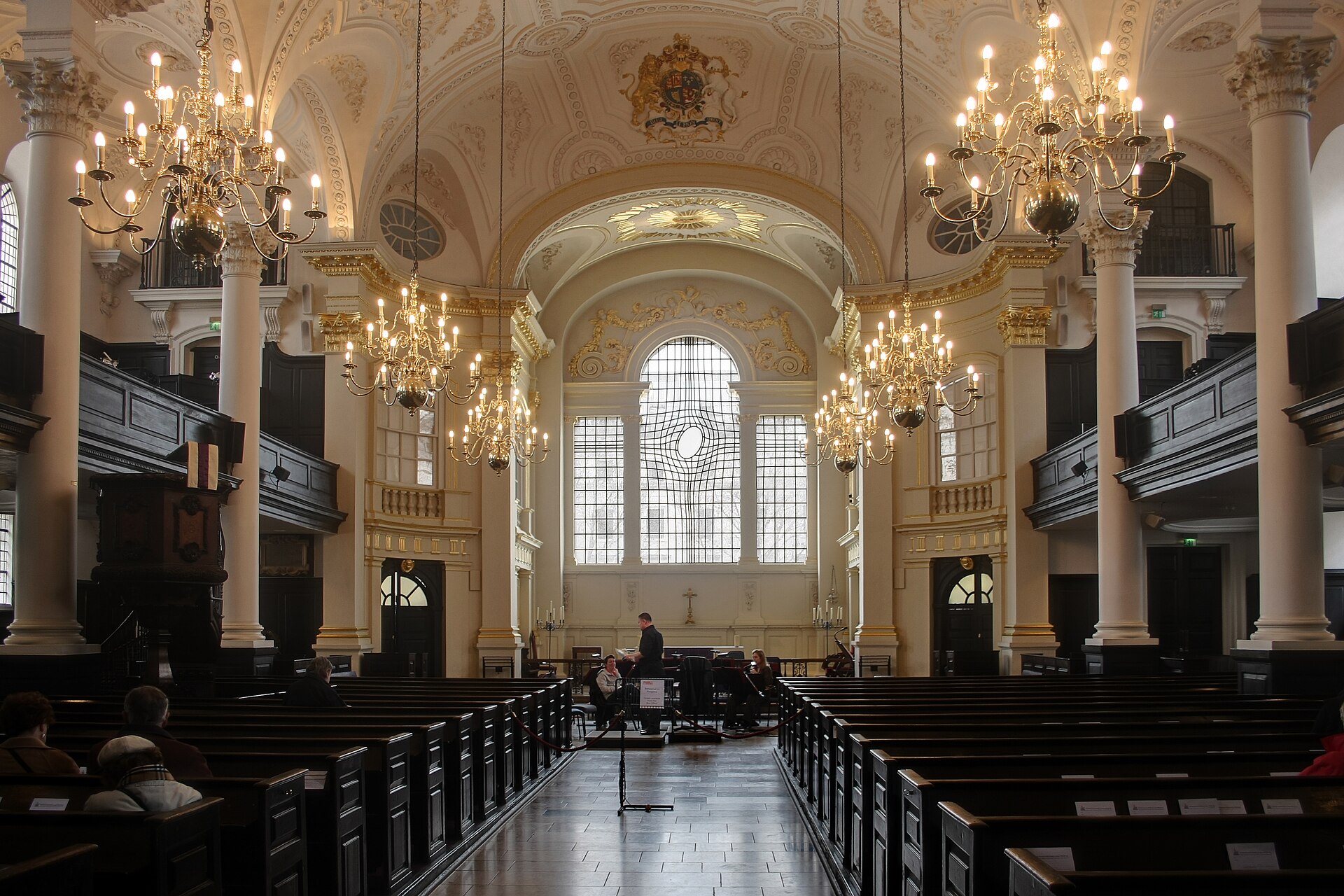
St Martin-in-the-Fields feels like one of those rare places in London that belongs both to the city and to some quieter, almost forgotten world of its own. Tucked away at the northeast corner of Trafalgar Square, it’s easy to overlook if you’re hurrying past the National Gallery’s grand colonnade. Yet this church is far more than just a historic building—it’s a living space where the past and present intertwine, where spiritual life meets cultural tradition in a way that feels both natural and unexpected.
The first church stood here as early as the 13th century, when this was still open countryside on the outskirts of London. The name stuck even as the city grew around it, and St Martin, the patron saint of travellers and the poor, was a fitting choice for a parish that lay on the road into the capital. Over the centuries, the church was rebuilt several times, but the current structure, completed in the early 18th century, is the work of James Gibbs, a Scottish architect whose design became one of the first examples of English Baroque. Gibbs struck a delicate balance between the austerity of Protestant tradition and the ornate flourishes of Catholic Baroque, creating something unusual for its time.
From the outside, St Martin’s appears modest, especially compared to London’s grander cathedrals like St Paul’s. Its facade is marked by a portico with columns and a tall spire, which once served as a landmark for travellers approaching the city. Inside, though, the space feels light and airy. White walls, high windows, and simple wooden pews create a sense of calm, while the absence of stained glass and elaborate murals reflects the restraint of Anglican worship. The central altar, surrounded on three sides by seating, was an innovative arrangement for the period, emphasising the idea of equality among the congregation.
St Martin’s has always been more than just a place of worship. In the 18th century, it was a gathering spot for London’s intellectuals, and by the 19th century, it had become known for its charitable work. During the Second World War, the church suffered heavy damage from bombing but was later restored and continued its role in the community. Today, it hosts not only services but also classical concerts, lectures, and exhibitions. The church’s choir is considered one of the finest in London, and its tradition of free lunchtime concerts, started in the 1920s, remains a beloved part of its identity.
One of the most intriguing features of St Martin’s is its crypt. Far from being just a burial space, it’s a lively cultural hub where contemporary art exhibitions, craft fairs, and even a café take place beneath its low, vaulted ceilings. The contrast between the hushed atmosphere of the main church and the bustle of the crypt below is striking. It’s this blend of old and new that makes St Martin’s feel so alive—it’s not a museum, but a place where people come for all kinds of reasons, whether to pray, listen to music, or simply take a moment away from the city.
What sets St Martin’s apart is its sense of openness. Unlike many churches that enforce strict rules for visitors, this one welcomes everyone—tourists, locals, believers, and non-believers alike. There are no signs demanding silence or banning photography, just an unspoken invitation to step inside and stay as long as you like. The church has long been involved in outreach programmes for the homeless, a tradition that continues today, reinforcing its reputation as a place of warmth and inclusion.
Outside, Trafalgar Square hums with activity, but the moment you cross the threshold of St Martin’s, the noise of the city fades. There’s no rush here, no sense of urgency—just the quiet, the light streaming through the tall windows, and the feeling that time moves differently. That might be why Londoners have such affection for this place. It doesn’t try to impress with grandeur or opulence; it simply exists, quietly and unassumingly, yet deeply woven into the fabric of the city and the lives of those who pass through its doors.