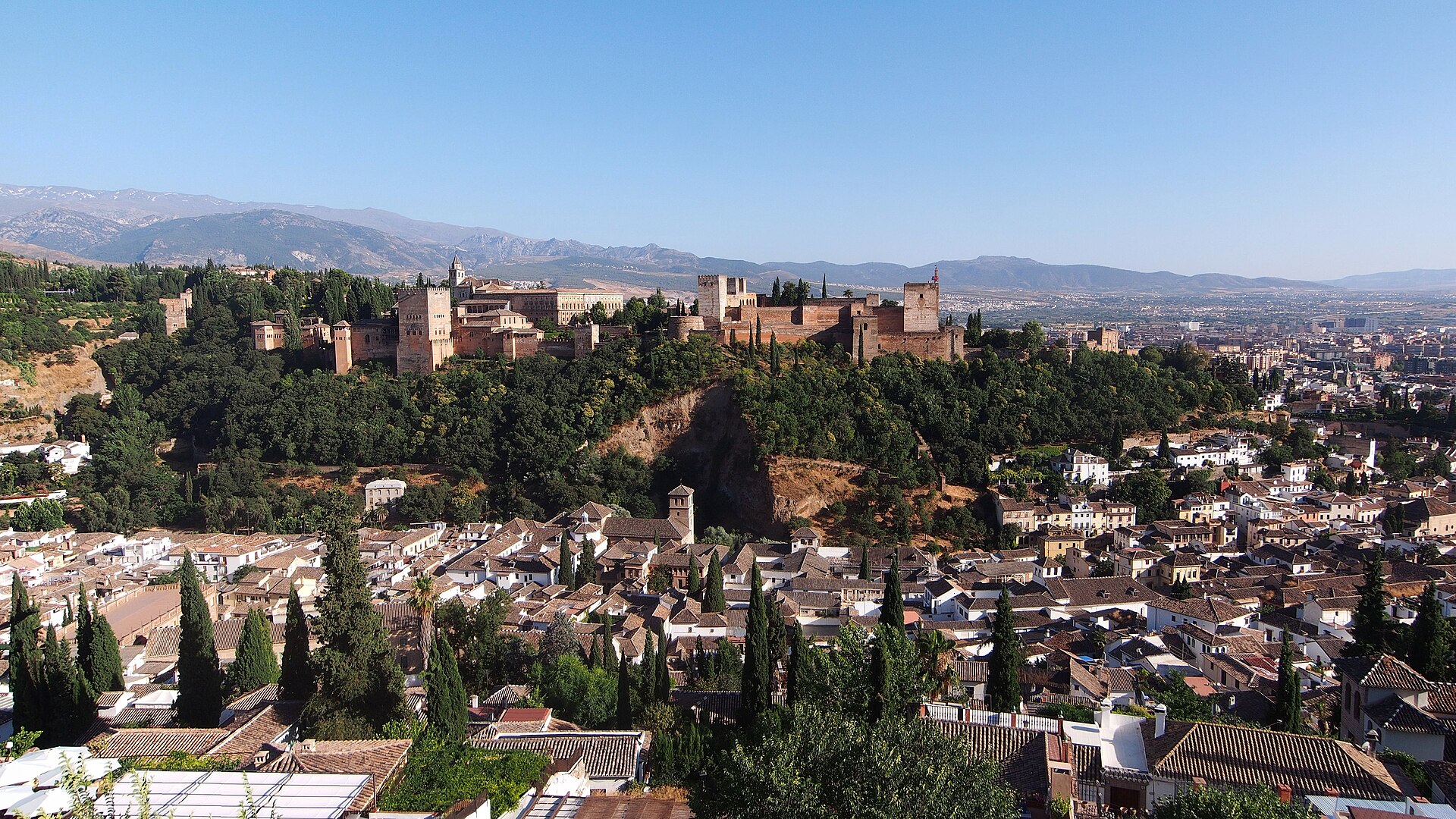
Mirador de San Nicolás is one of those rare places where the view itself is almost secondary to the feeling it evokes. Perched in the heart of Granada’s Albaicín district, this small stone terrace doesn’t just offer a panorama—it offers a moment of quiet revelation. From here, the Alhambra sprawls across the opposite hill, its red-tinged walls and intricate towers rising like a mirage above the city. But the magic isn’t just in the sight; it’s in the weight of history pressing against your shoulders, the sense that you’re standing where countless others have stood before, watching the same light play across the same ancient stones.
The Albaicín, where the mirador sits, is a maze of narrow, winding streets that feel suspended in time. Built by the Zirid dynasty in the 11th century, this neighborhood was once the political and cultural heart of Muslim Granada, a city of palaces, bathhouses, and bustling souks. After the Reconquista, when the Catholic Monarchs reclaimed the city in 1492, the Albaicín didn’t disappear—it simply transformed. Mosques became churches, hammams were repurposed as homes, and the grand estates of Nasrid nobles gave way to the mansions of Spanish aristocrats. Yet even today, the district retains an unmistakably Moorish character. The whitewashed houses, the hidden courtyards, the scent of jasmine spilling over garden walls—all of it whispers of a past that refuses to fade.
The mirador takes its name from the Church of San Nicolás, which stands beside it. Built in the 16th century on the site of a former mosque, the church is a striking example of Mudéjar architecture, blending Gothic structure with Islamic decorative motifs. Inside, the space is austere, almost severe, but outside, the building feels like a natural extension of the Alhambra’s aesthetic. The original minaret, from which the call to prayer once rang, is long gone, but the terrace remains a gathering place—now for tourists and locals alike, drawn by the promise of a sunset that turns the fortress’s walls to gold.
The view from San Nicolás is famous for a reason. Beyond the Alhambra, the Darro River valley unfolds below, its gentle slope marking the old divide between the Muslim and Christian quarters of the city. In the distance, the snow-capped peaks of the Sierra Nevada rise sharply against the sky, their presence a reminder of Granada’s dramatic geography. On clear days, you can make out the towers of the Generalife, the Nasrid rulers’ summer palace, its gardens a lush contrast to the arid hills around it. But the real spectacle comes at dusk, when the setting sun bathes the Alhambra in hues of amber and rose, and the entire terrace falls silent, as if holding its breath.
Yet San Nicolás is more than just a viewpoint. It’s a living space, a place where the city’s rhythms play out in real time. Tourists jostle for the best photo spots, while locals linger on the low stone walls, chatting or simply watching the light shift across the valley. In the summer, musicians often set up near the church, their guitars filling the air with the raw, emotional strains of flamenco. In winter, the crowds thin, but the atmosphere remains—quieter, perhaps, but no less compelling. There’s something about this spot that makes people pause, whether they’re here for the first time or the hundredth.
The mirador is also a crossroads of history. Just steps away, the remnants of an old Arab bathhouse peek out from behind a modern facade, while further down the hill, the arched doorways of former caravanserais hint at the neighborhood’s past as a hub of trade and travel. Centuries ago, this was one of the most vibrant parts of Granada, and even now, the energy lingers. It’s no wonder that San Nicolás has become a place for celebrations—weddings, festivals, impromptu gatherings—where the past and present blur into something new.
Reaching the mirador is part of the experience. The climb from Plaza Nueva winds through the Albaicín’s steep, cobbled streets, past houses with intricately carved wooden balconies and hidden patios shielded by wrought-iron gates. Along the way, small shops sell handmade ceramics, spices, and sweets—almond pastries, honey-drenched nougat—while the scent of orange blossoms drifts from the trees overhead. The ascent can be tiring, especially in the midday heat, but each turn reveals another glimpse of the city below, and by the time you reach the top, the effort feels worthwhile.
What makes San Nicolás special isn’t its grandeur or its fame, but its ability to distill Granada’s essence into a single frame. From here, you see everything—the Alhambra’s imposing silhouette, the labyrinthine streets of the Albaicín, the distant mountains that have shaped the city’s identity. There’s no fanfare, no elaborate staging, just the quiet power of a place that has witnessed centuries of change. It’s the kind of spot where you might sit for hours, watching the light fade over the fortress, and realize that some views aren’t just seen—they’re felt.