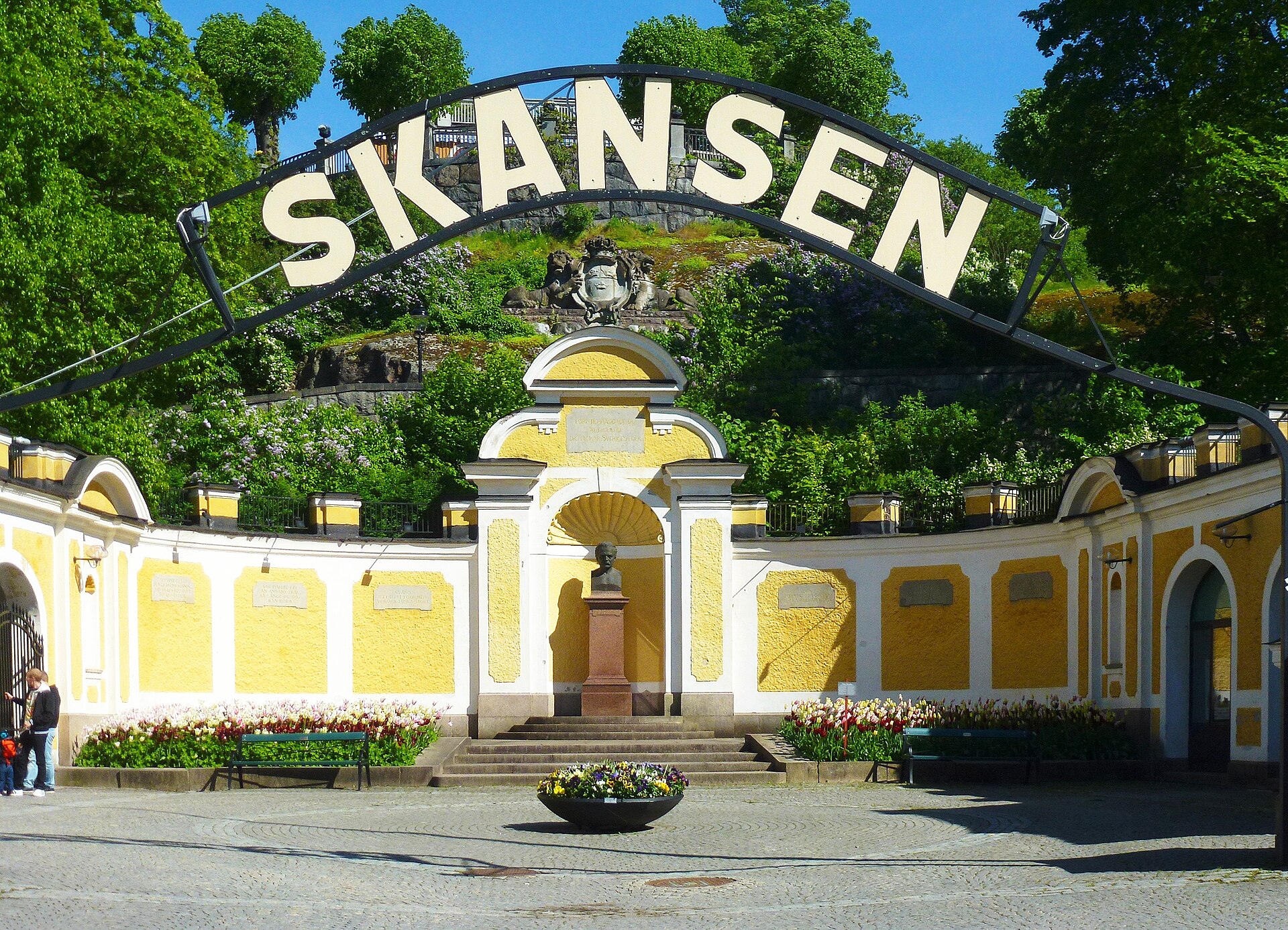
Skansen is the kind of place that feels both timeless and deeply rooted in a particular moment in history. Opened in 1891, it was the world’s first open-air museum, created by Artur Hazelius, a man with a vision to preserve Sweden’s rural traditions before they vanished in the wake of industrialization. What started as a modest collection of relocated buildings has grown into a sprawling 75-acre site on the island of Djurgården in Stockholm, where the past isn’t just remembered—it’s lived. Walking through Skansen feels less like visiting a museum and more like stepping into a living portrait of Sweden, one that stretches from the 16th century to the early 20th.
The museum is divided into distinct sections, each representing a different region or era of Swedish life. In the north, you’ll find the timbered houses and barns of Dalarna, their red-painted facades and intricate folk art instantly recognizable. The southern part of Skansen is home to the more modest cottages of Skåne, where thatched roofs and whitewashed walls speak of a quieter, agrarian way of life. Between these extremes are the townsfolk’s homes from central Sweden, the grand manor houses of the gentry, and even a full-scale 19th-century town complete with a bakery, a glassblower’s workshop, and a printer’s office. Every building was carefully dismantled from its original location and reassembled here, down to the last nail and floorboard.
What makes Skansen different from other museums is the way it animates history. Costumed interpreters go about their daily tasks as if the 21st century doesn’t exist—spinning wool, forging iron, baking bread in wood-fired ovens. In the summer, the air is filled with the scent of freshly baked cinnamon buns and the sound of folk music drifting from the dance pavilion. In the winter, the town square is transformed into a Christmas market, with mulled wine steaming in copper pots and handmade decorations glinting in the low Nordic light. The animals, too, play their part: Skansen’s zoo is one of the oldest in the world, home to native Scandinavian species like moose, lynx, and brown bears, as well as farm animals that would have been common in the past. Watching a blacksmith hammer out a horseshoe or a farmer lead a team of oxen feels less like a performance and more like a quiet conversation with the past.
The architecture of Skansen is a study in how Swedes have built their lives over the centuries. The stave church from the 13th century, with its dragon-headed gables and dark, soaring interior, is a reminder of the country’s medieval Christian roots. Nearby, the Seglora Church, built in 1729, stands as a testament to the simpler, more intimate worship spaces of the countryside. The manor houses, with their symmetrical facades and manicured gardens, reflect the influence of continental Europe, while the humble crofts and windmills tell a story of self-sufficiency and resilience. Even the layout of the buildings isn’t random—Hazelius arranged them to mimic the natural progression of a journey through Sweden, from the rugged north to the gentler south.
Beyond the buildings and the animals, Skansen is also a place of celebration. Midsummer, Sweden’s most beloved holiday, is marked here with all the traditional pomp: maypoles wrapped in greenery, flower crowns, and folk dances in the open-air theater. Lucia Day in December brings processions of candle-bearing singers, their voices rising in the cold air. These aren’t just tourist attractions; they’re rituals that have been observed for generations, and Skansen is one of the few places where they’re kept alive with such care. The museum also hosts concerts, craft fairs, and seasonal festivals, each one an excuse to gather, eat, and remember.
For all its historical weight, Skansen doesn’t feel like a relic. It’s a place where children chase each other through the old town’s cobbled streets, where families picnic on the grassy slopes overlooking the city, where couples stroll hand in hand past the rose gardens. The views from the higher points of the park are some of the best in Stockholm, with the water of Djurgården glinting in the distance and the spires of the city rising beyond. On a clear day, you can see all the way to the Baltic Sea. It’s easy to forget you’re in the middle of a capital city until the sound of a ferry’s horn or the distant hum of traffic brings you back.
Skansen’s legacy extends far beyond Sweden. It inspired the creation of open-air museums around the world, from Norway’s Maihaugen to the Netherlands’ Zaanse Schans. But what sets it apart is its refusal to romanticize the past. The buildings here aren’t just pretty facades; they’re honest representations of how people lived, worked, and survived. The crofts, for instance, aren’t quaint—they’re small, dark, and often cramped, a far cry from the cozy image of rural life. The manor houses, while grand, also hint at the social hierarchies of the time. Even the animals, from the majestic wolves to the scruffy farm pigs, are a reminder of the deep connection between humans and nature in Sweden’s history.
Visiting Skansen is a reminder that history isn’t just something you read about in books. It’s something you can touch, smell, and even taste. The cinnamon buns from the bakery, the smoked reindeer meat from the market stalls, the rough texture of a handwoven rug—these are all fragments of a way of life that might have disappeared if not for this place. It’s also a reminder of how quickly things change. When Hazelius first began collecting buildings in the late 19th century, Sweden was on the cusp of modernization. The rural world he sought to preserve was already fading, and within a few decades, it would be gone entirely. Skansen is both a memorial to that world and a celebration of its enduring spirit.
There’s a quiet magic to Skansen, the kind that lingers long after you’ve left. It’s not just the buildings or the animals or the festivals—it’s the sense of continuity, of a thread that connects the past to the present. In a world that often feels like it’s moving too fast, Skansen offers a chance to slow down, to look closely at the details, and to remember that the way things were isn’t so different from the way things are. Whether you’re watching a potter shape clay on a wheel, listening to a storyteller recount old folk tales, or simply sitting on a bench with a cup of coffee, you’re part of that thread. And that, more than anything, is why Skansen endures.