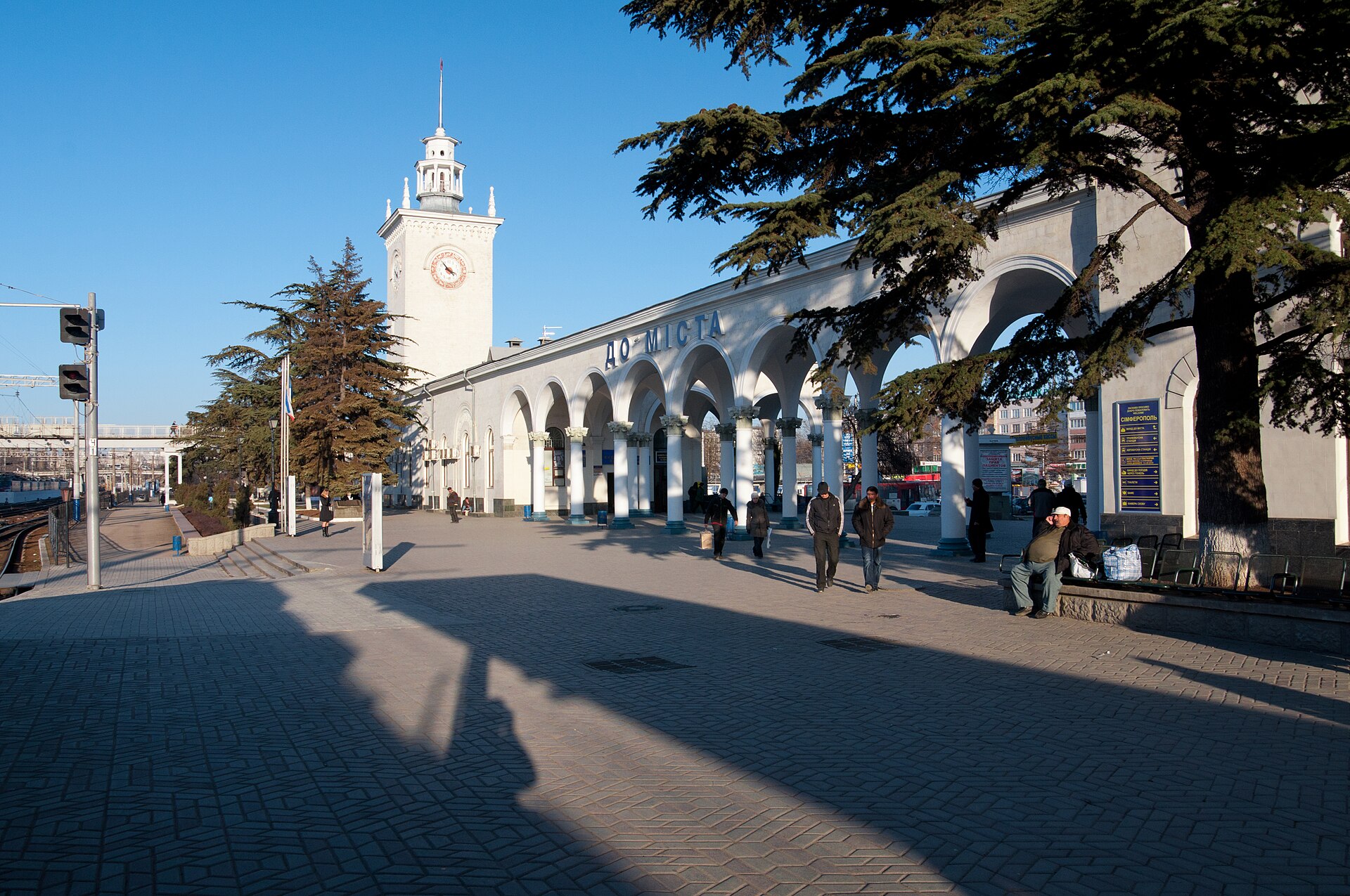
Simferopol-Passazhirsky is a railway station where the past and present of Crimea meet. Built in the mid-20th century, it remains one of Simferopol’s landmarks, a structure tied to the city’s daily life. For travelers, it’s a transit point where the pace of the peninsula becomes visible: unhurried, yet expectant, a threshold between what’s known and what’s ahead.
The station’s architecture reflects the Soviet era’s mix of utility and scale. Its facade has tall windows and geometric lines, while the interior shows signs of a time when train stations were designed as places of arrival and departure. Mosaic panels and decorative molding remain, though time has worn them. The building feels lived-in, its atmosphere warm, as if encouraging visitors to stay a while.
For decades, Simferopol-Passazhirsky has connected mainland Russia and Crimea. During the Soviet years, it saw passengers traveling to Black Sea resorts or returning with stories. After Crimea’s reunification with Russia, the station’s role expanded, linking the peninsula to cities across the country. In summer, tourists with backpacks, students heading to coastal universities, and locals visiting family fill the station. The air carries voices, the smell of coffee from kiosks, and announcements over loudspeakers.
Beyond the station, Simferopol’s life continues. Nearby markets sell Crimean fruits and handmade souvenirs. Small cafes serve simple meals, while budget hotels accommodate travelers who stay a night or two before moving on. The station has seen renovations and modern additions, but it retains its character, a place where old and new coexist.
For many, Simferopol-Passazhirsky is the first glimpse of Crimea. It’s where the journey starts, where the peninsula’s details emerge—the sunlight through high windows, footsteps on tiled floors, the mix of languages in the waiting halls. Train stations often feel like crossroads, where moments of departure and arrival blend. This one does too. It’s a place where history is visible in the architecture, while the present moves with arriving and departing trains.
The station has become part of Simferopol’s culture. It’s appeared in films, inspired local stories, and witnessed reunions, farewells, and daily routines. Unlike a museum, it isn’t static. It changes with the people passing through. That’s its appeal: it doesn’t demand attention, but it offers something to those who notice. A worn bench, a faded sign, a traveler deep in thought—each tells a story.
Today, the station is a key part of Crimea’s transport network. Long-distance trains connect to Moscow, St. Petersburg, and other Russian cities. Local electric trains go to Yalta, Sevastopol, and Alushta. Buses from nearby terminals travel into the region’s mountains and valleys. For many, Simferopol-Passazhirsky is the start of a Crimean trip, the place where the road to the sea or the mountains begins. It’s a hub, but also a pause—a moment to gather thoughts before the journey.
The area around the station has its own rhythm. Taxi drivers wait for passengers, vendors sell homemade preserves and pastries, and the waiting halls provide basics for travel. In recent years, free Wi-Fi, charging stations, and digital departure boards have been added, fitting alongside the station’s older features. Yet the place hasn’t lost its character. You can still buy tea from a vendor who’s served passengers for years, where the smell of bread mixes with diesel and pine.
Simferopol-Passazhirsky changes with the time of day. It can be busy in summer, when crowds fill its halls, or quiet in the early morning, when the first trains arrive and soft light fills the station. Some people like its energy, its sense of possibility; others find it overwhelming. But it’s hard to ignore. The station pulls you into its rhythm, whether you’re there briefly or for hours. For some, it’s just a stop. For others, it’s the start of something. For a few, it’s tied to memories—childhood trips, homecomings, moments that stay long after the train leaves.
That’s what makes it more than a building. It’s part of the city’s life, a place where stories begin and end, and where every traveler leaves something behind.