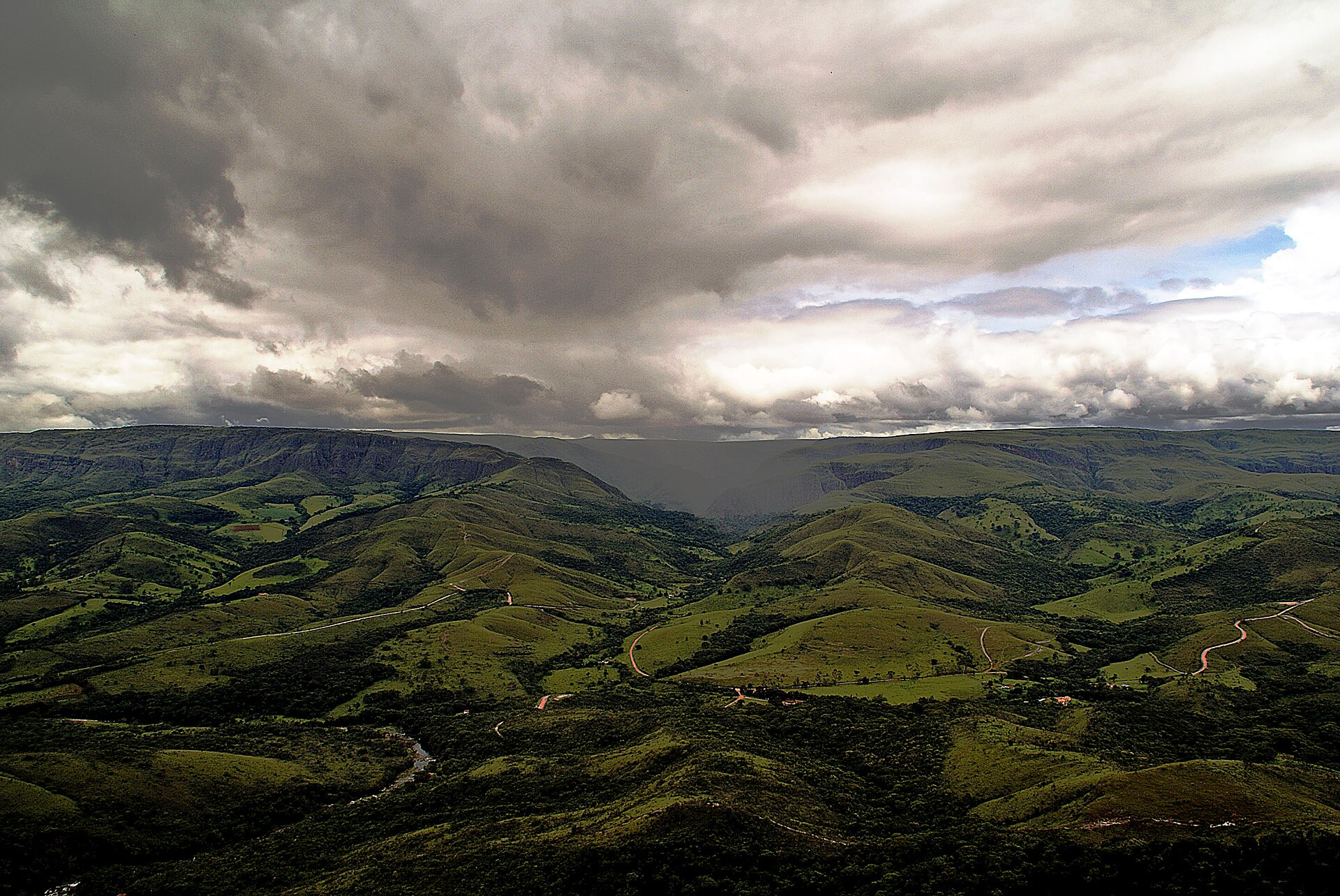
Nestled in the heart of Brazil, Serra da Canastra is a place where the land unfolds in raw, untamed beauty. This national park stretches across more than two hundred thousand hectares in the southwestern corner of Minas Gerais, a region where the earth rises in rugged ridges and deep valleys, untouched by the noise of modern life. There are no crowded resorts or tourist traps here—just endless horizons of wild landscapes that make you forget the world beyond. The mountains, draped in rare vegetation, give way to sheer cliffs and crystal-clear rivers, their waters carving paths through ancient rock. It’s a place where time seems to slow, where the air is thinner and the silence deeper, as if the land itself is breathing.
The name Serra da Canastra translates to "Chest Mountain," and from above, the ridges do resemble a giant treasure chest. But instead of gold, this chest holds one of Brazil’s most biodiverse ecosystems—the cerrado. This savanna-like biome is home to hundreds of plant species, many found nowhere else, and a wildlife that thrives in its folds. Among the rocks and forests, you might spot a maned wolf padding silently through the brush, or a giant anteater lumbering along a trail. Pumas roam the higher elevations, while birds of every color dart between the trees. The park is a living museum of nature, where every turn reveals something new, something rare.
One of the park’s most iconic sights is Cascatinha, a waterfall that plunges nearly two hundred meters into a misty abyss. Locals call it simply "Casca," a name that carries affection, as if the waterfall were an old friend. On sunny days, the spray catches the light, painting rainbows in the air. Trails wind around the falls, leading to viewpoints where the valley stretches out below, vast and green. There’s a quiet magic here, a sense that this place has always been special. Long before visitors arrived, indigenous peoples considered it sacred, believing the water held healing powers. Whether or not that’s true, the atmosphere is undeniably peaceful—a place to sit, listen, and let the world fade away.
The history of Serra da Canastra is woven into the story of Brazil’s interior. In the 18th century, these mountains stood along the Estrada Real, the Royal Road that carried gold from Minas Gerais to the coast. Prospectors and traders passed through, their mules laden with treasure, their hopes pinned on the next strike. The land bore witness to their struggles—some struck it rich, others vanished into the wilderness. Today, remnants of that era linger in the old stone roads and the crumbling ruins of forgotten settlements. In places, you can still find the mouths of abandoned mines, now silent and overgrown, where the earth once yielded its secrets.
There are no grand cathedrals or palaces here, but the charm of Serra da Canastra lies in its simplicity. The villages at the foot of the mountains feel frozen in time, their whitewashed houses and red-tiled roofs a nod to colonial Brazil. Small churches stand at the center of town, their bells ringing out over quiet streets. In the local shops, you’ll find wheels of Canastra cheese, aged in caves and sold by the slice, or jars of doce de leite, a caramel-like sweet that’s a staple of the region. The town of São Roque de Minas serves as the gateway to the park, a place where visitors can linger over a meal of slow-cooked beef or fried mandioca, served with a side of stories from the locals.
This is a place for those who want to move, not just observe. Hiking trails crisscross the park, leading to hidden waterfalls, natural pools, and viewpoints that stretch for miles. Birdwatchers come to spot rare species, while others simply wander, letting the landscape guide them. One of the most meaningful journeys is to the headwaters of the São Francisco River, which begins here as a trickle between the rocks. For Brazilians, this river is a lifeline, nourishing the land and its people for centuries. Standing at its source, you can almost feel the weight of its journey—the thousands of kilometers it will travel, the lives it will touch.
Serra da Canastra isn’t a destination for those seeking luxury. There are no five-star hotels or gourmet restaurants, just guesthouses where the beds are soft and the welcome is warm. Meals are simple—grilled meat, fresh cheese, beans cooked over an open fire—but they taste like home. The people here are proud of their land, eager to share its secrets. They’ll point out the best trails, the quietest swimming holes, the spots where the sunset paints the sky in shades of gold and pink. Their stories are part of the experience, passed down through generations, as much a part of the landscape as the rivers and the rocks.
A visit to Serra da Canastra isn’t just a trip; it’s a step into a different rhythm. There’s no schedule to follow, no itinerary to rush through. You can spend a day lying in the sun by a river, watching the clouds drift overhead, or set off on a multi-day trek, sleeping under the stars. The park doesn’t demand anything of you except your presence. It’s a place that reminds you what it means to slow down, to listen, to breathe. In a world that moves too fast, Serra da Canastra offers something rare: a chance to simply be. It’s not just a dot on a map, but a piece of Brazil’s soul—a place where the land and its people exist in quiet harmony.