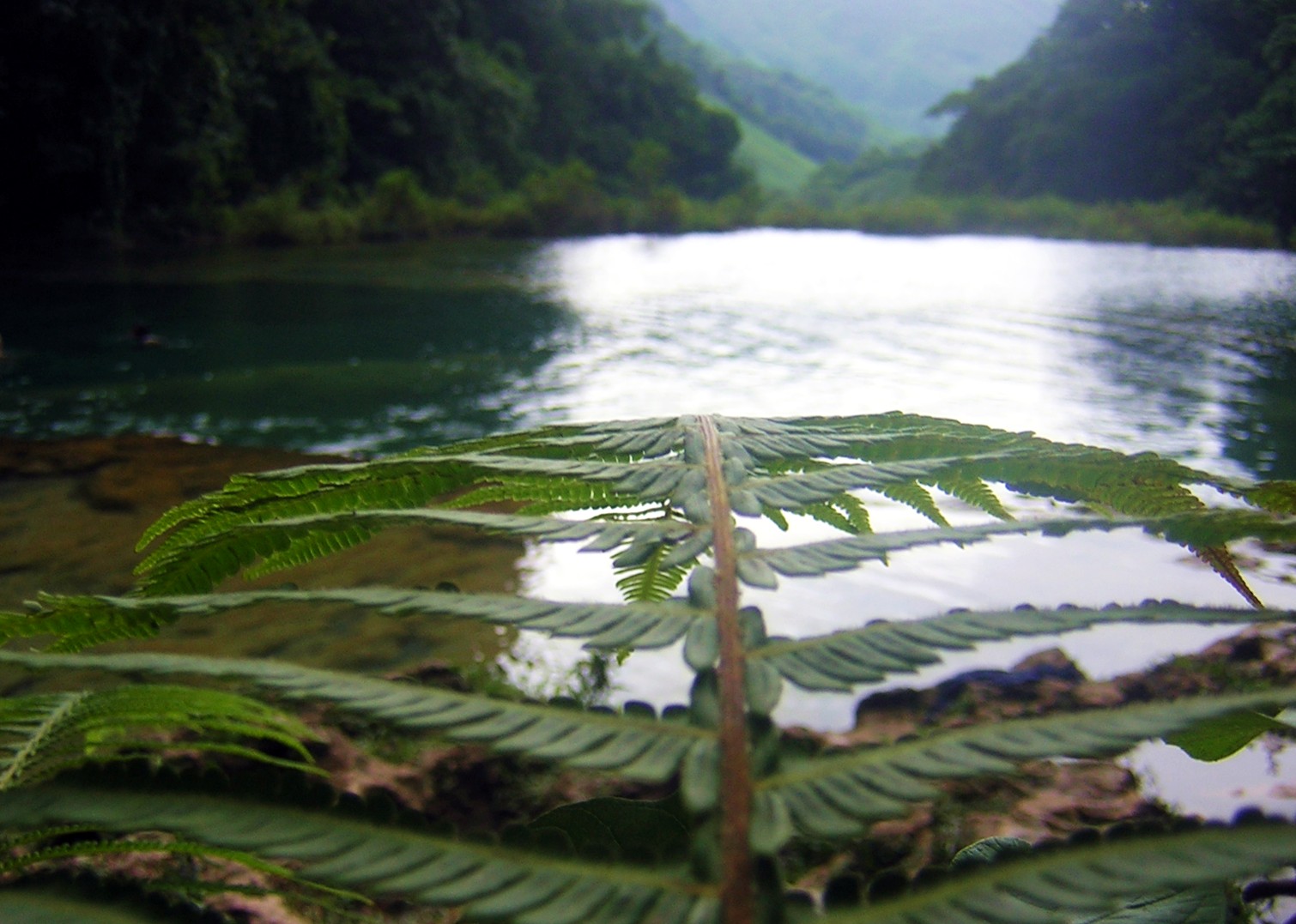
Semuc Champey isn’t the kind of place you visit to tick a box on a travel checklist. It’s where you go when you want to feel the weight of an ancient civilization without the noise of mass tourism. Tucked deep in the jungles of Guatemala’s Quiché department, not far from the quiet town of Lankin, these Maya ruins don’t have the fame of Tikal or Yaxha, but that’s part of their appeal. The jungle here is thick and alive, humming with the calls of birds and the rustle of leaves, while the stone structures, draped in moss and vines, seem more like natural formations than something built by human hands.
This was once a thriving Maya city, flourishing between the 3rd and 9th centuries. Unlike the grand ceremonial centers you might imagine, Semuc Champey offers something different—a glimpse into the everyday life of the Maya. The ruins include the remains of residential neighborhoods, administrative buildings, and small shrines, all arranged in a way that suggests a well-organized community. One of the most fascinating features is the water management system, with reservoirs and channels designed to collect rainwater, a critical resource in this humid yet seasonally dry region. It’s a reminder of how deeply the Maya understood their environment.
The architecture here is typical of Maya settlements in this part of Guatemala: low platforms supporting wooden or stone houses with thatched roofs, narrow stone-paved streets, and small plazas that served as gathering places. The stones aren’t polished like those in more famous cities, but that roughness gives the site an authenticity that’s hard to find elsewhere. Walking through these ruins, you can almost hear the voices of traders, artisans, and priests, the murmur of a marketplace, the crackle of cooking fires drifting through the air. In a few spots, faint traces of murals and carved designs remain, though time and nature have blurred them almost beyond recognition.
Semuc Champey wasn’t a capital or a major religious hub, but its significance in understanding Maya history is profound. It was a mid-sized city, one of many that formed the backbone of Maya civilization. There were no grand rituals here, no monuments to rulers—just the steady rhythm of daily life that kept the society running. Like so many other Maya cities, it was abandoned around the 9th century, though no one knows exactly why. Drought, social upheaval, or overpopulation may have played a role, but the truth is lost to time.
What makes Semuc Champey special today is the way history and nature coexist. The jungle is slowly reclaiming the ruins, with tree roots wrapping around stones and vines cascading down ancient walls. Howler monkeys, toucans, and other wildlife move freely through the site, as if they’ve always been here. Visitors are rare, which means you can explore in near silence, undisturbed by crowds. If you’re lucky, you might find a local guide who can share stories about Maya life—how they used plants for medicine, read the stars, or why they eventually left these places. Their tales aren’t always backed by science, but they capture the spirit of the place in a way no textbook ever could.
Getting here isn’t easy, and that’s part of the experience. From Lankin, the journey involves rough dirt roads that become nearly impassable during the rainy season. Local drivers know the route well, but even with them, the trip can take hours. Along the way, you’ll pass traditional Maya villages where women in vibrant woven skirts tend to fields and children play outside homes with clay walls. Life here moves at a different pace, untouched by much of the modern world. It’s no wonder Semuc Champey feels alive—it’s as if the past is still breathing in the air.
For those who make the journey, Semuc Champey isn’t just another tourist stop. There are no souvenir shops, cafes, or detailed informational signs—just stones, jungle, and quiet. You can sit on one of the ancient platforms, listen to the sounds of the forest, and try to imagine what this place looked like a thousand years ago. In moments like these, it’s easy to understand why the Maya saw nature as sacred, their cities as part of a living world. Semuc Champey doesn’t offer easy answers, but it asks questions worth pondering.