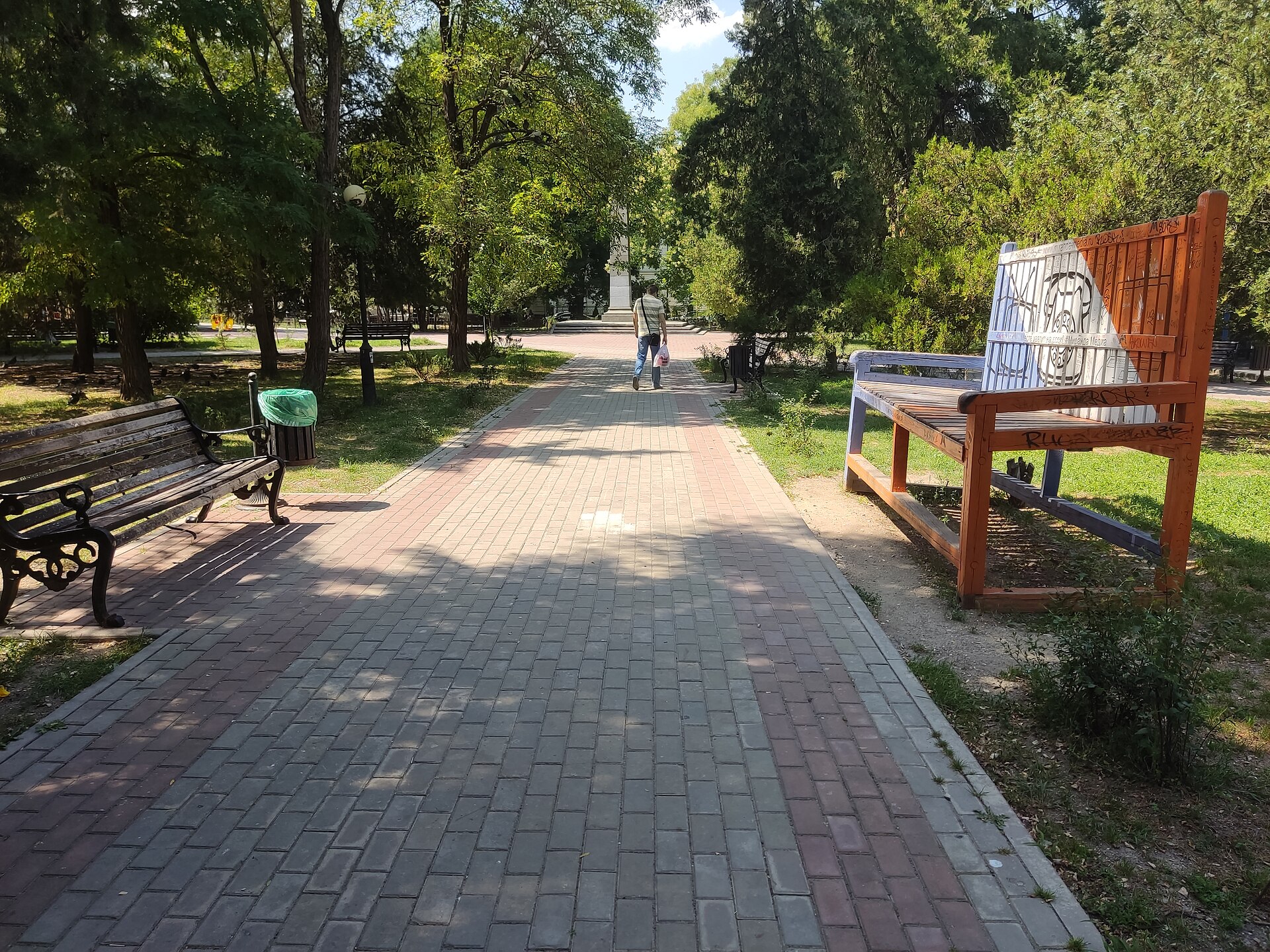
Seminary Square is one of those quiet corners of Simferopol that doesn’t demand attention but lingers in memory all the same. Tucked away in the heart of the city, it sits where the streets still carry the faint echo of old Tavrida, where the buildings remember a time when Simferopol was just beginning to take shape as the city it is today. The square isn’t large, but its size is deceptive—it’s easy to lose an hour or two here, watching life pass by or simply sitting on one of the benches beneath the spreading trees.
The history of this place is tied to education and faith. In the 19th century, the Tavriческая духовная семинария stood here, a school that trained clergy for the entire peninsula. More than just an institution, it was a center of intellectual and cultural life, shaping not only priests but also teachers, scholars, and public figures. The square itself came later, during the Soviet era, when the area around the former seminary buildings was landscaped. Little remains of the original seminary today—just a few of its structures, now repurposed for other uses—but its legacy lives on in the square’s name and the quiet atmosphere that still lingers.
The architecture around the square tells its own story. The old seminary buildings, constructed in the late 1800s, are classic examples of the era’s style: austere facades, tall windows, and heavy doors. They stand as a reminder that Simferopol has always been a city where different eras and cultures intertwine. Nearby, Soviet and modern buildings coexist, yet even they don’t disrupt the harmony. The square itself is where these layers of time converge—old-fashioned lampposts, contemporary benches, and a small fountain all blend together, creating a space that feels both timeless and lived-in.
Seminary Square isn’t just a patch of greenery in the city center; it’s a pause from the hustle of urban life. There are no crowds of tourists, no flashy attractions, no neon signs. Instead, there’s a hush broken only by the rustle of leaves and the occasional murmur of passersby. In summer, the shade of the trees offers respite from the heat, and the air is filled with the scent of blooming shrubs. Winter transforms the square—frost coats the branches, and the paths grow quiet, inviting slow, unhurried walks.
Locals know this square well. For some, it’s a meeting place; for others, a shortcut on the way to work or school; for a few, just a quiet corner to be alone with their thoughts. Parents often bring their children here, as the wide paths and lack of traffic make it safe. You might spot students with books or laptops on the benches, or elderly men playing chess. The square has its own rhythm, unhurried and steady, and that’s where its charm lies.
Despite its unassuming appearance, Seminary Square plays a meaningful role in the life of the city. It’s woven into the daily routines of Simferopol’s residents, a place people come to not for grand experiences but for a sense of quiet belonging. There are no towering monuments or elaborate flowerbeds here, just the kind of simplicity that’s often missing in modern cities—the feeling of home. That might be why the square is so beloved; it doesn’t try to be anything more than what it is, and in that, it finds its strength.
Walking through Seminary Square, it’s hard not to wonder about the stories this place could tell. How many people have passed through here over the decades? How many lives have intersected on these paths? How many conversations have taken place on these benches? The square’s history is the city’s history—its people, their hopes, their quiet moments. Though the seminarians and their teachers are long gone, the spirit of the past still lingers in the air, a reminder that Simferopol is more than just a modern city; it’s a place with a rich, layered past.
Seminary Square isn’t the kind of place that grabs your attention at first glance. You have to let it settle in, to feel its rhythm. There’s nothing forced about it—just trees, benches, paths, and people. But in that simplicity lies its beauty. The square doesn’t try to impress or dazzle; it simply exists—quiet, unassuming, real. And perhaps that’s why it means so much to those who know it.