The Sakha Academic Theatre named after Oiunsky is a place where language becomes a bridge between cultures, not a barrier. It stands as the world’s only professional theatre where performances unfold entirely in the Yakut language, a fact that makes it unique not just in Russia but globally. Yet its significance goes far beyond linguistic curiosity. This is the principal theatre of the Republic of Sakha, a stage where centuries of oral tradition meet contemporary storytelling, and where the spirit of a people is preserved in every gesture, note, and word.
The theatre’s origins trace back to the early 20th century, a time of cultural awakening in Yakutia. In 1920, a city theatre opened in Yakutsk with two troupes—one performing in Russian, the other in Yakut. Five years later, on October 17, 1925, the Yakut troupe staged its first independent production, Nikolai Neustroev’s comedy *Kuhagan Tyyn* (*The Evil Spirit*), marking the birth of what would become the Sakha Theatre. The early years were shaped by figures like Anempodist Sofronov-Alampa, a poet and playwright who served as its first director, and Dmitri Bolshev, who had organized amateur theatre in the Vilyuy region. The arrival of the first professional director, a graduate of GITIS, in 1933, brought a new level of craft to the stage. By 1934, the theatre was named after Platon Oiunsky, a towering figure in Yakut culture—a poet, playwright, and statesman who helped shape the republic’s identity. The theatre’s evolution continued in 1990 when it officially became the Sakha Theatre, and in 1995, it earned the prestigious title of academic theatre.
The 1960s and 70s marked a turning point under the leadership of Fedot Potapov, who introduced classical productions to the repertoire. Plays like Lev Gabyshev’s *Neighbors* and *The Stars of Abaga*, as well as Alejandro Casona’s *Trees Die Standing*, brought a new depth to the theatre’s work. But it was the era of Andrei Borisov, artistic director from 1983 to 2010, that truly expanded its horizons. His productions, including *The Desired Blue Shore* based on Chingiz Aitmatov’s work and a Yakut-language adaptation of *King Lear*, brought the theatre international recognition. Many of Yakutia’s most celebrated actors, including People’s Artists Anna Kuzmina, Afanasy Petrov, and Maria Varlamova, emerged from Borisov’s troupe. Even today, the theatre remains a training ground for talent—Gerasim Vasiliev, the current artistic director of the Theatre of Olonkho, began his career here.
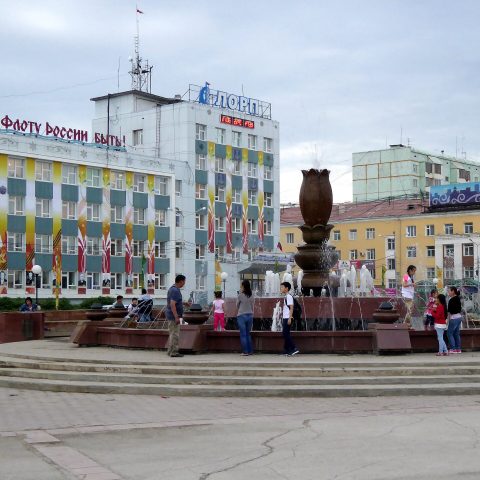
The building itself is a quiet presence in the heart of Yakutsk, just off Lenin Square. Its unassuming exterior belies the richness of what happens inside. The architecture is functional rather than grand, designed to serve the performances rather than overshadow them. Over the decades, the theatre has become a cultural hub, not just for Yakut audiences but for anyone interested in the intersection of tradition and modernity. The stage has hosted everything from ancient epics to Shakespeare, all filtered through the lens of Yakut culture. The music, movement, and visual storytelling often carry as much weight as the words, making the performances accessible even to those who don’t speak the language.
What makes the Sakha Theatre special is how it balances preservation with innovation. The Yakut language, once marginalized, is given pride of place here, yet the stories told are universal. Many productions draw from the *olonkho*, the traditional Yakut epic, a form recognized by UNESCO as a masterpiece of oral heritage. These tales, passed down through generations, find new life on stage, reimagined for contemporary audiences. At the same time, the theatre engages with global classics, proving that Yakut culture is not isolated but part of a broader human conversation. The result is a repertoire that feels both deeply local and expansively worldly.
Attending a performance here is less about understanding every word and more about experiencing the atmosphere. The rhythm of the language, the expressiveness of the actors, and the live music—often featuring traditional instruments like the *khomus* (jaw harp) or *kyryympa*—create a sensory immersion that transcends translation. For those who need it, Russian synopses are usually available, and some productions offer simultaneous translation. The theatre’s schedule is varied, with everything from experimental works to beloved classics, but tickets for premieres can sell out quickly, so it’s worth checking the program in advance.
The Sakha Theatre is more than a venue; it’s a living archive of a culture that has endured despite centuries of upheaval. In the Soviet era, Yakut identity was often suppressed, yet the theatre became a space where language and tradition could survive. Today, it stands as a testament to resilience, a place where the past is not just remembered but actively reimagined. For visitors, it offers a rare chance to witness a culture in dialogue with itself—rooted in its own stories yet unafraid to engage with the wider world. Whether you come for the history, the artistry, or simply the curiosity of seeing theatre in a language you don’t speak, the experience lingers long after the final bow.