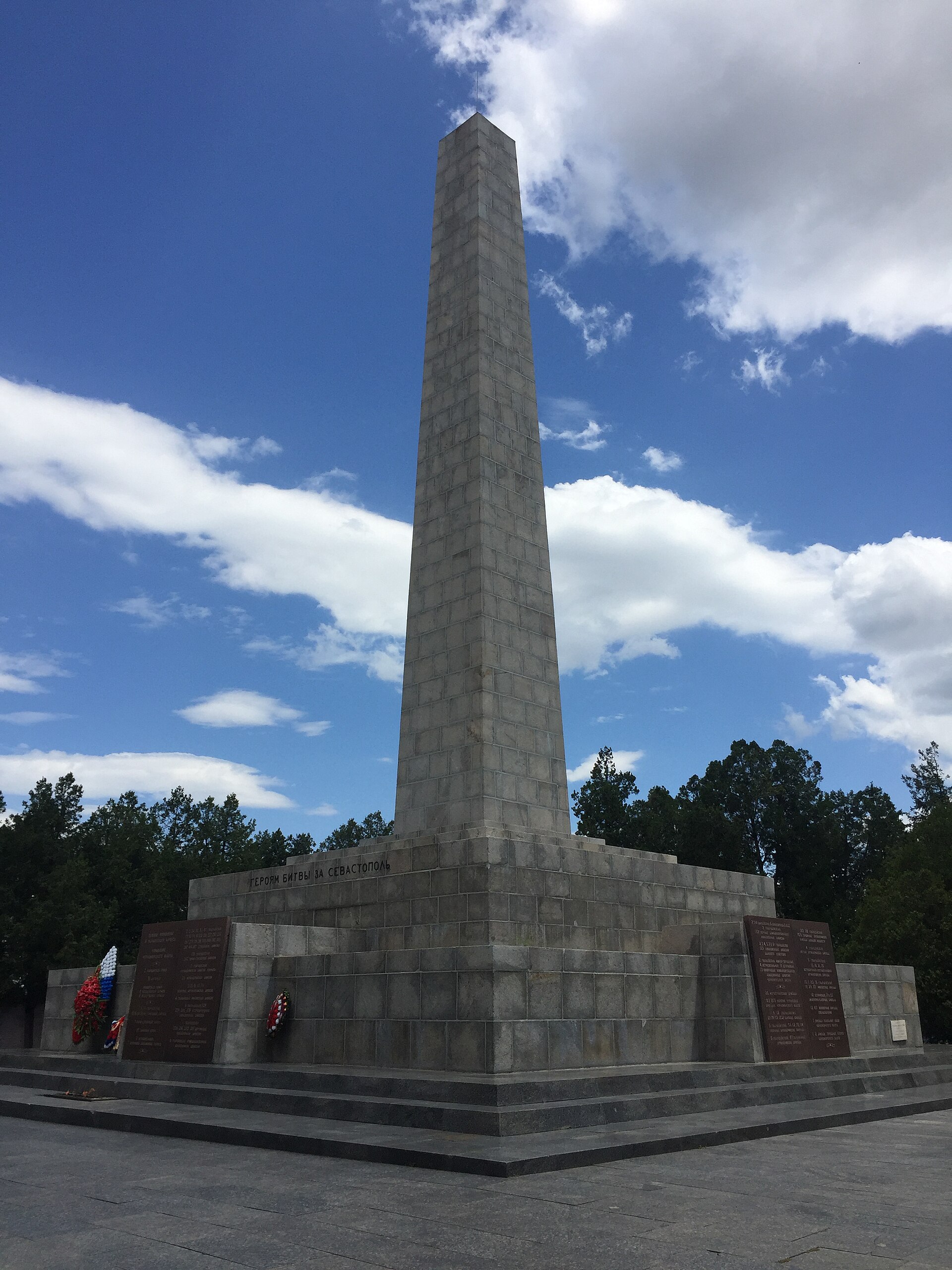
Sapun Mountain is one of those places in Crimea where history isn’t just remembered—it lingers in the very ground beneath your feet. Just outside Sevastopol, this modest height witnessed one of the most brutal chapters of World War II, when Soviet forces fought fiercely in May 1944 to liberate the peninsula from Nazi occupation. Today, the mountain is more than a memorial; it’s a place where the weight of the past meets the quiet beauty of the present, offering views that make the cost of victory impossible to ignore.
The ascent begins along a winding road that cuts through low hills, lined with memorial plaques and markers honoring the soldiers who fought here. The mountain itself isn’t particularly tall, but its slopes are scarred with trenches and foxholes, left almost exactly as they were in 1944. These aren’t reconstructed relics; they’re the real thing, preserved to show what war looked like up close. Walking among them, you can almost hear the echoes of the past—the distant crack of gunfire, the shouts of orders, the silence between battles.
At the summit stands a towering memorial complex dedicated to the heroes of the assault. The centerpiece is a dramatic sculpture of Soviet soldiers mid-charge, their figures frozen in a moment of raw determination. Nearby, an eternal flame flickers on days of remembrance. From here, the view stretches across Sevastopol Bay, rolling green hills, and the distant shimmer of the Black Sea. On clear days, the horizon feels endless, as if time itself has paused to let you take it all in.
Sapun Mountain is inseparable from the story of Sevastopol’s defense. During the 250-day siege of 1941–1942, the city held out against overwhelming odds before finally falling to the enemy. Two years later, when Soviet troops launched their counteroffensive, this hill became the linchpin of the battle. German fortifications here were formidable—concrete bunkers, minefields, barbed wire. The assault was costly, but capturing Sapun Mountain broke the enemy’s defenses and paved the way for the city’s liberation.
Nowadays, the mountain is quiet. Visitors stroll along the paths, locals walk their dogs, and school groups arrive for guided tours. An open-air museum displays the military hardware of the era—tanks, artillery pieces, mortars—some still bearing the scars of battle, others restored to their original condition. They stand where they once fired, creating a strange sense of connection to the past. It’s not a sanitized exhibit; it’s a place where history feels tangible.
The atmosphere is especially poignant in May, when Victory Day draws crowds to honor the fallen. Veterans, families, and strangers gather to lay flowers, listen to wartime songs, and reflect. But even on ordinary days, the mountain retains its solemnity. It’s not a tourist attraction in the usual sense—it’s a living monument, still serving its purpose: to remind us of what must never be forgotten.
For many, visiting Sapun Mountain is less about sightseeing and more about personal reflection. There are no flashy attractions or crowds here, just the wind rustling through the grass, the distant hum of the city below, and the quiet understanding that history isn’t just something that happened—it’s something that lingers. It’s a place to think about how fragile peace can be and how much it’s worth protecting.
Sapun Mountain wasn’t chosen as a symbol of courage by accident. Its story is woven into the larger history of the country, and it endures in the memories of those who come here. Whether it’s your first visit or your tenth, there’s always something new to notice—the way the light falls on the trenches, the sound of the sea in the distance, the weight of the silence. It may not be Crimea’s most famous memorial, but it’s one of its most honest.