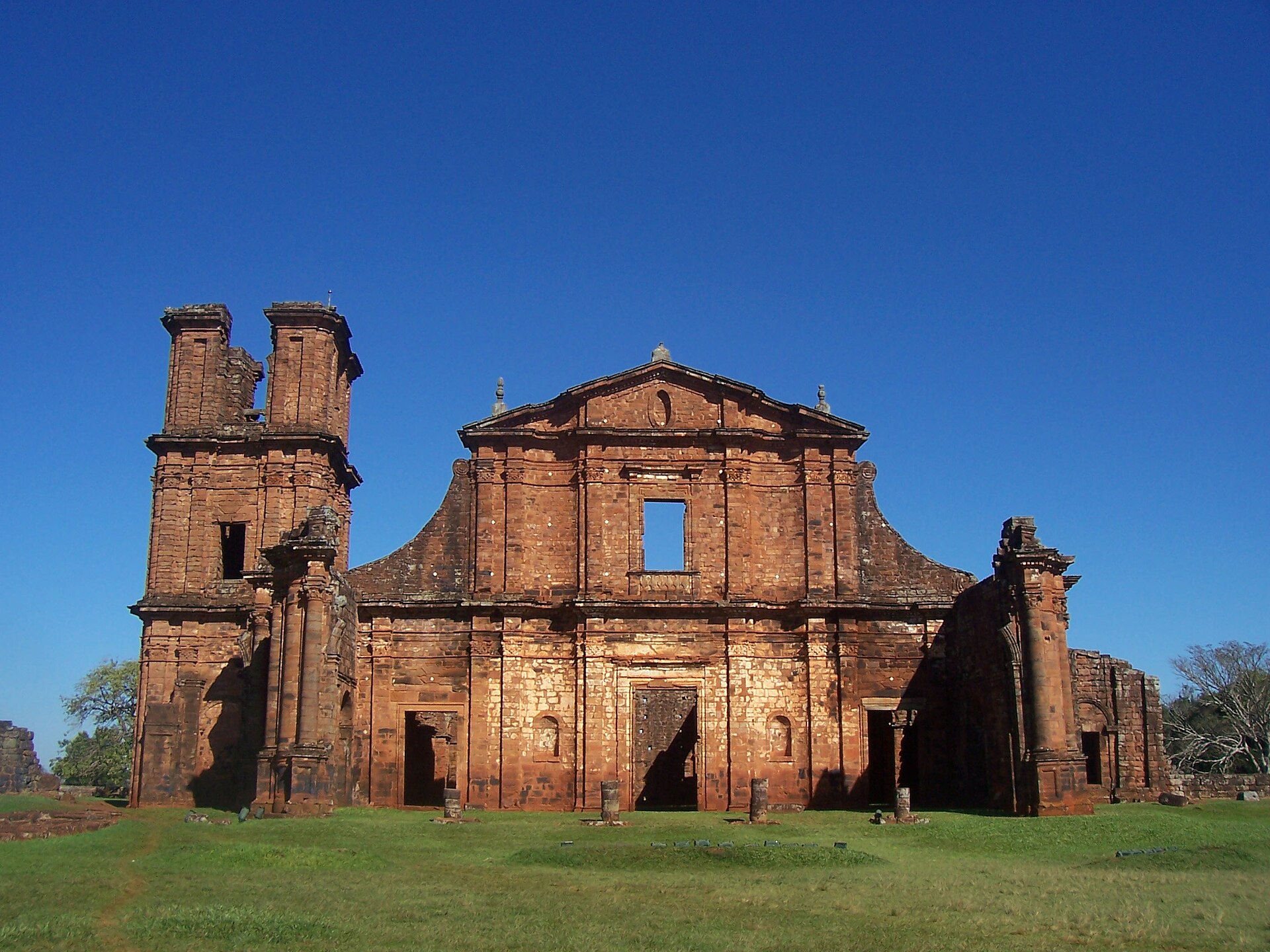
São Miguel das Missões is a place where the past lingers in the quiet rustle of wind through the ruins, as if time itself paused here centuries ago. Nestled in the rolling hills of southern Brazil, in the state of Rio Grande do Sul, this archaeological site was once part of a vast network of Jesuit missions established in the 17th and 18th centuries. These missions, known as reductions, were built to convert the indigenous Guaraní people to Christianity, but they became far more than religious outposts—they were centers of culture, craftsmanship, and community.
The story of São Miguel das Missões begins with the arrival of Jesuit missionaries in South America. Their goal was to create self-sustaining settlements where the Guaraní could live under the guidance of the Church, learning European trades, agriculture, and religious practices. The missions followed a similar layout: a central square surrounded by a church, living quarters, workshops, and schools. São Miguel was one of the largest and most prosperous of these reductions, a thriving hub where indigenous traditions blended with European influences. For a time, it flourished, but its prosperity was short-lived.
By the mid-18th century, tensions between the Jesuits and colonial powers reached a breaking point. The Portuguese and Spanish authorities, wary of the Jesuits' growing influence, accused them of creating an independent state within the missions. In 1756, after years of conflict known as the Guaraní War, São Miguel was abandoned and left to decay. The once-bustling settlement fell into ruin, its people scattered, and its buildings slowly reclaimed by nature. For generations, the site lay forgotten, until its historical significance was recognized in the 20th century.
Today, the ruins of São Miguel das Missões stand as a haunting reminder of its former grandeur. The most striking remnant is the church, a masterpiece of Baroque architecture with subtle indigenous touches. Though its facade is weathered by time, the intricate carvings and structural details still hint at the skill of the Guaraní craftsmen who built it. Nearby, the outlines of workshops, living quarters, and a bell tower can be seen, their crumbling walls telling a silent story of the lives once lived here.
The setting of São Miguel adds to its mystique. The ruins sit on a gentle rise, surrounded by grassy slopes and scattered trees, creating an atmosphere of serene isolation. As the sun sets, the stones take on a warm, golden hue, and the long shadows seem to whisper of the past. It’s easy to imagine the sounds of daily life—the clatter of tools in the workshops, the murmur of prayers in the church, the laughter of children playing in the square—fading into the quiet of history.
A small museum near the ruins houses artifacts uncovered during excavations: pottery, tools, religious objects, and other remnants of mission life. The exhibits offer a glimpse into the daily routines of the Guaraní and the Jesuits, from the crafts they practiced to the ways they adapted to one another’s cultures. Though modest in size, the museum provides context, helping visitors understand the role these missions played in shaping the region.
São Miguel das Missões is more than just a historical site; it’s a place where the complexities of history come alive. It speaks to the collision of cultures, the ambitions of empire, and the resilience of those who lived here. Walking among the ruins, one can’t help but reflect on the fragility of human endeavors—how even the most ambitious projects can fade, yet leave behind echoes of their existence.
Visiting São Miguel is a bittersweet experience. There’s a sense of loss in seeing the grandeur of the past reduced to ruins, but also a deep admiration for the people who built and sustained this place. It’s a reminder that history isn’t just about the structures we leave behind, but the lives lived within them—the faith, the labor, the hopes that endure long after the stones have crumbled.