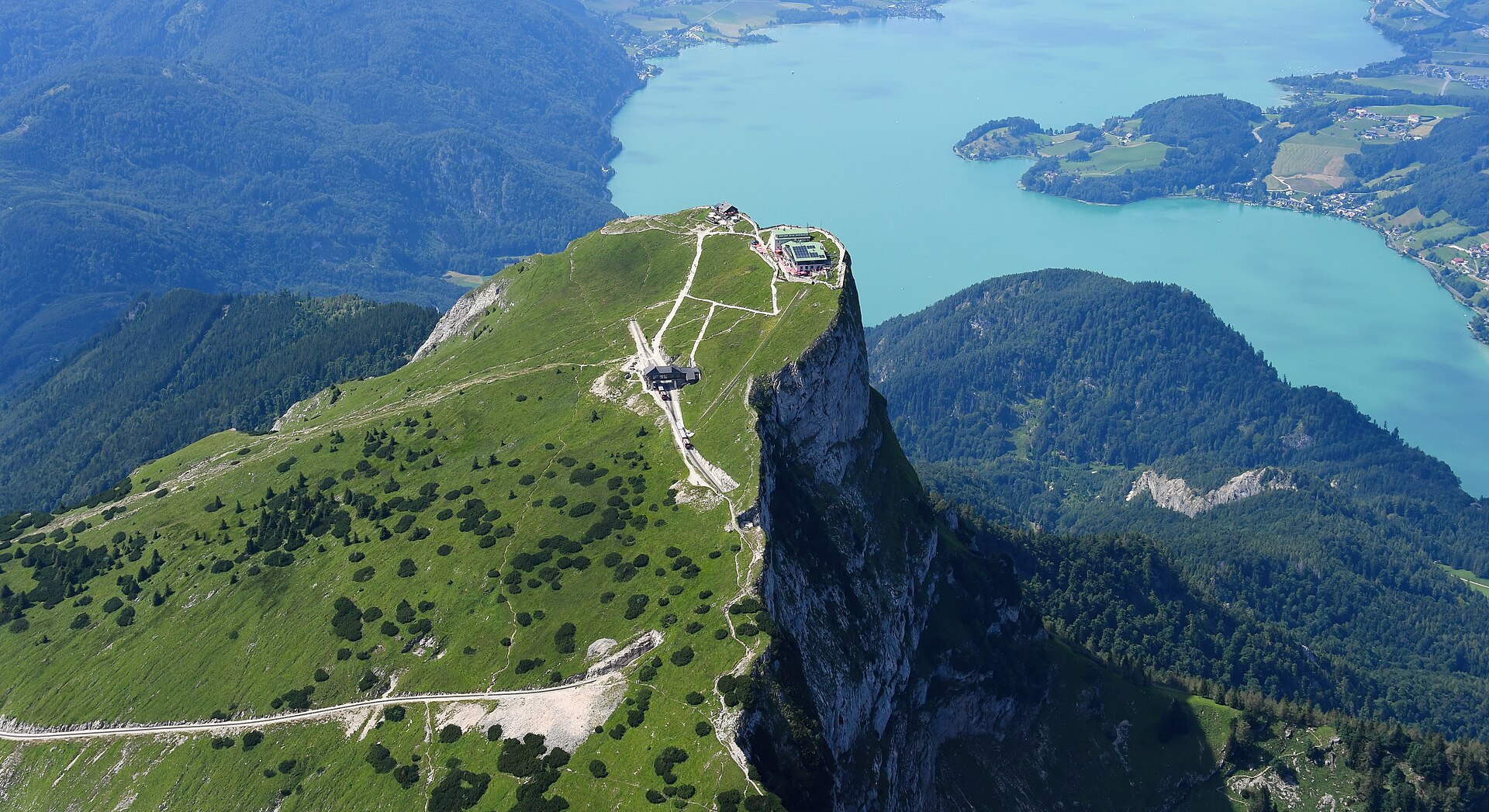
Schafberg isn’t just a mountain—it’s the quiet backbone of Hallstatt, the silent witness to centuries of life unfolding below. From the village, it looms over the lake like a guardian, its slopes steep enough to make the climb feel like a proper journey, not just a walk. At just under seventeen hundred meters, it’s modest by Alpine standards, but its presence is anything but. The mountain has always been more than scenery; it shaped the rhythm of this place long before tourists arrived with their cameras.
The easiest way up is by train, and that journey alone is worth the trip. The Schafbergbahn, one of the oldest cogwheel railways in the world, has been climbing these slopes since 1893. The track winds upward in tight curves, hugging the mountainside so closely that at times it feels like the train might tip right over the edge. The original steam locomotives were replaced by electric ones decades ago, but the experience hasn’t lost its charm. The slow ascent—forty-five minutes of creaking metal and shifting views—feels like stepping into the past. Below, the forest thins out, giving way to rocky outcrops, and then, suddenly, the lake appears, small and perfect, like something from a postcard.
At the summit, there’s little to distract from the view. A small hotel, a tiny church, and a handful of benches are all that stand between you and the vastness of the Alps. On clear days, the horizon stretches endlessly, the jagged peaks of the Dachstein range cutting into the sky. The air is thinner up here, crisper, carrying the scent of pine and damp earth. In winter, the silence is absolute, broken only by the occasional crunch of snow underfoot. Summer brings a different kind of quiet, the kind that settles into your bones as you watch the light change over the valley.
The mountain has always been tied to Hallstatt’s identity. Centuries ago, salt was king here, and Schafberg was part of that story. The mines that honeycombed its slopes were once the lifeblood of the region, their tunnels stretching deep into the rock. The salt trade made Hallstatt wealthy, but it also bound the village to the mountain in ways that went beyond economics. Even after the mines closed, the connection remained. Locals still call themselves *Salzkammergut*—salt workers—though these days, their work is more likely to involve serving coffee to visitors than hauling brine from the earth.
The railway itself is a marvel of nineteenth-century engineering. Building it wasn’t just a matter of laying track; the slope was so steep that engineers had to design a system where the train’s wheels literally grip the rails to keep from sliding back down. The original wooden carriages have been replaced, but the route hasn’t changed. The train still climbs at the same deliberate pace, as if in no hurry to reach the top. For passengers, the ride is a lesson in patience and perspective. The higher you go, the more the world below shrinks, until Hallstatt looks like a toy village and the lake like a puddle of blue glass.
The hotel at the summit has been there almost as long as the railway. It’s the kind of place that feels untouched by time—wooden beams, worn furniture, a fireplace that’s probably seen a century’s worth of stories. The rooms are simple, the food hearty, the kind of meal you’d want after a long climb. In winter, staying here feels like being wrapped in a thick blanket. The wind howls outside, but inside, it’s warm, the kind of warmth that comes from a place that’s been welcoming travelers for generations. Even in summer, there’s a sense of isolation, as if the rest of the world has faded away.
For those who prefer to walk, the trails up Schafberg offer a different kind of reward. The paths aren’t technical, but they’re steep enough to make your legs burn. The higher you climb, the more the landscape opens up—dense forests give way to alpine meadows, then to bare rock and sky. There’s a freedom in it, the kind that comes from putting one foot in front of the other until the noise of everyday life falls away. In winter, the same trails become routes for skiers and snowboarders, though you’re more likely to share the slope with a chamois than with another person.
What makes Schafberg special isn’t just the view or the history, but the way it makes you feel. There’s a stillness here that’s hard to find in the village below, where tourists cluster around the market square and the famous bone house. Up here, the only sounds are natural—the wind, the distant call of a bird, the occasional rumble of the train. It’s a place that invites you to slow down, to look around, to remember that mountains aren’t just things to conquer but to understand.
From Hallstatt, Schafberg is always in sight, a constant presence on the horizon. For locals, it’s more than a landmark; it’s a reminder of where they come from. The mountain has seen generations come and go, has watched the village grow from a salt-mining outpost to a place that draws visitors from around the world. To stand on its summit is to stand in the middle of that story, to feel the weight of time in the wind and the rock beneath your feet. It’s the kind of place that stays with you long after you’ve left.