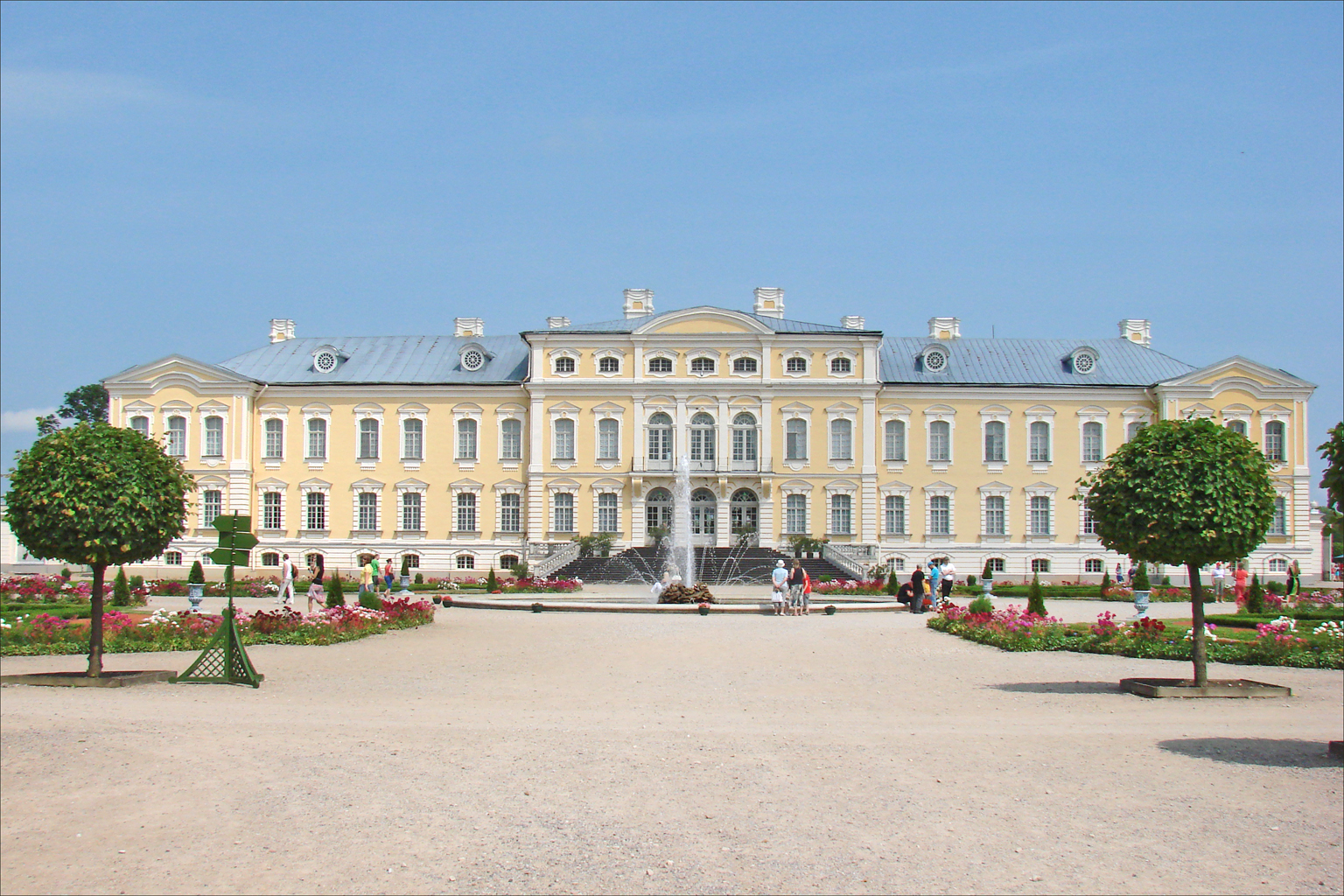
Rundāle Palace sits quietly in the Latvian countryside, far from the well-trodden paths of mass tourism. Nestled in a gentle valley along the Lielupe River, about half an hour’s drive from Bauska, it feels more like a private estate than a museum. There are no crowded halls or overwhelming displays here—just the lingering presence of the 18th century, when the palace was built for Ernst Johann Biron, a favorite of Russian Empress Catherine the Great. The place carries the weight of history not through grand narratives or dry facts, but through its very atmosphere, as if the past has settled into the walls and the surrounding park like dust on old bookshelves.
The palace is a masterpiece of Baroque architecture, though not the kind that overwhelms with its grandeur. Designed by Francesco Bartolomeo Rastrelli—the same Italian architect behind St. Petersburg’s Winter Palace and Tsarskoye Selo—Rundāle is a more intimate take on the style. Rastrelli worked on a smaller scale here, but with no less care for detail. The white facades, gilded stucco, and tall windows that mirror the park create a sense of lightness, almost as if the building is floating above the ground. The most striking space is the Golden Gallery, where intricate frescoes cover the walls and ceiling, and mirrors stretch the room into infinity. It’s easy to imagine the aristocrats who once gathered here, their voices echoing under the painted skies.
Unlike many palaces that feel like museums frozen in time, Rundāle was built as a summer residence, and that purpose still lingers in its design. The interiors are bright and elegant, focused on comfort rather than ostentation. The grand halls retain their original Dutch-tiled stoves, Rococo furniture, Chinese vases, and tapestries—objects that weren’t just for show but were actually used by the people who lived here. The duchess’s boudoir, with its soft pink walls and delicate moldings, feels particularly personal, a small sanctuary where every detail seems chosen for warmth and intimacy. Even the way the light falls through the windows suggests a place meant for living, not just for display.
The palace park is just as thoughtfully designed. Laid out in the formal French style, with straight avenues, manicured hedges, and fountains, it somehow avoids feeling rigid. The trees are planted in a way that creates natural alcoves, inviting visitors to sit on a bench and watch the water or simply enjoy the quiet. In summer, the air is thick with the scent of roses and damp earth, while the sound of trickling fountains blends with the rustling leaves. Autumn brings a different mood—softer, quieter, with the crunch of fallen leaves underfoot and the long, empty paths stretching into the distance. It’s a place where time seems to slow down, where you can wander without purpose and still feel like you’ve found something.
Rundāle’s history hasn’t always been kind. After Biron’s fall, the palace changed hands multiple times, serving as a military hospital, a school, and even a grain warehouse. During World War II, it housed a German headquarters, and in the decades that followed, it fell into disrepair. Restoration began in the 1960s and continues today, with some rooms still waiting for their turn. But this imperfection is part of the palace’s charm. It doesn’t feel like a flawless monument; it feels lived-in, as if the layers of its past are still visible beneath the surface. The cracks in the plaster and the worn edges of the furniture tell their own stories, making the place feel more real than many perfectly preserved historical sites.
Today, Rundāle is more than just a museum. It’s a place where history is brought back to life through concerts, festivals, and even weddings. In the summer, visitors can attend balls dressed in period costumes, while winter brings Christmas markets and candlelit evenings. These events don’t feel like staged performances—they’re more like an attempt to restore the palace’s original purpose as a gathering place, a home for celebration and connection. In that sense, Rundāle is unique. It’s not just an architectural landmark; it’s a house that still breathes, still welcomes people within its walls.
For first-time visitors, Rundāle might come as a surprise. It’s not as imposing as Peterhof or as fairy-tale-like as the châteaux of the Loire Valley. But that’s precisely what makes it special. There’s no pressure here, no sense of history bearing down on you with its grandeur. Instead, the palace wraps around you gently, like an old story you’ve stumbled upon by accident. You can wander through the empty halls, sit on the terrace overlooking the flowerbeds, or lose yourself in the park without feeling like you’re following a script. It’s the kind of place where you might glance up at a fresco and suddenly feel connected to the people who once stood in the same spot, centuries ago.
The surrounding countryside is just as unassuming. Small villages dot the landscape, where life moves at its own unhurried pace. The locals treat the palace with quiet respect, but it’s not some untouchable relic to them—it’s simply part of their world, as much a fixture of the landscape as the river that flows nearby. Maybe that’s why Rundāle has never become a major tourist hotspot. It doesn’t try to impress or dazzle; it just exists, as naturally as the trees in the park or the fields beyond.
If you find yourself in Latvia and want to experience something that feels authentically Latvian yet deeply connected to European history, Rundāle is a perfect choice. There are no crowds, no rush, no obligatory photo ops. Just silence, beauty, and the sense that time here moves to its own rhythm. Perhaps that’s why the palace draws people in—it offers a chance to pause, to step outside the usual tourist experience, and to feel, even for a moment, like you’ve touched something timeless.