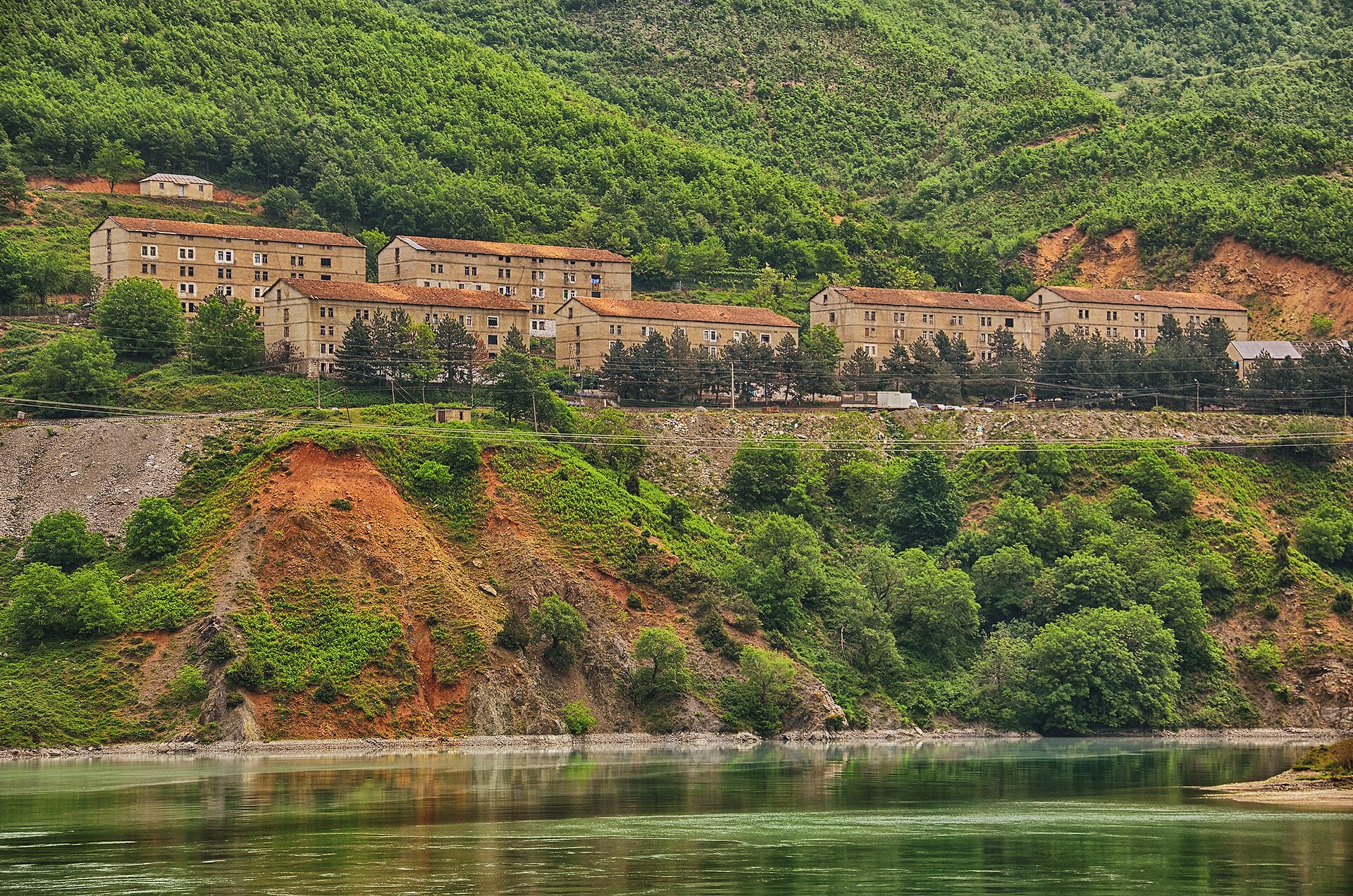
The Valbona River cuts through the heart of northern Albania like a vein of liquid silver, winding between the towering peaks of the Accursed Mountains. This is a place where the water runs so clear it feels almost unreal, as if the river itself is holding its breath. The current shifts from gentle ripples over smooth stones to sudden, foaming rushes where the valley narrows, carving its way through limestone and time. For centuries, the Valbona has been both a lifeline and a boundary—sustaining villages with its waters while isolating them from the outside world. Even now, its banks remain quiet, untouched by the kind of development that has reshaped so many other European landscapes.
The river begins high in the Valbona Pass, where melting snow from the jagged peaks of the Albanian Alps feeds its flow. By the time it reaches the valley floor, it has gathered strength, tumbling over boulders and pooling in deep, emerald basins where trout dart beneath the surface. The water is cold year-round, a shock to the skin even in summer, but that hasn’t stopped locals and visitors from wading in or sitting on the sun-warmed rocks to let the current rush past their feet. In spring, the river swells with snowmelt, turning into a roaring force that echoes through the valley. By late summer, it settles into a calmer rhythm, its surface reflecting the steep slopes of beech and pine that rise on either side.
The villages along the Valbona have always lived in its shadow, their wooden houses clinging to the hillsides as if afraid to get too close. Bajram Curri, the nearest town, is a quiet place where life moves at the pace of the river—slow, deliberate, and tied to the seasons. The people here are mostly farmers and shepherds, their lives shaped by the land and the water. In the past, the river was a natural barrier, protecting the valley from invaders but also making trade and travel difficult. The first proper road into the region wasn’t built until the 20th century, and even now, the journey to Valbona feels like stepping into another era. The road winds along the riverbank, offering glimpses of waterfalls and cliffs before disappearing into the forest.
For those who venture beyond the villages, the Valbona offers a landscape of raw, untamed beauty. Hiking trails follow the river’s course, leading to hidden waterfalls and alpine meadows where wildflowers bloom in summer. One of the most striking features is the canyon near Dragobia, where the river narrows between sheer rock walls, creating a natural corridor that feels almost secret. The water here is deeper, darker, its surface broken only by the occasional leap of a fish or the ripple of a passing breeze. Further upstream, the valley opens up into wider pastures, where shepherds graze their flocks and the sound of cowbells mingles with the rush of the current.
The Valbona has also been a witness to history, though much of it remains unrecorded. The Accursed Mountains have long been a refuge for those fleeing conflict, and the river’s remote location made it a natural hideaway. During World War II, partisan fighters used the valley as a base, moving through the forests and along the riverbanks to avoid detection. Even earlier, the region was part of the Ottoman Empire, though its isolation meant that many traditions and ways of life remained unchanged for generations. Today, the only signs of the past are the occasional stone bridge or the ruins of an old mill, half-swallowed by the forest.
What makes the Valbona special is not just its scenery, but the way it feels alive. The river is never still, never silent—it hums with the sound of water over stone, the rustle of leaves, the distant call of a bird. In the early morning, mist rises from its surface, curling around the trees like smoke. By midday, the sun turns the water into a ribbon of light, and in the evening, the valley falls into shadow, the river darkening to a deep, reflective blue. There are no grand monuments here, no famous landmarks, just the quiet persistence of nature. That’s what draws people back, year after year—the sense that this place exists outside of time, that the Valbona has been flowing like this for centuries and will continue long after we’re gone.
For now, the river remains a well-kept secret, known mostly to hikers, adventurers, and those who grew up along its banks. There are no crowds, no souvenir stands, no signs telling you where to go or what to feel. The Valbona doesn’t offer easy answers or Instagram moments; it asks for patience, for stillness, for the willingness to simply be in a place that doesn’t need you. And if you stay long enough, you might start to understand why the people here have never wanted to leave. The river gives them everything they need—water, food, a sense of belonging. In return, they give it their silence, their respect, and the quiet knowledge that some places are too precious to change.