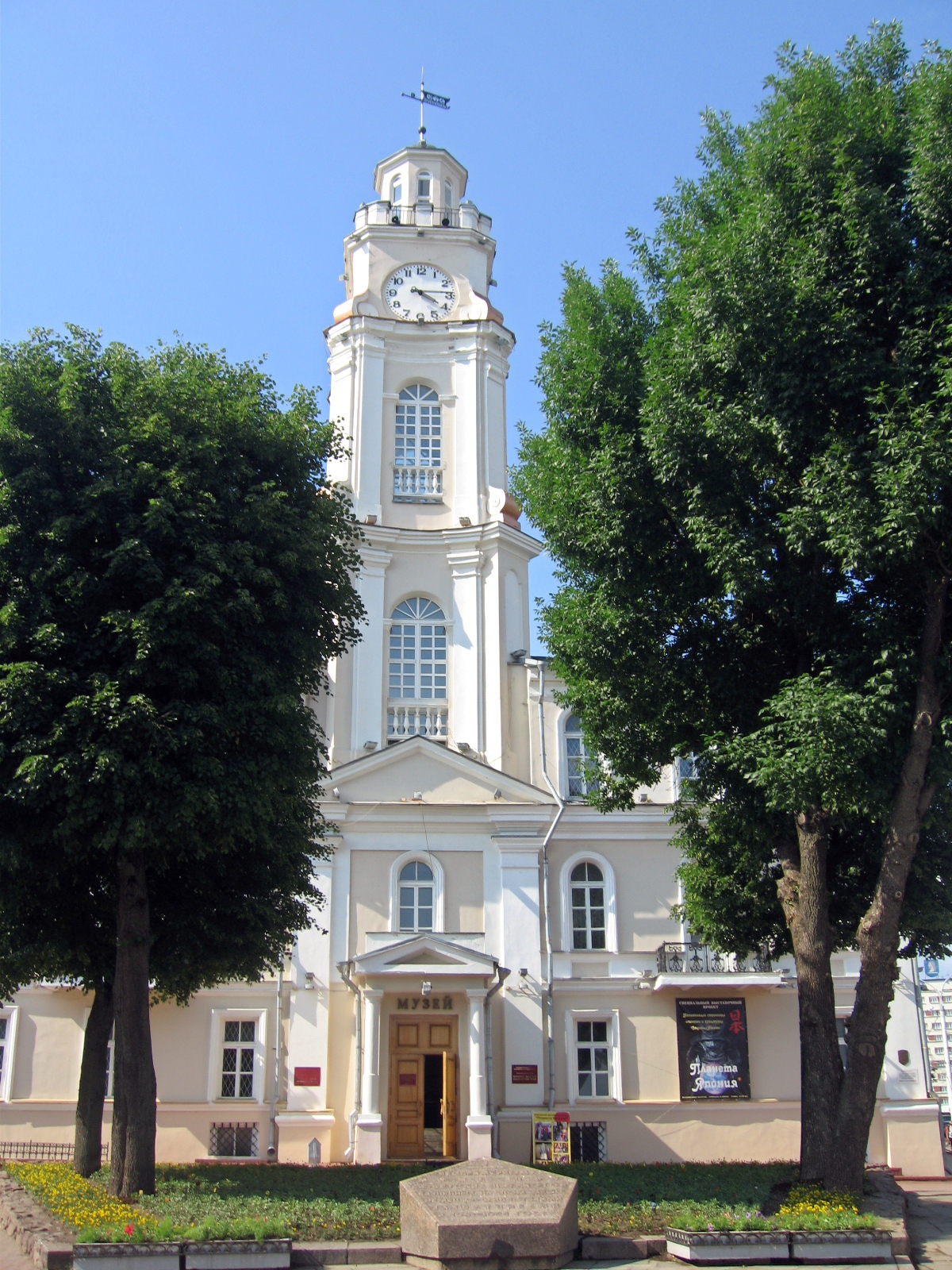
Vitebsk’s town hall is one of those places where history feels almost tangible, as if the past hasn’t quite settled into the quiet dignity of a museum piece but lingers in the air like the echo of footsteps on cobblestones. Built in the late 18th century, it stands in the heart of the city, a modest yet striking example of Baroque architecture with a touch of local character. The building has seen Vitebsk grow from a provincial town into a cultural hub, surviving wars, fires, and the shifting tides of empires. Its white facade, crowned with a clock tower, has become a symbol of the city—not just as an administrative center, but as a witness to the everyday lives of generations of its residents.
The town hall was originally constructed in 1775, after Vitebsk received its Magdeburg rights, a medieval privilege that allowed towns to govern themselves and hold markets. This was a time when the city was part of the Polish-Lithuanian Commonwealth, and the new status brought a wave of urban development. The building was designed to reflect the town’s newfound importance, though its scale was never grandiose. Unlike the towering town halls of Western Europe, Vitebsk’s version is more restrained, almost unassuming, yet it carries the weight of its purpose with quiet confidence. The clock tower, added later, became a focal point for the city, its chimes marking the rhythm of daily life.
Over the centuries, the town hall has been rebuilt and restored multiple times, each iteration leaving its mark on the structure. The most significant changes came in the 19th century, when Vitebsk was under Russian rule. The building was expanded, its facade simplified, and the clock tower took on its current form. These alterations reflected the changing tastes of the time, but they also preserved the essence of the original design. Even today, if you look closely, you can see the layers of history in the stonework—the way the newer sections blend with the old, not seamlessly, but with a kind of honest imperfection that tells a story.
Inside, the town hall is less about opulence and more about function. The interiors have been adapted over the years to serve different purposes, from municipal offices to cultural spaces. There’s a certain austerity to the rooms, with high ceilings and large windows that let in plenty of light, but little in the way of ornate decoration. This simplicity isn’t a lack of ambition; it’s a reflection of the city’s pragmatic spirit. Vitebsk has always been a place where art and everyday life intersect, and the town hall embodies that balance. It’s not a palace, but it doesn’t need to be—its value lies in its connection to the people who have walked its halls.
The square in front of the town hall has long been the heart of Vitebsk’s public life. In the past, it was where markets were held, where announcements were read, and where the town gathered for celebrations or protests. Today, it’s a place where locals and visitors alike pause to take in the view, perhaps grabbing a coffee from a nearby café or simply watching the world go by. The square has a relaxed, unhurried feel, as if it’s still catching its breath from the centuries of activity that have taken place here. On summer evenings, the sound of music often drifts from the open-air concerts that are held nearby, adding a modern layer to the square’s historic atmosphere.
What makes Vitebsk’s town hall particularly interesting is how it fits into the broader story of the city. Vitebsk has always been a place of contrasts—between East and West, tradition and innovation, quiet provincial life and bursts of artistic energy. The town hall stands at the center of these tensions, not as a grand statement, but as a steady presence. It’s been a backdrop to some of the city’s most famous moments, from the early 20th-century avant-garde art scene that flourished here to the more somber periods of war and occupation. Yet it’s also been a part of the mundane, the everyday routines that make up the fabric of any city.
In many ways, the town hall is a microcosm of Vitebsk itself. It’s not the most famous landmark in Belarus, nor is it the most visually spectacular. But that’s part of its charm. There’s a sense of authenticity here, a feeling that this is a place that has grown organically over time, shaped by the people who have lived and worked within its walls. The building doesn’t demand attention; it earns it, quietly, through its enduring presence and the stories it holds. Whether you’re interested in history, architecture, or simply soaking up the atmosphere of a city that has seen it all, the town hall offers a glimpse into the soul of Vitebsk.
If you visit, take a moment to step inside. The ground floor often hosts small exhibitions, sometimes featuring local artists or historical displays about the city. The upper floors, where the municipal offices are located, are usually off-limits to the public, but the exterior alone is worth the trip. Stand in the square and look up at the clock tower, imagining the countless times its hands have moved forward while the city around it changed. It’s a reminder that history isn’t just about grand events or famous names—it’s also about the quiet, persistent rhythm of life in a place like Vitebsk.