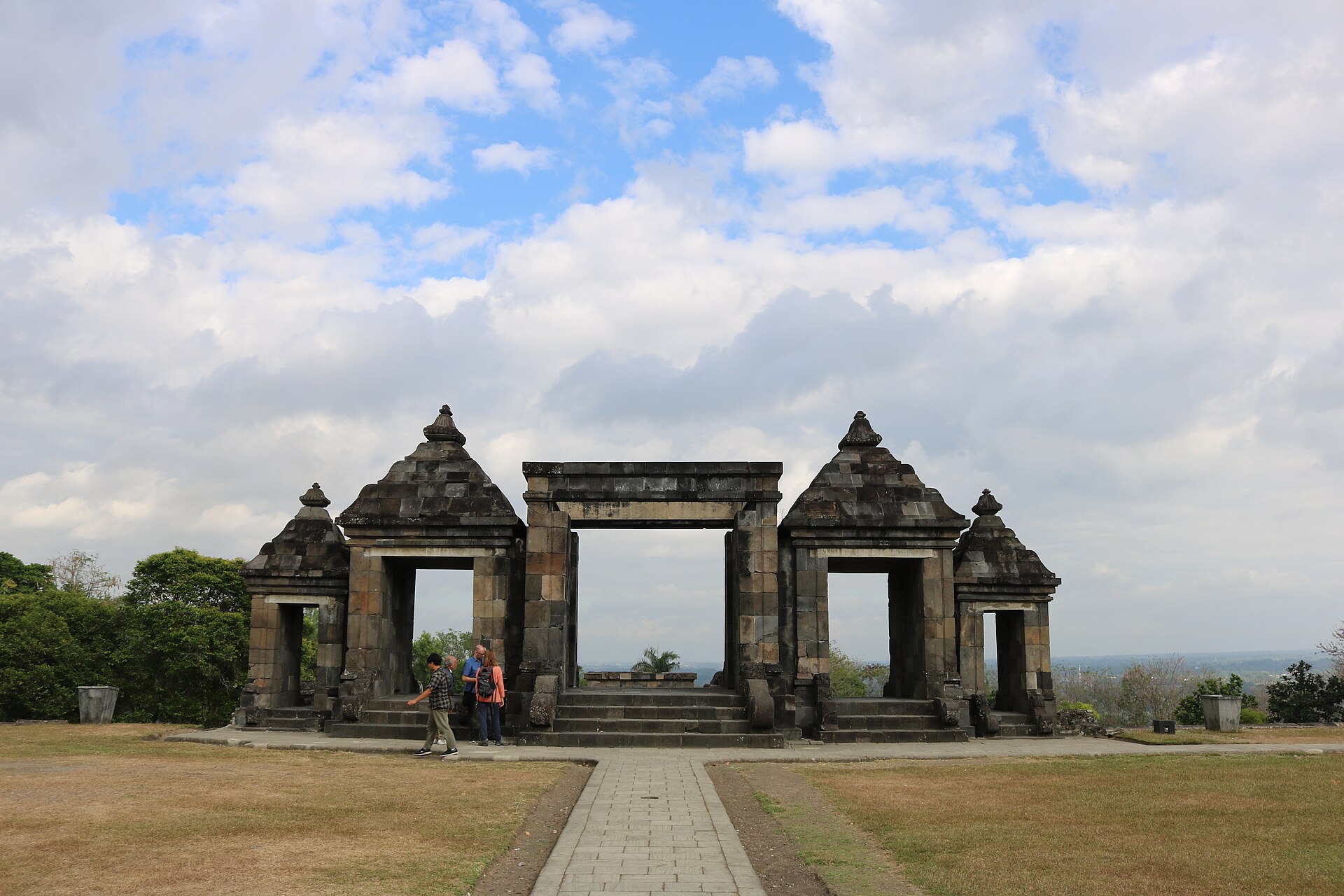
Ratu Boko isn’t just another set of ruins—it’s a place where the past lingers in the weathered stone and the sweeping terraces that stretch into the distance. Perched on a hill southeast of Yogyakarta, this archaeological site was once a palace, a fortified residence, or perhaps something else entirely. Historians still debate its original purpose: a royal retreat, a monastery, or a military stronghold. The uncertainty only adds to its allure. Unlike the more famous temples nearby, Ratu Boko doesn’t offer clear answers, just the quiet weight of history pressing against the present.
The architecture here reflects the cultural and religious blend of 8th to 10th century Java, where Buddhist and Hindu influences intertwined. The grand entrance, adorned with carvings and stone guardians, leads into what was once a sprawling complex. Today, only the foundations of walls and columns remain, but their scale is still striking. The central platform, elevated above the rest, offers a commanding view of the surrounding landscape—likely the very spot where rulers once held court or surveyed their domain. The stones here don’t just mark a place; they hint at the decisions, ceremonies, and daily life that once unfolded within these walls.
One of the most intriguing features of Ratu Boko is its series of stone-lined pools, arranged in tiers across the site. These weren’t just practical water reservoirs; they may have served ritual purposes, perhaps for purification ceremonies. After a rain, the pools still fill, their surfaces catching the golden light of sunset. The effect is almost meditative, and it’s easy to see why locals sometimes come here just to sit by the water, as if the stillness might connect them to the people who once used these same pools centuries ago.
The land around Ratu Boko is just as much a part of its story as the ruins themselves. From the hilltop, the view extends over emerald rice terraces and quiet villages, where life moves at the same unhurried pace it has for generations. In the distance, the silhouette of Mount Merapi looms—one of Indonesia’s most active volcanoes. The contrast between the ancient stones and the living landscape makes Ratu Boko feel less like a relic and more like a place where time hasn’t so much stopped as slowed down. There’s no sense of being a tourist here; instead, you’re an observer, stepping into a story that began long before you arrived.
Ratu Boko is often overshadowed by its more famous neighbors, Borobudur and Prambanan, which lie just a few kilometers away. Those sites dazzle with intricate carvings and towering spires, while Ratu Boko’s charm is quieter, more understated. It doesn’t have the same level of preservation or the crowds that flock to the other temples, and that’s part of its appeal. Without the distractions of guided tours and souvenir stalls, you can wander freely, letting your imagination fill in the gaps. What were these walls used for? Who walked these paths? The answers aren’t written in stone, but the questions linger in the air.
The best time to visit is early morning or late afternoon, when the sun is gentler and the light softens the edges of the ruins. At these hours, the site is nearly empty, and the silence makes it easier to picture the past. Sunset is particularly magical, as the sky turns shades of pink and orange, casting long, dramatic shadows across the stones. Some visitors come with cameras, hoping to capture the mood, while others simply sit on the steps, watching the light fade over the landscape. There’s no rush here, no agenda—just the slow unraveling of time.
Unlike Borobudur, with its detailed explanatory plaques, Ratu Boko offers no easy interpretations. That’s not a flaw but a feature. The lack of signage means you’re free to make your own sense of the place. Maybe you’ll imagine yourself as a ruler surveying your kingdom from the central platform, or a traveler seeking wisdom in the quiet of the pools. Or perhaps you’ll just appreciate the stillness, the way the wind moves through the grass, the way the stones seem to breathe. The site doesn’t demand your awe; it simply invites you to look closer.
Today, Ratu Boko is protected as a cultural heritage site, with ongoing efforts to preserve its structures. Yet even with these modern interventions, it retains a sense of authenticity. It doesn’t compete with Prambanan’s grandeur or Borobudur’s spiritual depth. Instead, its power lies in its simplicity—the way it grounds you in the physicality of the past. There are no grand narratives here, just earth, stone, and sky, telling their story in their own time. And maybe that’s why it feels so real. It doesn’t try to be anything more than what it is: a place where history isn’t just remembered but felt.