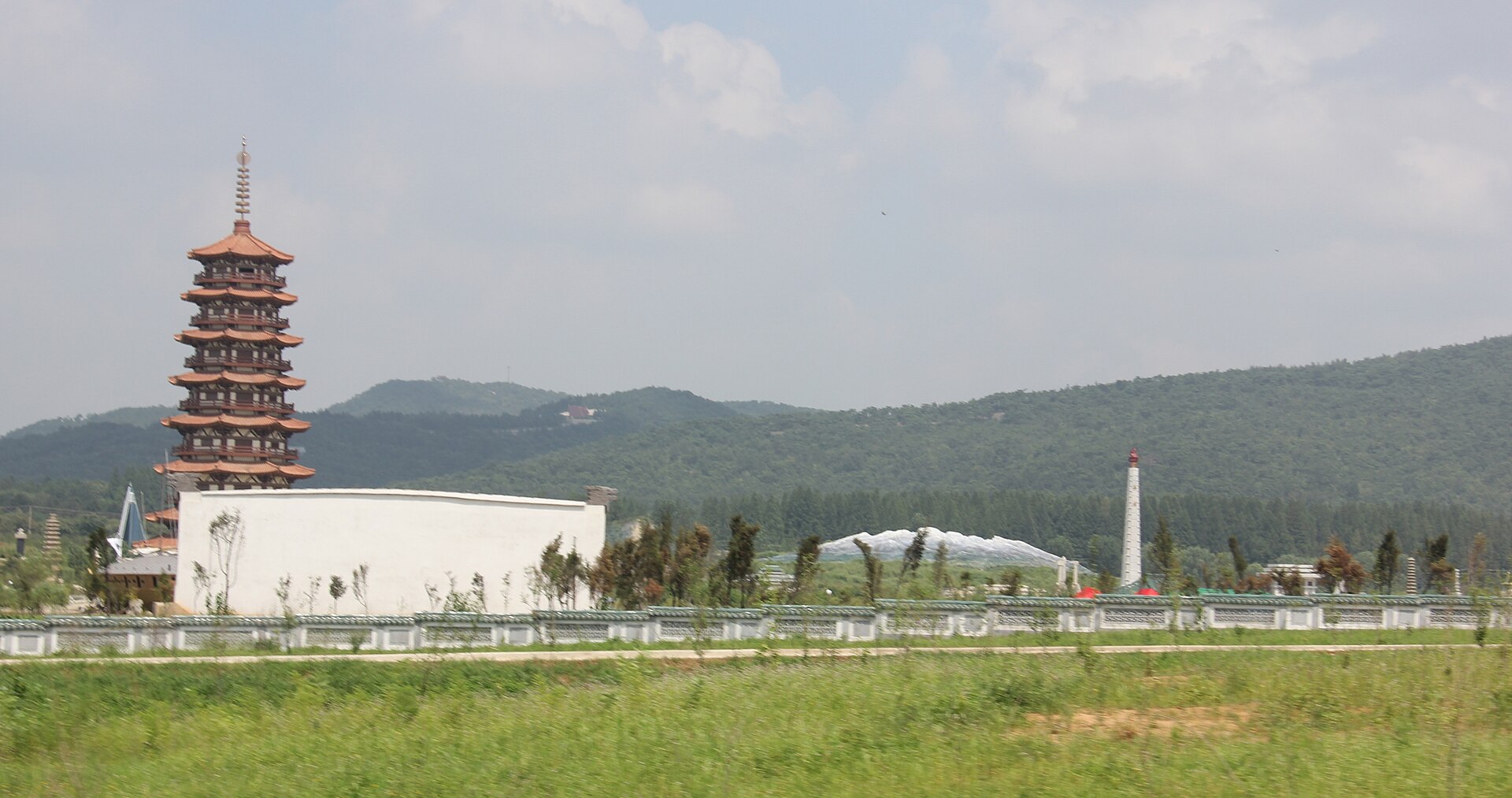
Pyongyang Folklore Park is one of those rare places in North Korea where the country’s past isn’t just preserved—it’s carefully reconstructed, almost like a living diorama of history. Unlike typical theme parks with rides and flashy attractions, this open-air museum offers something quieter: a chance to walk through different eras of Korean life, where architecture, crafts, and daily routines are brought back to life with surprising detail. It’s less about entertainment and more about storytelling, where every corner holds a fragment of a much larger narrative.
The moment you step inside, the park pulls you into its world of miniature landmarks. Scattered across the grounds are scaled-down versions of famous buildings, temples, and even humble village homes, some so meticulously crafted that they feel less like models and more like actual historical structures plucked from their original settings. The replica of Pyongyang’s old city gates, once the grand entrance to the capital, stands out in particular—a reminder of how the city itself has transformed over centuries. These aren’t just decorative pieces; they’re meant to evoke a sense of continuity, as if the past isn’t really gone but merely waiting to be rediscovered.
The park is divided into sections, each dedicated to a specific period in Korean history. One area might transport you to the era of the Three Kingdoms, with its thatched-roof houses and simple tools, while another recreates the more structured villages of the Joseon Dynasty, complete with wooden gates, communal wells, and workshops. What makes these spaces compelling isn’t just the buildings themselves but the way they’re brought to life. Artisans work at looms, potters shape clay, and blacksmiths hammer away at their forges—all part of a carefully staged performance that blurs the line between demonstration and reality. It’s easy to forget that these scenes are curated, especially when the rhythms of traditional work feel so natural.
For those who want to engage more actively, the park offers a taste of old Korean pastimes. Visitors can try their hand at archery, a skill once essential for both hunting and warfare, or fly a traditional kite, its paper wings fluttering against the sky. There’s also *yut*, a board game played with wooden sticks, where strategy and luck decide the outcome. Seasonal workshops let you shape clay into pottery or paint intricate designs on fans, though these activities aren’t always available—much depends on the time of year and the park’s schedule. Even if you don’t participate, watching others at work can be just as absorbing, especially when the craftspeople take the time to explain their techniques.
While the park’s focus is firmly on the past, it doesn’t ignore the present entirely. Modern touches, like a small amphitheater for folk performances or a café serving traditional dishes, remind you that this is still North Korea in the 21st century. The food, prepared according to old recipes, is more about authenticity than taste—some dishes might feel unfamiliar to those used to contemporary Korean cuisine, but that’s part of the experience. These moments of contrast—between the historical and the modern, the staged and the spontaneous—make the park feel less like a museum and more like a place where time moves at its own pace.
There’s an undeniable political layer to the park, as there is with many things in North Korea. It’s not just about preserving culture but also about shaping how that culture is perceived, both by locals and outsiders. In a country where history is often rewritten to fit ideological narratives, places like this serve a dual purpose: they celebrate Korea’s pre-division heritage while subtly reinforcing the idea of a unified, continuous identity. That doesn’t mean the effort is insincere—many of the traditions on display are genuine, even if the presentation is carefully controlled. For visitors, it’s a chance to see a side of North Korea that isn’t dominated by propaganda, where the focus shifts from politics to the everyday rhythms of life that have endured for generations.
What makes the park unusual is its lack of the usual tourist trappings. There are no crowds, no souvenir stalls hawking trinkets, no loud announcements. Instead, there’s a quiet, almost meditative atmosphere, as if the park exists outside the usual flow of time. The absence of overt political symbols—no portraits of leaders, no slogans—is striking, especially in a country where such imagery is ubiquitous. For foreigners, this can feel like a rare glimpse into a different North Korea, one where the emphasis is on shared cultural roots rather than state ideology. Even the interactions with staff, though guided, can be surprisingly warm; many are happy to share stories, demonstrate crafts, or teach a few words of Korean.
Of course, it’s important to remember that this is still a reconstruction, not a living historical site. The villages, the workshops, even the games—all of it is designed to present an idealized version of the past, one that glosses over the hardships and complexities of real life. But that doesn’t diminish its value. For those willing to look beyond the curated surface, the park offers something more than just a collection of buildings and artifacts. It’s a space where history feels tangible, where the past isn’t just something you read about but something you can almost touch. And in a country as closed off as North Korea, that’s a rare opportunity indeed.
Whether you’re drawn by curiosity, a love of history, or simply the chance to see a different side of Pyongyang, the Folklore Park leaves an impression that lingers. It’s not the kind of place that dazzles with spectacle, but rather one that invites you to slow down, observe, and reflect. In a world where so much of North Korea is hidden or obscured, here, at least, the past is allowed to speak for itself—even if it’s in a voice carefully shaped by the present.