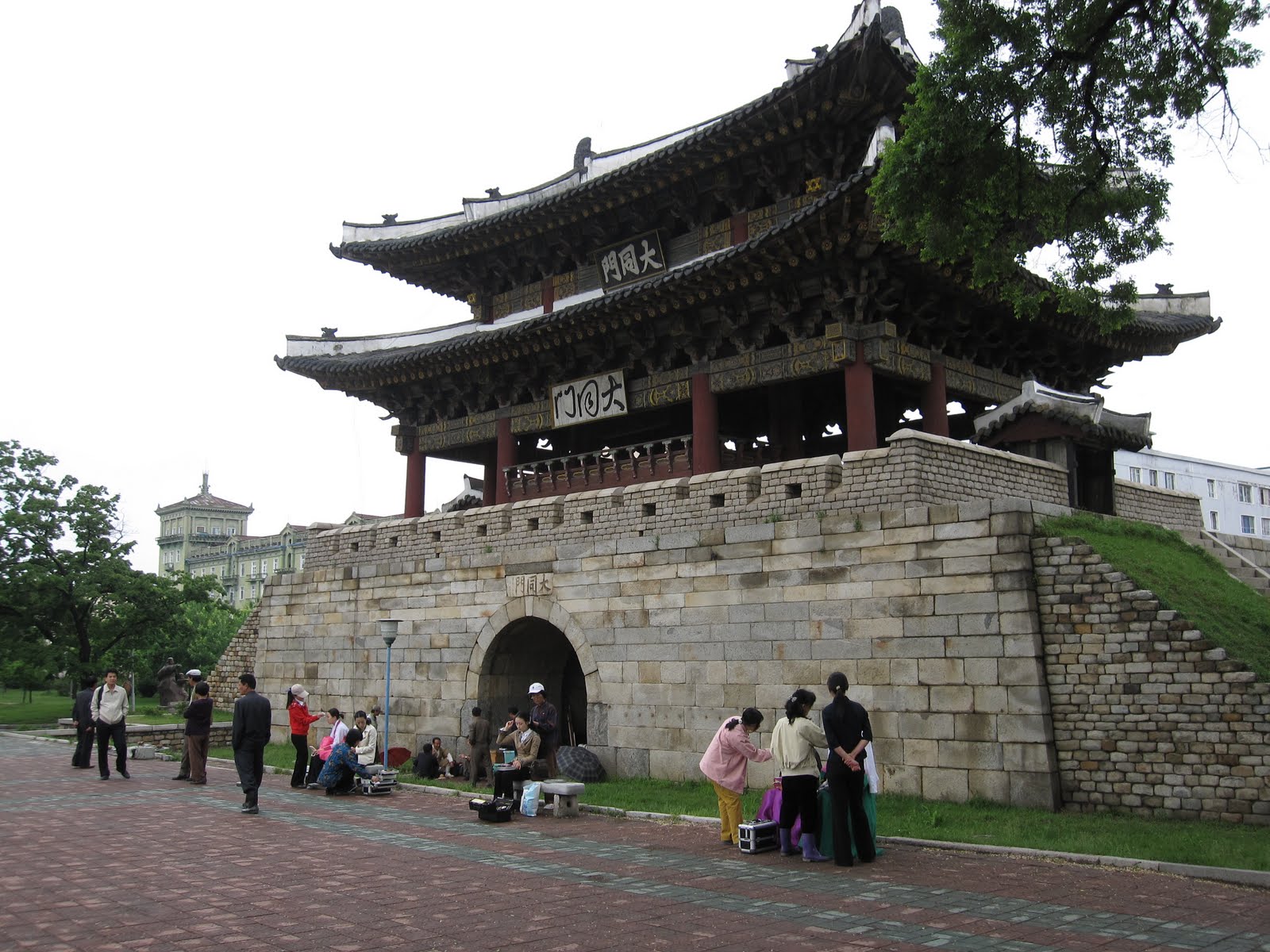
Perched on a gentle rise within Pyongyang’s modern sprawl, the ruins of Pyongyang Castle offer a quiet glimpse into the city’s distant past. What remains today are fragments—weathered stone walls, uneven foundations, and the faint outlines of structures that once stood as a symbol of power and defense. The site doesn’t demand attention like the grand monuments of later dynasties, nor does it try to impress with restored grandeur. Instead, it lingers as a subtle reminder of a time when Pyongyang was not a capital, but a fortified stronghold at the crossroads of trade and conflict.
The origins of the castle trace back to the Three Kingdoms period, when the Korean Peninsula was divided among rival states vying for dominance. Pyongyang, then known as the capital of Goguryeo, was a strategic prize, and the castle formed part of its defenses. Goguryeo, one of the most formidable kingdoms of the era, built these walls to withstand sieges, repel invasions, and control the movement of armies and merchants. Over centuries, the fortress was destroyed and rebuilt, its stones bearing witness to battles and shifting allegiances. By the time Korea unified under the Joseon Dynasty, the castle had long outlived its military purpose, its stones repurposed for new construction, its memory fading into legend.
The architecture of the ruins reflects the practical, no-nonsense style of early medieval fortifications on the peninsula. The walls were constructed from large, roughly hewn stones stacked without mortar, a technique designed for durability rather than aesthetics. Inside the perimeter, the foundations of buildings suggest a self-sufficient complex—barracks, storage rooms, perhaps even a small palace or shrine. The entrance, now lost to time, was likely guarded by a gatehouse or watchtower, though little remains to confirm its exact form. What survives is enough to sketch a rough picture of life here: a garrison town where soldiers, officials, and laborers lived in the shadow of constant vigilance.
Pyongyang’s growth eventually swallowed the castle whole. As the city expanded, the fortress was dismantled piece by piece, its stones carted away to build homes and public buildings. By the 20th century, only scattered remnants hinted at its existence. Archaeological work in later decades partially uncovered and stabilized the ruins, though they were never restored to their former state. Today, the site feels more like an open-air museum than a tourist attraction—there are no flashy exhibits, no guided tours, just the quiet persistence of history beneath the feet of those who bother to look.
Visiting the castle is an exercise in imagination. There are no signs explaining its significance, no vendors selling trinkets, no crowds jostling for the best view. Instead, the place exists in a kind of suspended stillness, broken only by the rustle of leaves or the occasional passerby. For locals, it’s a familiar landmark, a place to cut through on the way to somewhere else. For outsiders, it can feel underwhelming at first glance, especially compared to the meticulously preserved palaces and temples elsewhere in Korea. But that’s part of its charm. The castle doesn’t try to compete with the present; it simply endures, a fragment of a world that once was.
A small park surrounds the ruins, offering a place to wander or sit on one of the benches. From the top of the hill, the view stretches over modern Pyongyang—wide boulevards, towering monuments, the hum of a city moving forward. The contrast is stark. Below, the past lies in pieces; above, the future is built in concrete and steel. It’s a reminder that history isn’t always grand or dramatic. Sometimes, it’s just a few stones left behind, waiting for someone to notice.
Pyongyang Castle isn’t the only remnant of the city’s ancient defenses. Other sections of the old walls still stand in various states of decay, scattered across the urban landscape. But this site, modest as it is, holds a particular weight. It’s not a must-see destination, not the kind of place that makes it onto postcards. Yet for those who seek out the quieter corners of history, it offers something rare: a direct, unfiltered connection to the past. There’s no narrative imposed here, no curated story—just the raw material of time, open to interpretation.
Sitting among the ruins, it’s easy to let the mind wander. What was it like when these walls were whole, when the air was filled with the sounds of a garrison going about its daily routine? Did merchants haggle in the shadow of the gates? Did soldiers stand watch on the ramparts, scanning the horizon for signs of approaching armies? Or was it quieter than that—just the wind and the occasional call of a sentry? The stones don’t answer, but they don’t need to. Their presence is enough. They’ve outlasted the people who built them, the wars that destroyed them, and the generations that forgot them. Now, they wait for the next visitor to pause, look closer, and wonder.