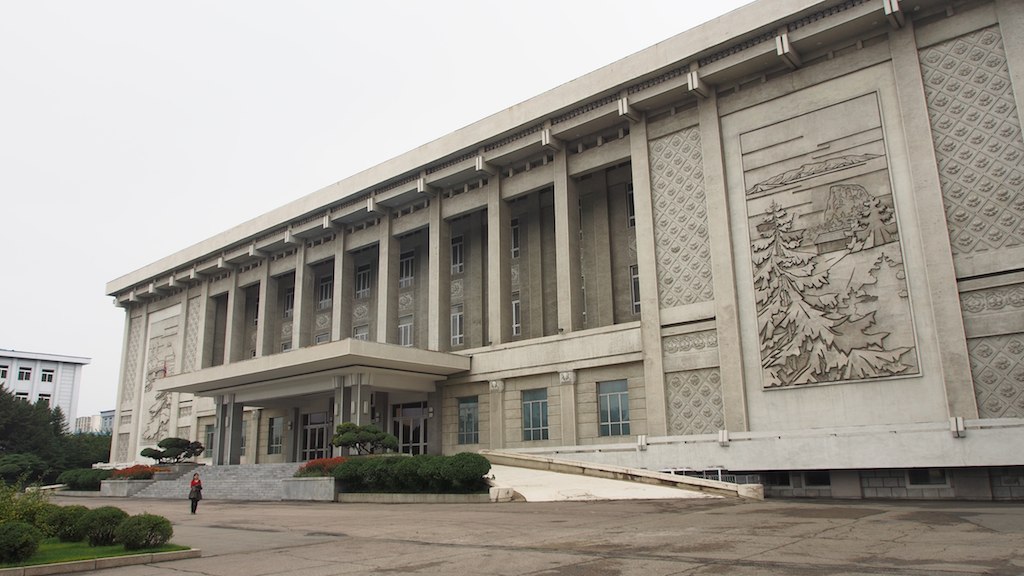
The Pyongyang Railway Museum is one of those places in North Korea’s capital where the country’s history unfolds from an angle many visitors don’t expect. Unlike the grand monuments or ideological slogans that dominate much of Pyongyang, this museum offers a quieter, more practical perspective—one shaped by the development of the nation’s transport infrastructure. The building itself is part of that story. Originally constructed in the mid-20th century, it once served as the city’s main railway station, a hub of movement and connection. Though the station has since relocated, the old structure retains the atmosphere of an era when railways were more than just a means of travel; they were a symbol of progress, resilience, and national ambition.
The museum’s exhibits span over a century of railway history on the Korean Peninsula, beginning with the first steam locomotives introduced during the colonial period. The focus, however, is on the post-war years, when rebuilding the rail network became a priority for the North Korean state. Visitors can see detailed models of stations, photographs of bridge and tunnel construction, and documents that reveal how railway workers contributed to the country’s recovery after the devastation of the Korean War. For many, this is an unexpected insight into North Korea’s identity—one where railways aren’t just a mode of transport but a cornerstone of national life, linking cities, industries, and people.
Outside, in the museum’s courtyard, several original locomotives stand as silent witnesses to different eras. The oldest is a steam engine from the early 1900s, a relic of the time when Korea was under Japanese rule. Its massive wheels and soot-stained body evoke an age when such machines were marvels of engineering. Nearby, more modern locomotives—diesel and electric models from the Soviet era, as well as domestically produced designs—show how the technology evolved. One particularly striking exhibit is a luxury train car once used by high-ranking officials, including the country’s early leaders. Its opulent interior, with polished wood and plush seating, contrasts sharply with the rugged exterior, hinting at the stark divisions of the time.
Inside the museum, the exhibits go beyond machinery to tell human stories. Displays honor exemplary railway workers, their portraits and awards proudly showcased. In North Korea, labor has always been revered, and the railway industry is no exception. The exhibits emphasize the collective effort required to keep the trains running—how engineers, dispatchers, and maintenance crews worked together, often under difficult conditions. Some photographs capture moments of extraordinary dedication: workers repairing tracks during wartime or keeping the system operational despite shortages. These images offer a glimpse into the daily realities of a country where infrastructure was, and remains, a matter of survival.
The building itself is a piece of history. Designed in the 1950s, it reflects the architectural style of the period—functional yet imposing, with clean lines, symmetry, and a reliance on local materials like stone and concrete. The high ceilings and large windows allow natural light to fill the halls, creating an atmosphere that feels both grand and utilitarian. This was a time when public buildings were meant to embody not just practicality but also the ideals of the state. While many stations across the country have since been modernized, this one remains a preserved example of an era when architecture was as much about symbolism as it was about service.
Visiting the museum offers a different way of understanding North Korea. There are no propaganda posters or political slogans here, just tangible evidence of how the country has developed despite isolation. Railways in North Korea have always been more than a way to get from one place to another; they are the lifelines that connect regions, deliver food and goods, and sustain industries. The museum presents this story without embellishment—showing both achievements and the challenges faced along the way. For those interested in the history of technology or the everyday realities of life in North Korea, it’s a revealing experience.
It’s worth noting that the museum isn’t a typical tourist attraction. Foreign visitors are rare, and the exhibits are primarily designed for a local audience. The signs are in Korean, and guides usually don’t speak English. Yet for those who do find their way here, it’s an opportunity to see North Korea through a different lens—not as a political symbol, but as a nation shaped by its infrastructure and the people who built it. There’s no grand narrative here, just the quiet testimony of objects that speak for themselves.
The pace inside the museum is unhurried. There’s no rush, no crowd, no pressure to move quickly from one exhibit to the next. Visitors can take their time examining the details, reading the descriptions, or, if they’re lucky, striking up a conversation with a staff member. The employees often speak with pride about their work, and their stories add another layer to the experience. The museum doesn’t try to impress; it simply exists, preserving the memory of how one of the country’s most vital industries came to be. For those who seek something beyond Pyongyang’s grand boulevards and monuments, it’s a place that offers depth and authenticity.