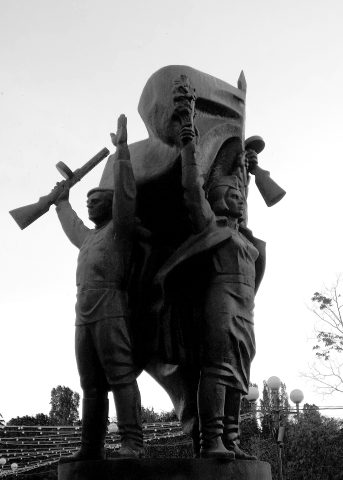
Prokhorovka Field is where the weight of history presses down with particular force. This stretch of land in Belgorod Region became the stage for one of the largest tank battles of World War II, a clash so intense that the ground itself seemed to shudder under the weight of steel and fire. In the summer of 1943, during the Battle of Kursk, hundreds of armored vehicles collided here in a confrontation that would shift the momentum of the war on the Eastern Front. Today, the field is more than a memorial—it’s a place where the past lingers, tangible and unshaken by time.
The name Prokhorovka is etched into history books as the site of a battle that turned the tide. Soviet forces halted the German advance here, marking the beginning of the end for Nazi operations in the East. The fighting was brutal, a culmination of the larger Kursk offensive, and its outcome ensured that the Red Army would seize the initiative for the remainder of the war. Now, the field is dotted with monuments, memorials, and museums that preserve the memory of those days, each structure a silent witness to the scale of what unfolded.
At the heart of the memorial stands the Belfry, a towering structure that dominates the landscape. Its bells toll in remembrance, their sound carrying across the fields, a solemn reminder of the lives lost. Nearby lies a mass grave where thousands of soldiers rest, many of them unknown. The quiet here is different—deeper, as if the wind itself hesitates, allowing space for reflection. Visitors often find themselves standing in silence, the weight of the place settling over them.
The Museum of Military Glory nearby offers a closer look at the battle and its context. Exhibits include military equipment, personal belongings of soldiers, documents, and photographs from the era. The collection extends beyond Prokhorovka, tracing the broader arc of the war and the experiences of those who fought on this front. One section focuses on the local population, many of whom endured occupation and contributed to the war effort in ways both small and significant. The displays are straightforward, letting the artifacts speak for themselves.
The landscape around Prokhorovka has changed little since the war. Rolling fields, gentle hills, and patches of woodland stretch out much as they did eighty years ago. In summer, wildflowers dot the grass; in winter, snow blankets the ground. Yet even in its quiet seasons, the land carries an undercurrent of tension, as if the echoes of battle are never fully gone. It’s easy to imagine the scene—the roar of engines, the crack of gunfire, the smoke rising over the horizon. The past doesn’t feel distant here; it feels present, just beneath the surface.
For many, Prokhorovka is a place of pilgrimage. Veterans, relatives of the fallen, students, and travelers come to pay their respects. Each year, commemorative events mark the anniversary of the battle, drawing crowds who gather to lay flowers, listen to speeches, and honor the memory of those who fought. The field comes alive with voices, but the mood is one of reverence, a shared acknowledgment of what was sacrificed.
Yet Prokhorovka is more than a monument to the past. It’s a reminder of why history matters, of the cost of war and the fragility of peace. Standing here, it’s impossible not to reflect on the lessons of those years—how easily things could have gone differently, how much was lost, and how much was gained. The field doesn’t just preserve memory; it demands it, urging visitors to carry its stories forward.
A visit to Prokhorovka isn’t like other historical sites. There’s no detachment here, no sense of observing from a distance. The land itself seems to draw you in, making the past feel immediate and personal. It’s a place where history isn’t just learned—it’s felt. And in that feeling, there’s a quiet understanding of what it means to stand on ground where so much was decided, where lives were given and futures were shaped. The field doesn’t let you leave unchanged. It asks you to remember.