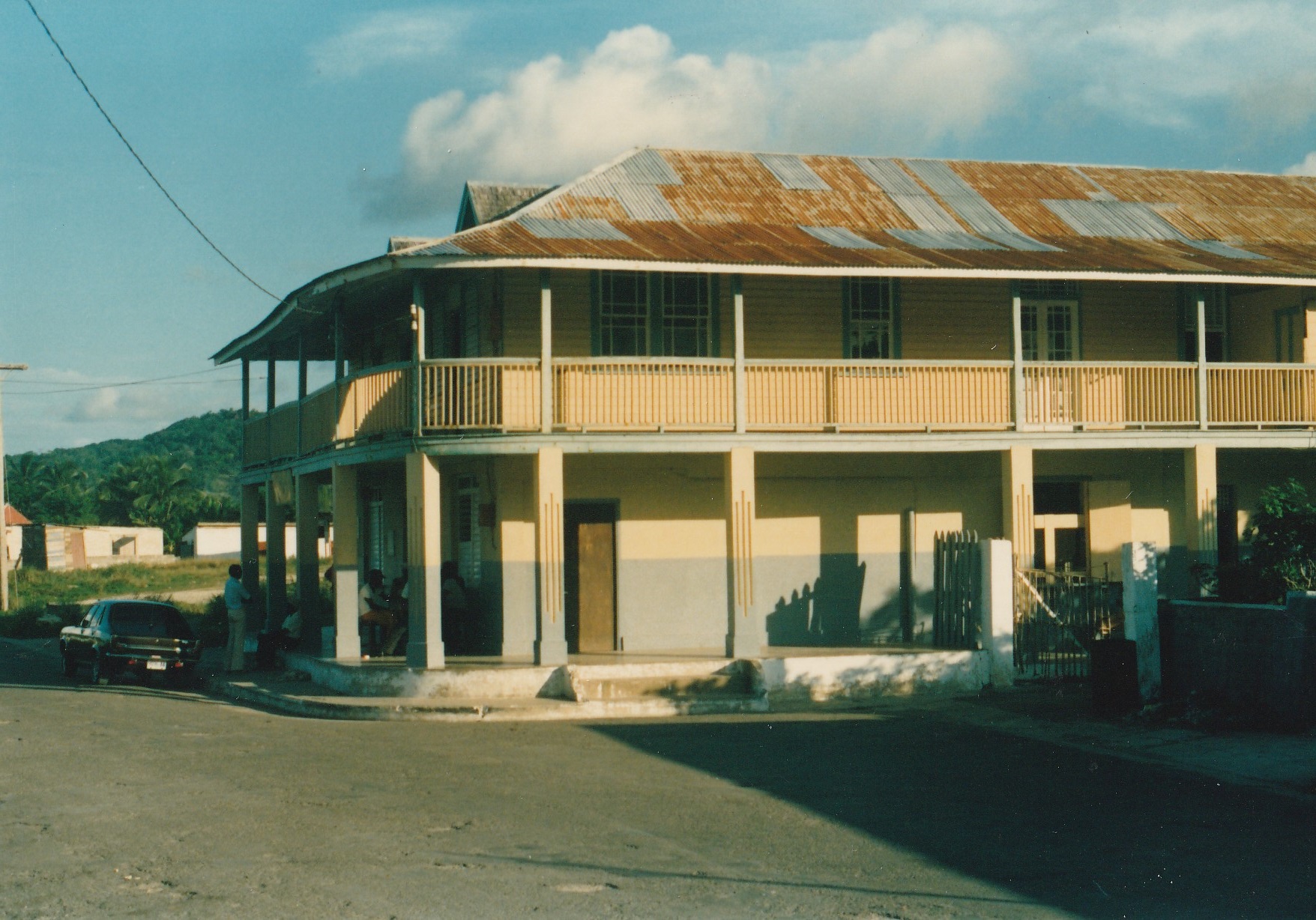
Port Maria’s waterfront is where Jamaica’s layered history meets the sea. This quiet town on the island’s north coast, known for its banana groves and empty beaches, carries the echoes of a time when colonial ports hummed with activity. Unlike Montego Bay or Kingston, where cruise ships and resorts dominate, Port Maria’s harbor feels like a place where the past hasn’t been polished for tourists—just left to settle into the salt air.
The docks themselves are unassuming: a few weathered wooden piers, rusted bollards, and warehouses with peeling paint that once stored sugar, rum, and bananas bound for Europe and the Americas. In the 18th and 19th centuries, this was a busy stop on the trade routes, but today the only remnants of that era are the sagging buildings and the occasional fishing boat tied to the pilings. There’s a quiet melancholy here, the kind that lingers in places where time has slowed but not erased what came before.
The town spills out from the harbor in a tangle of narrow streets lined with brightly painted houses. Vendors sell mangoes and scotch bonnet peppers from roadside stalls, while fishermen mend nets by the water’s edge. Unlike the crowded resorts of Negril or Ocho Rios, Port Maria moves at its own pace, untouched by the rush of mass tourism. Locals might nod at visitors who wander through, especially if they stop at a small cookshop for grilled fish with pepper sauce and fried plantains. The food is simple, the conversation easy, and the sense of being somewhere real is immediate.
Beyond the harbor, the coastline offers more than just history. Nearby beaches like Cabarita and Annotto Bay curve along the shore with powdery sand and clear water, while inland, waterfalls and dense forests hide in the hills. But even without venturing far, the waterfront has its own quiet magic. At dusk, the sea turns gold, and the fishing boats return with the day’s catch, their hulls scraping against the docks. It’s the kind of scene that makes you forget to check your watch.
For those curious about Jamaica’s colonial past, Port Maria is a good place to start. The ruins of old plantations dot the surrounding countryside, silent reminders of the enslaved people who once worked the land. In town, a few buildings from the British era still stand, their architecture a mix of practicality and faded grandeur. You don’t need to be a historian to feel the weight of what happened here—just walking along the docks, where generations of ships once loaded and unloaded, is enough to imagine the lives that passed through.
These days, the harbor is less about trade and more about the rhythms of local life. There are no luxury hotels or beachfront bars, just a handful of small guesthouses and the occasional traveler who strays from the usual tourist trail. What you find instead is the unfiltered side of Jamaica—the one that exists beyond the postcards. The air smells of salt and woodsmoke, the conversations are unhurried, and the sense of being somewhere authentic is almost tangible.
That authenticity is what draws people here. Port Maria doesn’t try to impress; it just is. The docks creak underfoot, the waves lap against the shore, and the history isn’t presented in a museum—it’s woven into the place itself. For anyone tired of manufactured experiences, this is where you come to sit on a bench, watch the tide roll in, and let the quiet do the talking. Sometimes, the most memorable places aren’t the ones that shout for attention, but the ones that let you listen.