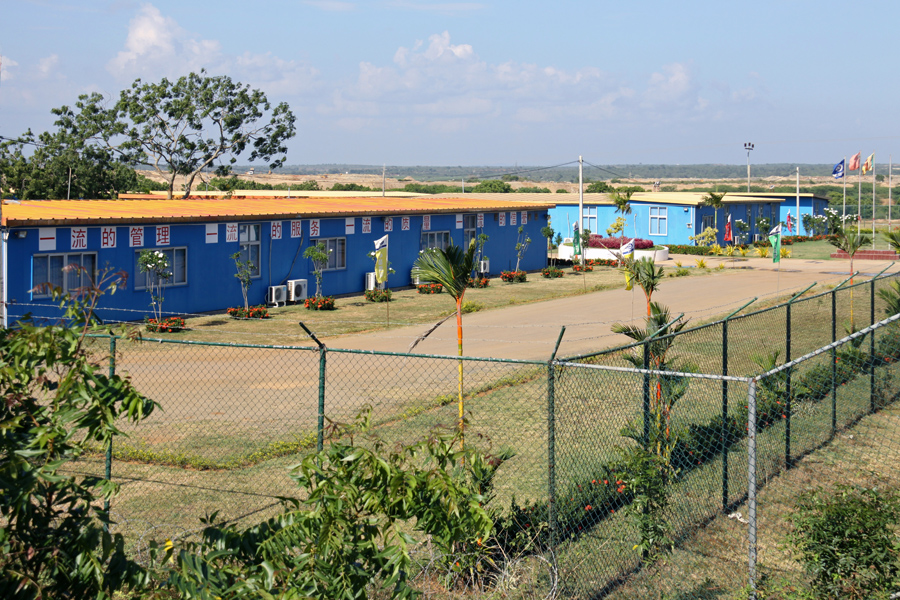
Hambantota Port is one of those places where the past and present collide in ways that feel both deliberate and accidental. Nestled along Sri Lanka’s southern coast, where the Indian Ocean stretches endlessly toward the horizon, the port is a modern marvel that has reshaped the region’s identity. Yet it remains a project wrapped in controversy, ambition, and the quiet rhythms of a country still finding its footing in the global economy. For travelers who venture beyond the usual tourist circuits, it offers a glimpse into the complexities of development, the weight of geopolitics, and the stubborn resilience of local life.
The port’s origins trace back to an idea that was as much about necessity as it was about aspiration. Hambantota, once a sleepy fishing town, had long been overshadowed by Sri Lanka’s more famous coastal destinations. Its natural harbor, though deep and sheltered, was underutilized, and the region lagged behind the rest of the country in infrastructure. In the early 2000s, the government saw an opportunity to change that. The plan was to transform Hambantota into a major maritime hub, a gateway for trade between East and West, and a catalyst for economic growth in the south. The first phase of the port opened in 2010, built with Chinese investment and engineering expertise, and it wasn’t long before the project became a symbol of Sri Lanka’s pivot toward Asia.
What strikes visitors first is the sheer scale of the place. The port stretches across thousands of acres, with towering cranes, vast container yards, and ships that seem too large to be real. The breakwaters, constructed from massive concrete blocks, curve into the ocean like the arms of a fortress, shielding the harbor from the monsoon waves. The design is functional, almost brutalist in its efficiency, but there’s a certain grandeur to it—a reminder of what human ingenuity can achieve when ambition outpaces caution. The port is not just a transit point; it’s a statement, one that declares Sri Lanka’s intent to play a bigger role in the world’s shipping lanes.
Yet for all its modernity, Hambantota Port is a place of contradictions. The economic promises that accompanied its construction have been slow to materialize. The port was meant to rival Colombo, but traffic has remained below expectations, and the financial burden of its development has weighed heavily on the country. In 2017, Sri Lanka handed over control of the port to a Chinese state-owned company on a 99-year lease, a move that sparked debates about sovereignty and debt diplomacy. For locals, the port is both a source of pride and frustration—a reminder of what could have been and what still might be.
The surrounding area tells its own story. Hambantota town, once a quiet backwater, has grown in fits and starts, with new roads, hotels, and commercial buildings rising alongside older, weathered structures. The port has brought jobs, but not always the kind that locals hoped for. Many of the high-skilled positions went to outsiders, while those from the region found work in construction, security, or the informal economy. The fishing communities, whose livelihoods were disrupted by the port’s expansion, have had to adapt, sometimes moving farther along the coast or shifting to other trades. The changes have been uneven, leaving behind a patchwork of progress and stagnation.
For those who take the time to explore, the port and its surroundings offer more than just a lesson in economics. The coastline here is rugged and beautiful, with long stretches of empty beach and the occasional glimpse of traditional fishing boats bobbing in the waves. The nearby Bundala National Park, a UNESCO biosphere reserve, is home to flamingos, crocodiles, and migratory birds, a stark contrast to the industrial landscape of the port. The juxtaposition is striking—wild nature and human ambition existing side by side, each shaping the other in ways that are still unfolding.
The port’s future remains uncertain. Plans for a free trade zone, an airport, and even a city built from scratch have been floated, but progress has been halting. The COVID-19 pandemic and Sri Lanka’s subsequent economic crisis slowed development, and the port’s role in the region’s economy is still being defined. Yet there’s a sense that Hambantota is a place in motion, a work in progress that reflects the broader story of Sri Lanka itself. It’s a reminder that development is never a straight line, and that the most interesting places are often those where the past and future are still negotiating their terms.
Visiting Hambantota Port isn’t like visiting a traditional tourist destination. There are no guided tours, no gift shops, no carefully curated experiences. Instead, it’s a place to observe, to wander, and to think about the forces that shape a country’s destiny. The port is open to the public, though access is limited to certain areas, and security is tight. Those who make the journey will find a place that is at once impressive and unsettling, a monument to ambition that is still finding its purpose. It’s not a place for everyone, but for those who are drawn to the edges of the map, it offers a perspective that’s hard to find elsewhere.