Tiraspol’s central square, named after Alexander Suvorov, feels like a place where time has settled into a quiet rhythm. It’s not the kind of square that draws crowds with flashy monuments or grand events, but rather one that quietly anchors the city, holding within its boundaries the layers of a complicated past. Suvorov, the 18th-century Russian general known for his military campaigns in the region, is a figure who looms large in local history, and this square is where his legacy is most visibly preserved. The statue of him here, standing in a pose that suggests both authority and contemplation, is one of the first things you notice. It’s not an imposing monument, but it carries weight—partly because of what it represents, and partly because of where it stands.
The square itself is a broad, open space paved with stone, framed by buildings that tell their own stories. On one side, the city’s administrative offices rise in a style that blends Soviet-era functionality with a touch of neoclassical grandeur. Their facades are well-maintained, though not ornate, reflecting a city that has learned to preserve its past without embellishing it. Across from them, the House of Soviets, a low-slung building with a long colonnade, stretches along the edge of the square. It’s an unmistakably Soviet structure, built in the mid-20th century when Tiraspol was part of the Moldavian SSR. The architecture here isn’t about beauty in the traditional sense—it’s about solidity, about the idea of permanence in a place that has seen its share of upheaval.
What makes Suvorov Square interesting isn’t just its buildings, but the way it functions as a kind of living archive. The city’s history isn’t confined to museums here; it’s woven into the streets, the names, the very layout of the place. Tiraspol was founded in 1792 by Suvorov himself, under orders from Catherine the Great, as a fortress town meant to secure Russia’s southern borders. The square, then, isn’t just a tribute to the general—it’s a reminder of the city’s origins as a military outpost, a role that shaped its identity for centuries. Even today, you can sense that legacy in the way the square is laid out, with wide avenues radiating outward, as if designed for movement and control rather than leisure.
Walking across the square, you notice how little has changed in some ways. The benches are occupied by older men playing chess, their games unfolding in silence, punctuated only by the occasional clink of pieces. Nearby, a few teenagers sit on the steps of the administrative building, scrolling through their phones, seemingly oblivious to the history around them. The square isn’t a tourist attraction in the usual sense—there are no souvenir stalls, no guided tours, no signs urging you to take a photo. It’s a place where life happens, unhurried and unscripted. On weekends, there might be a small market selling local produce or handmade crafts, but even then, the atmosphere remains subdued, as if the square itself is holding its breath.
The most striking thing about Suvorov Square is how it manages to feel both central and peripheral at the same time. It’s the heart of Tiraspol, yet it doesn’t dominate the city in the way that squares in other capitals might. There’s no grand fountain, no towering obelisk, no dramatic lighting to draw the eye. Instead, it’s a space that invites you to slow down, to look around, to notice the details—the way the light hits the buildings in the late afternoon, the sound of footsteps echoing on the pavement, the faint scent of coffee drifting from a nearby café. It’s a square that doesn’t demand attention, but rewards those who take the time to observe.
The buildings around the square offer a glimpse into the city’s more recent past. The House of Soviets, for instance, was built in the 1950s, a time when Soviet architecture was shifting from the ornate styles of the early 20th century to something more streamlined and utilitarian. The colonnade along its front is a nod to classical design, but the overall effect is one of simplicity, even austerity. It’s a building that was meant to convey stability, to reassure the people of Tiraspol that their place in the Soviet Union was secure. Today, it houses government offices, and while the flag of Transnistria flies above it, the building itself hasn’t changed much since it was first constructed. It’s a reminder that in this part of the world, history isn’t something that’s easily erased—it’s built into the very fabric of the city.
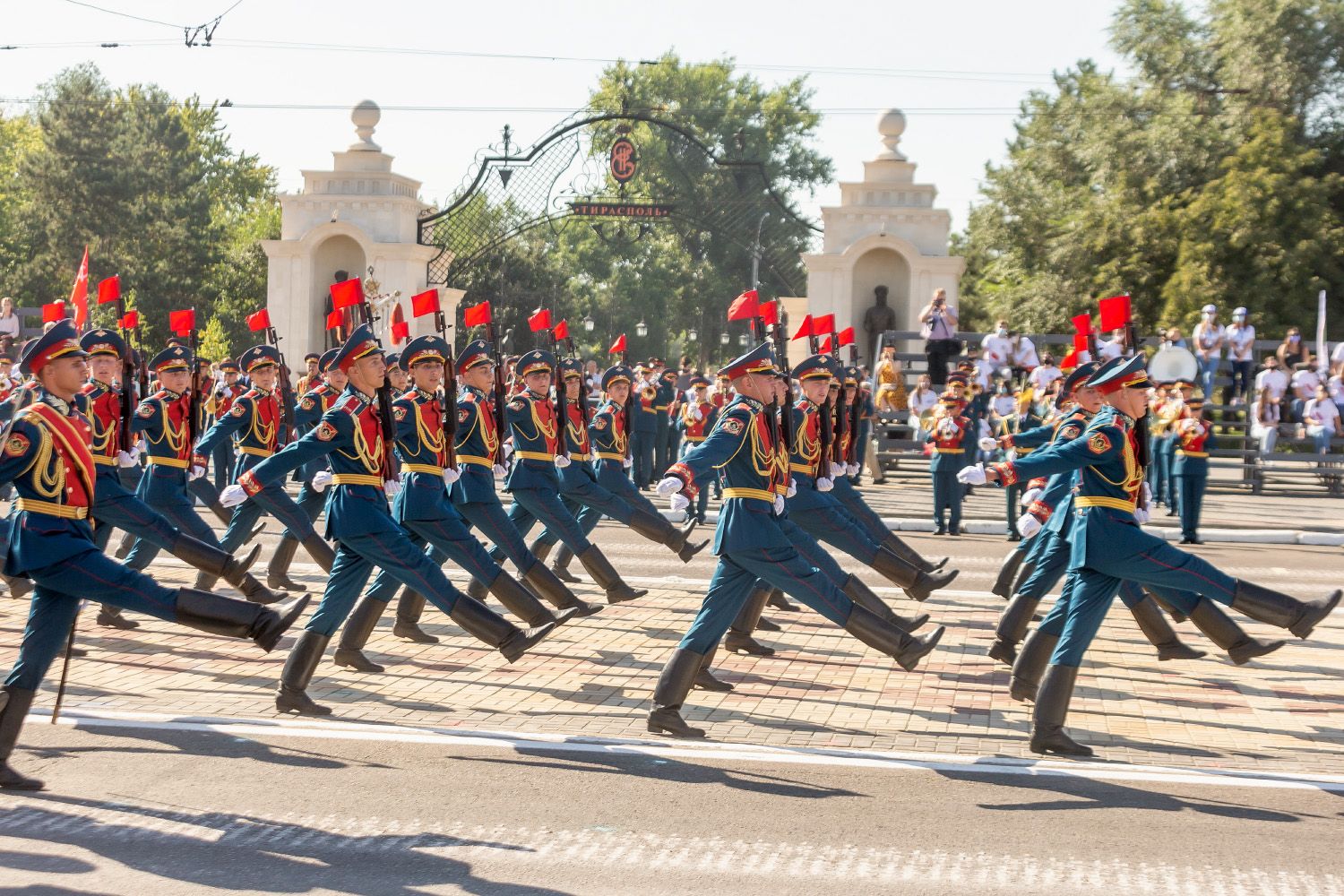
Suvorov Square also serves as a kind of stage for the city’s public life. On national holidays, like Victory Day or the Day of the Republic, it becomes the focal point for parades and ceremonies. The statue of Suvorov is often adorned with flowers, and the square fills with people, some in military uniforms, others in traditional dress. These events are solemn, almost ritualistic, a way for the city to reaffirm its identity. But on ordinary days, the square is just a place to pass through—a shortcut between the market and the bus station, a spot to meet a friend, a quiet corner to read a book. It’s this duality that makes it interesting: it’s both a symbol and a backdrop, a place of memory and a place of everyday life.
One of the most intriguing things about the square is how it reflects the complexities of Transnistria itself. This is a region that exists in a kind of limbo, unrecognized by most of the world but very much real to those who live here. The square, with its mix of Soviet and pre-Soviet history, mirrors that ambiguity. The statue of Suvorov, a Russian general, stands in a city that is now the de facto capital of a breakaway state, yet the square doesn’t feel like a political statement. It’s more like a quiet acknowledgment of the past, a place where different eras coexist without fanfare. The buildings, the statue, the people—all of them are part of a story that’s still being written, even if the pace of change is slow.
If you spend enough time in Suvorov Square, you start to notice the small things—the way the shadows lengthen in the evening, the sound of a tram rattling past, the occasional laughter of children playing near the statue. It’s a place that doesn’t reveal itself all at once, but gradually, as you watch and listen. There’s a sense of continuity here, a feeling that life in Tiraspol has always moved at this unhurried pace, regardless of what’s happening in the wider world. The square isn’t just a monument to history; it’s a living part of the city, a place where the past and present coexist in a way that feels both ordinary and extraordinary.