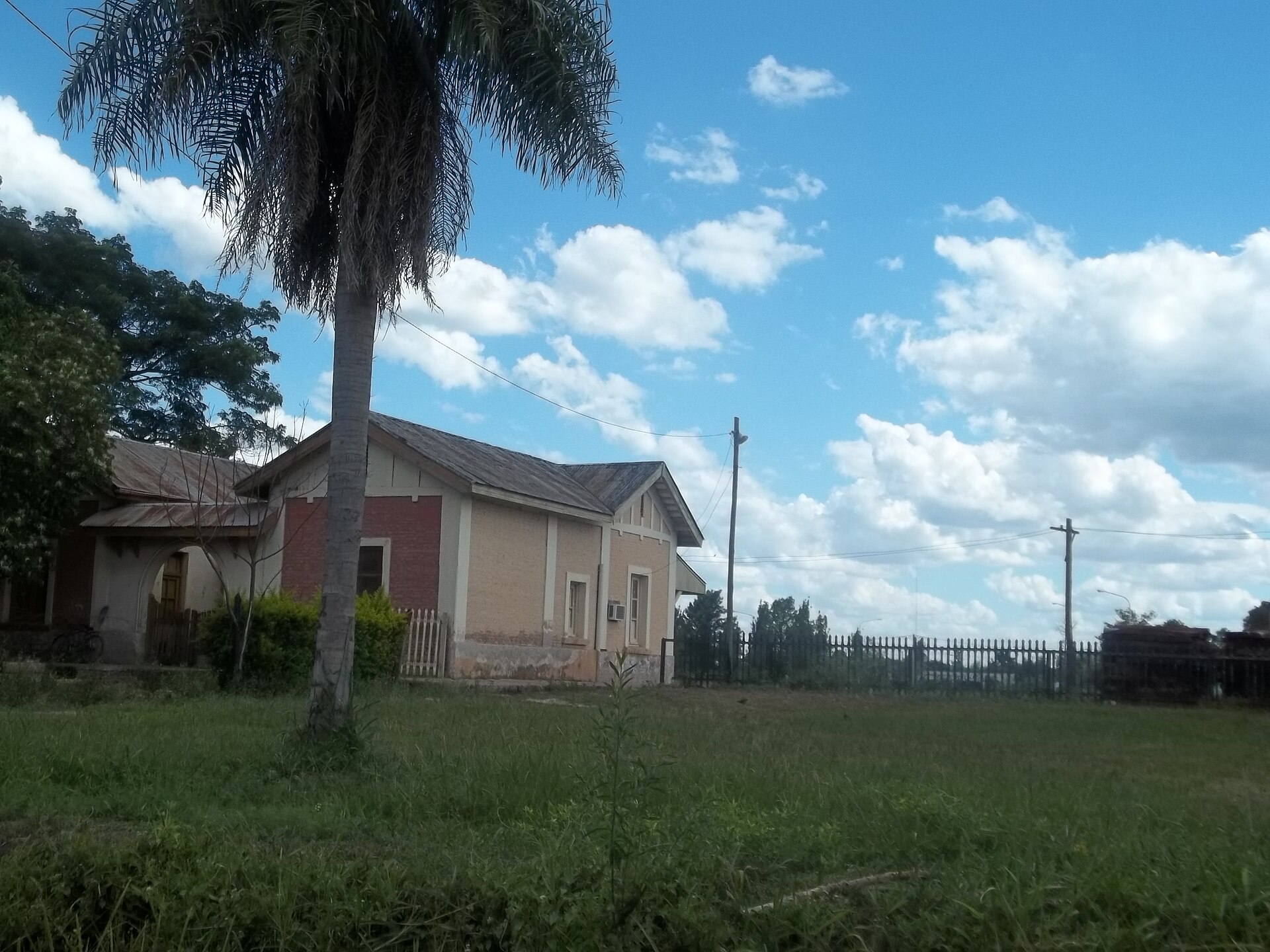
Presidencia de la Plaza is one of those quiet Argentine towns where time seems to move at its own unhurried pace, tucked away in the northern province of Chaco. It’s not the kind of place that makes it onto postcards or travel brochures, but that’s part of its charm. The town feels lived-in rather than staged for visitors, with wide, tree-lined streets that shade the low-slung buildings and the occasional stray dog napping in the afternoon sun. Life here revolves around small routines—morning coffee at the local café, the slow clatter of bicycles on cobblestones, the distant hum of a tractor in the surrounding fields. And at the heart of it all is Plaza San Martín, the town’s central square, where the past and present coexist without much fuss.
The square itself is a classic example of the kind of public space that defines so many Argentine towns, large and small. It follows the traditional layout of a central plaza mayor, a concept that dates back to Spanish colonial urban planning, where the church, the municipal buildings, and the most important homes would all face inward toward a shared open space. Here, the square is framed by the parish church on one side, its whitewashed façade and simple bell tower standing out against the clear sky. The municipal building, with its modest colonial architecture, occupies another corner, while the rest of the perimeter is made up of one-story houses, some with wrought-iron balconies and others with plain wooden shutters. The whole scene has a sense of order, but not the kind that feels imposed—more like something that grew naturally over time.
Plaza San Martín isn’t grand by any measure. There are no towering monuments or elaborate fountains, no manicured gardens that demand admiration. Instead, it’s a place of quiet utility, where the townspeople gather for the things that matter in everyday life. In the mornings, older men sit on the benches, reading newspapers or chatting about the weather, while children kick soccer balls across the open patches of grass. In the evenings, teenagers loiter near the kiosks that sell ice cream and soda, and families stroll along the paths, pausing to greet neighbors. The square is less a tourist attraction than a living room for the town, a space that adapts to whatever the day brings.
The history of the square is closely tied to the history of Presidencia de la Plaza itself, which was founded in the early 20th century as part of a wave of settlement in the Chaco region. The town was named after one of Argentina’s early presidents, Victorino de la Plaza, though its origins are more practical than political. The area was originally home to indigenous groups, including the Toba and Wichí peoples, who lived in the region long before European settlers arrived. By the late 1800s and early 1900s, the Argentine government was encouraging colonization of the Chaco as a way to secure territory and develop agriculture, particularly cotton. Presidencia de la Plaza grew out of this push, becoming a small but important hub for the surrounding rural communities.
The architecture around the square reflects this relatively recent history. Unlike the colonial cities of northern Argentina, where Spanish influence is unmistakable, the buildings here are simpler, more utilitarian. The church, for instance, is a straightforward structure with a single nave and a small altar, its design more about function than ornamentation. The municipal building, too, is modest, with a façade that hasn’t changed much since it was first built. Even the houses that line the square are unpretentious, built to withstand the region’s hot, humid summers and occasional floods. There’s a sense of resilience in the way the town has been constructed, as if every building is meant to serve a purpose first and foremost.
What makes Plaza San Martín special isn’t any single feature, but rather the way it embodies the rhythm of life in a small Argentine town. It’s the kind of place where nothing much happens, yet everything happens at once. On weekends, the square might host a local festival, with folk music playing from a small stage and vendors selling empanadas and locro, the hearty stew that’s a staple of northern Argentine cuisine. During the week, it’s quieter, but no less alive—just in a different way. The benches fill up with students on their lunch break, the kiosks do a brisk trade in cold drinks, and the occasional street performer might set up near the church steps, playing a guitar for spare change.
The square also serves as a kind of barometer for the town’s mood. In times of celebration, like the annual patron saint festival or national holidays, it becomes the focal point for parades and fireworks. During more somber moments, such as after a local tragedy or a difficult harvest season, it’s where people come to gather, to talk, to find comfort in shared silence. This duality is what gives Plaza San Martín its character—it’s both a stage for public life and a quiet refuge, depending on the day.
For visitors, the square offers a glimpse into a side of Argentina that’s often overlooked. It’s not Buenos Aires with its grand boulevards and European-style cafés, nor is it the dramatic landscapes of Patagonia or the wine country of Mendoza. Instead, it’s a place where life unfolds at a slower pace, where the connections between people feel more immediate. There’s no need to rush here, no must-see attractions demanding attention. The square invites you to sit, to watch, to let the town reveal itself in its own time.
If you do find yourself in Presidencia de la Plaza, the best way to experience Plaza San Martín is simply to spend an afternoon there. Bring a book, or better yet, strike up a conversation with someone on a bench. Try the local pastries from the panadería around the corner, or grab a mate from one of the older men who often share it with strangers. The square doesn’t ask for much—just that you take it as it is, a small but essential part of a town that has found its own way of being in the world. And in that simplicity, there’s something quietly profound.