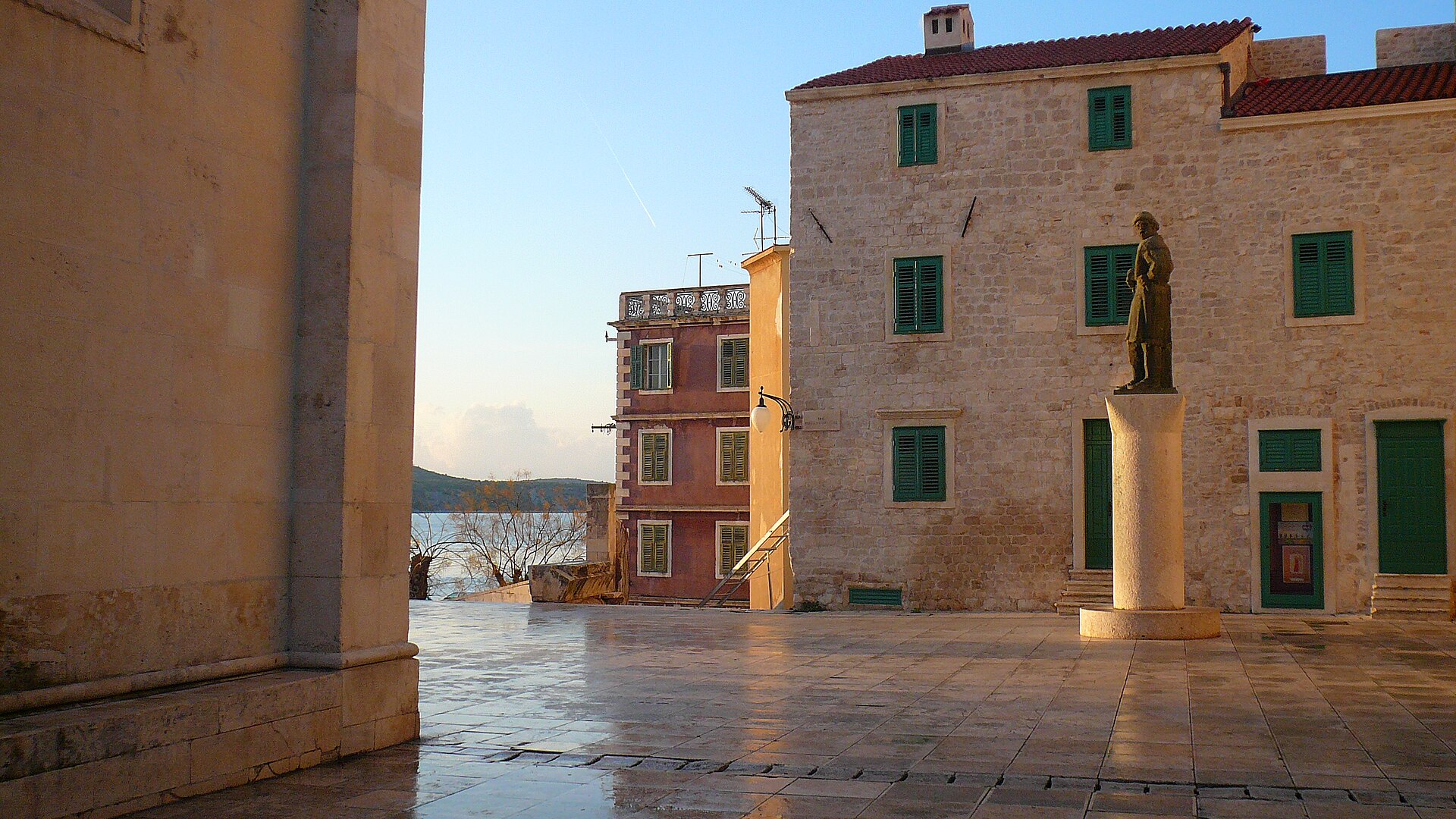
Šibenik’s Republic of Croatia Square is where the city reveals itself without pretense. Unlike the bustling waterfront or the crowds gathered around St. James’s Cathedral, this place feels lived-in, unhurried, as if the Adriatic’s slow currents have shaped its rhythm over centuries. The square isn’t large, but it holds everything that matters: weathered stone houses, café terraces where time seems to pause, and the quiet pulse of daily life—locals stepping into shops, lingering over coffee, or simply passing through.
The architecture here tells a story without words. The buildings encircling the square span different eras, yet all bear the unmistakable imprint of the Mediterranean. Thick stone walls, terracotta roofs, and narrow windows with wooden shutters create a sense of continuity, even as styles shift from Renaissance to Baroque. The most striking structure is the 16th-century town hall, its arched ground floor and clean lines a testament to the city’s past. Once a place where regional decisions were made, it now houses municipal offices, though its presence still anchors the square.
Šibenik has always stood apart from its more famous neighbors. Unlike Split or Dubrovnik, it wasn’t under Venetian rule for long, and that independence is visible in its character. Republic Square was the heart of old Šibenik, where markets thrived, news spread, and citizens gathered—sometimes in protest. The steps of the town hall once echoed with proclamations and judgments. Today, those echoes are gone, but the square remains a public space, just a quieter one.
Summer transforms the square. Morning sunlight floods the stones, while by midday, the shade from the town hall and surrounding buildings offers respite from the heat. Cafés serve more than just drinks—fresh bread, olives, local cheese, and simple grilled fish appear on tables. Evenings bring a gentle liveliness: groups gather, music drifts from open doors, and occasional street performances add to the atmosphere. Yet the square never feels crowded. Šibenik isn’t a city that chases spectacle.
Winter changes the mood. Rain washes the cobblestones, and the sea breeze carries a sharp, salty edge. Fewer people linger at the cafés, but those who do stay longer, huddled under heaters on the terraces. The square takes on a cozier feel, as if the city has wrapped itself around those who remain. It’s a good place to sit and watch life unfold—old men playing chess outside a bar, children darting between the town hall’s columns, the rare tourist wandering in despite the off-season.
This isn’t a place that demands attention. It doesn’t dazzle at first glance, and that’s precisely why it’s worth visiting. There’s nothing staged here, just the weight of history in the worn stones, the stories embedded in the walls, the scent of salt air mingling with fresh bread. It’s a square for those who want to know Šibenik beyond the guidebooks, in the quiet corners where time moves differently.
From here, the sea is just a short walk away. The path leads to the waterfront, where the St. Anthony Channel and the city’s fortresses come into view. But even if you don’t go further, the square offers enough—a piece of history, a breath of atmosphere, a moment to feel part of something older than yourself. It hasn’t changed much over the centuries, and that’s its charm. The square exists on its own terms, untouched by expectations.