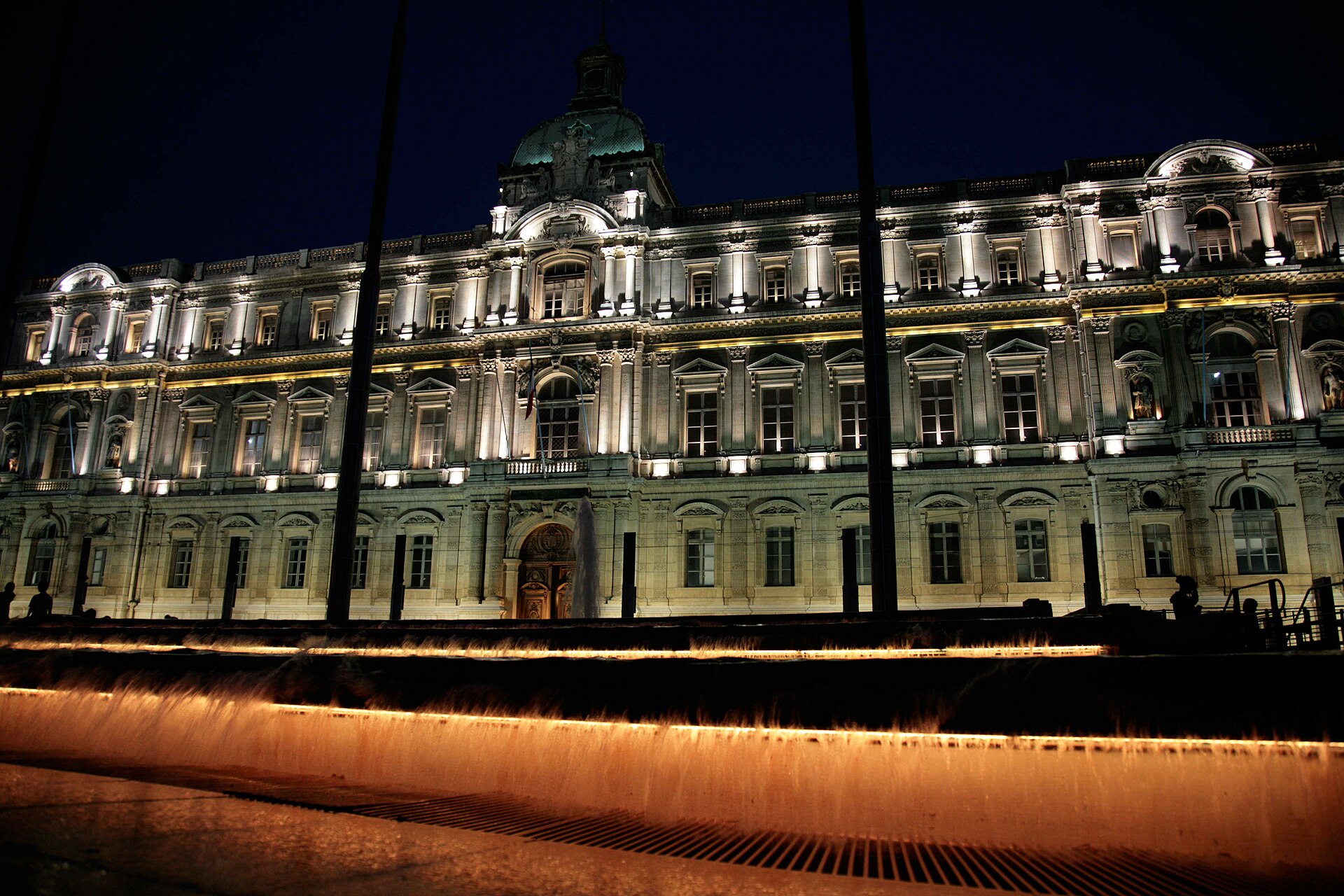
Place de la Préfecture in Marseille doesn’t announce itself with grand monuments or tourist crowds. It reveals itself slowly, unfolding as you wander through the city’s historic center and find yourself at the edge of its business district. This isn’t the Marseille of postcards—no sweeping harbor views or iconic basilicas. Instead, it’s a place where the city’s pulse feels unfiltered, where the rhythm of daily life takes precedence over spectacle.
The buildings surrounding the square are unassuming at first glance, but their facades tell a layered story. Traces of neoclassical design blend with modern renovations, a quiet testament to the city’s evolution. The square itself is anchored by the Préfecture des Bouches-du-Rhône, a mid-19th-century structure built when Marseille was transforming into a major port and commercial hub. Its imposing columns and sculpted details speak to an era when administrative buildings were meant to project authority. The heavy doors still lead to halls where regional governance unfolds, just as it has for over a century and a half.
Beside the préfecture stands the Hôtel de Ville, Marseille’s city hall. Rebuilt in the 20th century, it retains the warm, sun-bleached aesthetic of southern French architecture. Across the square, contemporary office buildings rise, their glass and steel contrasting with the older stonework. This juxtaposition of old and new isn’t unique to the square—it’s a defining feature of Marseille itself, a city that has always absorbed change without erasing its past.
There are no museums here, no cafés with sea views, no grand monuments to photograph. On weekdays, the square hums with activity: civil servants hurrying to work, locals running errands, the occasional protest or public gathering. On weekends, it quiets down, offering a chance to notice the small details—the way light plays across the stone facades, the worn edges of the pavement, the way the trees cast shifting shadows. It’s a place where the city’s administrative heart beats steadily, unobtrusive but essential.
The square’s origins lie in a 19th-century redevelopment that swept away a maze of narrow streets and old houses. The préfecture was one of the first new structures to rise here, reshaping the neighborhood into the administrative core it remains today. If you explore the surrounding streets, you’ll find remnants of the past—faded signs, fragments of older facades, entire buildings that survived the demolitions. These glimpses of history are easy to miss, but they’re part of what makes the area feel lived-in rather than staged.
For most visitors, Place de la Préfecture is little more than a transit point, a place to pass through on the way to the Vieux-Port or Le Panier. But if you’re looking for a Marseille that exists beyond the guidebooks, it’s worth lingering here. Watch how the light changes on the buildings at different times of day—how the stone warms in the afternoon sun or takes on a cool, gray hue in the morning. Listen to the sounds: the hum of traffic, the murmur of conversations, the distant clatter of the port. There’s no grand narrative here, no legendary figures or dramatic events tied to the square. Instead, it offers something rarer—a sense of the city as it is, not as it’s packaged for visitors.
The seasons leave their mark on the square in subtle ways. In winter, the bare trees and muted facades give it a stark, almost austere quality. Spring and summer soften the scene, with greenery filling the planters and the air carrying the scent of flowers. Autumn brings a golden light that makes the buildings glow, their stone surfaces seeming to absorb the warmth of the sun. It’s not a place that demands attention, but it rewards those who pay it.
There’s no single story to tell about Place de la Préfecture, no dramatic tale of revolution or artistic genius. Its value lies in its ordinariness, in the way it reflects the everyday life of Marseille. It’s a place where the city’s administrative machinery hums quietly in the background, where locals go about their routines, where the past and present coexist without fanfare. If you’ve come to Marseille for more than just its famous sights, this is where you might find it—not in the extraordinary, but in the unremarkable moments that make the city feel real. You may not leave with a photograph worth framing, but you’ll carry something less tangible and perhaps more meaningful: a sense of Marseille as it truly is.