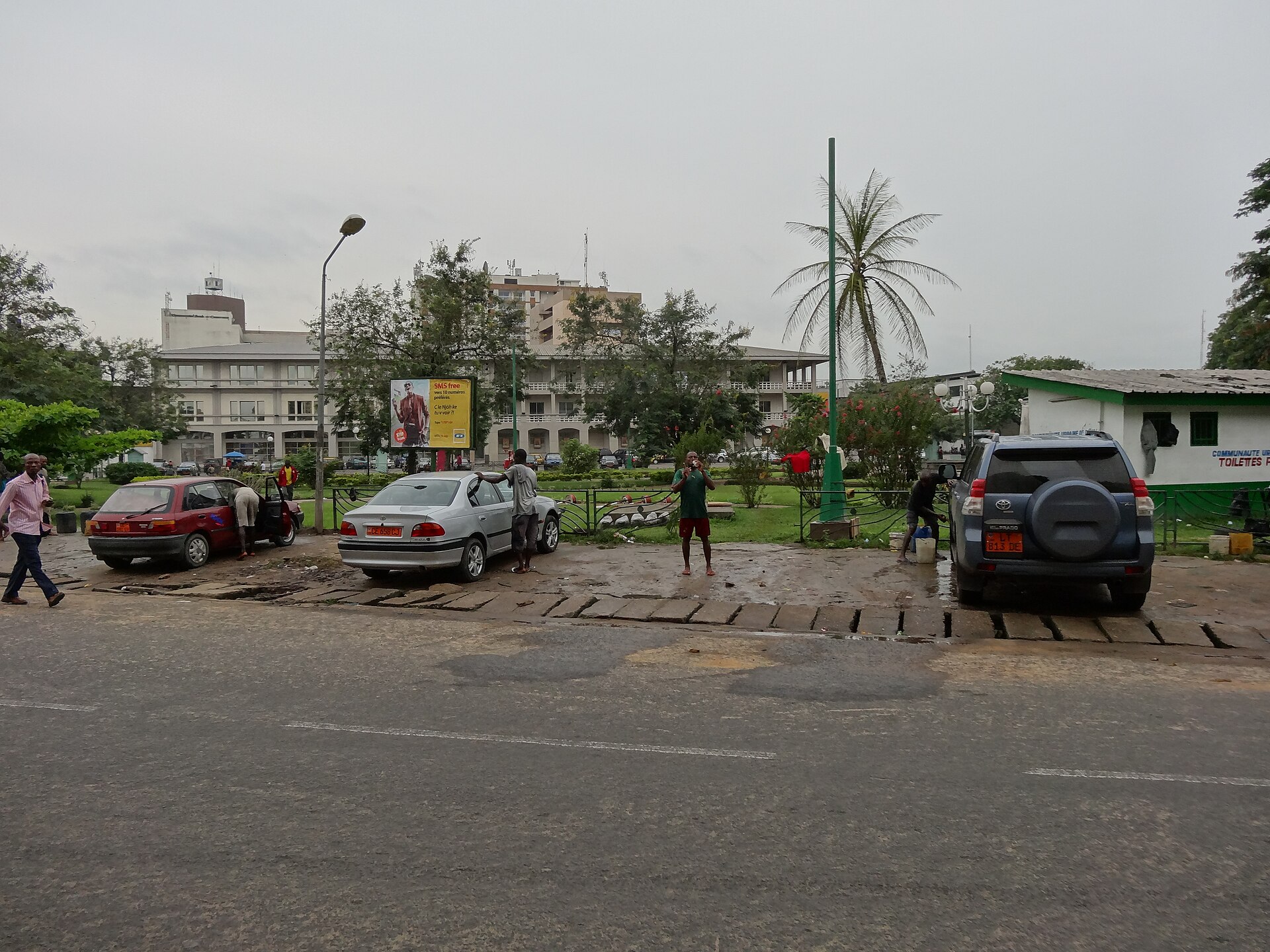
Government Square in Douala is one of those places where the city’s past and present intersect quietly, without fanfare. It’s not the kind of spot that appears in glossy travel brochures or tops lists of must-see attractions, but that’s part of its charm. The square sits at the heart of Cameroon’s largest city, a place where the rhythms of daily life unfold against a backdrop of colonial-era architecture and the hum of a bustling urban center. For those who take the time to linger, it offers a glimpse into the layers of history that have shaped Douala—from its days as a German trading post to its role as a key economic hub in modern Cameroon.
The square itself is modest in size, framed by a mix of buildings that reflect different eras of the city’s development. The most prominent structure is the former German governor’s residence, a stately building with high ceilings, arched windows, and a facade that hints at the grandeur of early 20th-century colonial design. Built during the German colonial period in the late 1800s and early 1900s, it was later repurposed by French administrators after Germany’s defeat in World War I. Today, it houses government offices, its corridors still echoing with the weight of decisions made over the decades. The architecture is a reminder of how Douala, like much of Cameroon, has been shaped by external powers—first Germany, then France—each leaving their mark on the city’s physical and cultural landscape.
Around the square, the streets are alive with activity. Vendors sell fresh fruit, roasted plantains, and spiced peanuts from makeshift stalls, their voices blending with the honking of taxis and the occasional call to prayer from a nearby mosque. Douala is a city of movement, and Government Square is no exception. Office workers hurry past in crisp shirts and dresses, while motorbike taxis weave through traffic, their drivers shouting destinations over the din. The square isn’t just a government precinct; it’s a crossroads where different facets of the city converge. Here, the formal and the informal coexist—the bureaucratic routines of state institutions alongside the improvisational energy of street life.
The history of Government Square is intertwined with Douala’s evolution as a commercial center. Long before the colonial powers arrived, the area was part of the territory of the Duala people, who established settlements along the Wouri River. The river, which flows just a short distance from the square, was a vital trade route, connecting the interior of Cameroon with the Atlantic coast. When German traders and missionaries arrived in the late 19th century, they recognized the strategic importance of the location and began developing Douala as a port city. The square became a focal point of this development, serving as an administrative hub for the colonial government. Even after Cameroon gained independence in 1960, the square retained its role as a center of governance, though its significance has shifted with the changing priorities of the country.
Walking through Government Square, it’s easy to overlook the small details that tell the story of the place. The worn steps of the old governor’s residence, the faded paint on the colonial-era buildings, the way the sunlight slants across the pavement in the late afternoon—all of these elements contribute to the square’s atmosphere. There are no grand monuments here, no towering statues or elaborate fountains. Instead, the square feels like a lived-in space, one that has been shaped by the people who pass through it every day. On weekends, it’s quieter, with families strolling along the sidewalks and children playing in the open areas. During the week, the pace quickens, as civil servants, businesspeople, and visitors go about their routines.
One of the most interesting aspects of Government Square is how it reflects the broader tensions and contradictions of Douala itself. The city is Cameroon’s economic powerhouse, a place of opportunity and industry, but it’s also a city of stark contrasts. Wealth and poverty exist side by side, and the square is no exception. Just a few blocks away, the gleaming towers of banks and multinational corporations rise into the sky, while in other parts of the city, informal settlements sprawl along the riverbanks. Government Square sits somewhere in between—neither the most affluent nor the most deprived part of Douala, but a place where the complexities of the city are on full display.
For visitors, Government Square offers a chance to experience Douala beyond the usual tourist sites. It’s not a place to rush through, but rather one to observe, to sit on a bench and watch the world go by. The square is a microcosm of the city’s energy, its history, and its contradictions. It’s a reminder that Douala, like many African cities, is a place of constant reinvention, where the past is never far from the surface. Whether you’re interested in history, architecture, or simply soaking up the atmosphere of a vibrant urban space, the square provides a quiet corner of the city where you can do just that.
In the end, Government Square is what you make of it. For some, it’s just another stop on the way to somewhere else. For others, it’s a place to pause and reflect on the forces that have shaped Douala over the centuries. It doesn’t demand attention, but for those who pay it, the square offers a deeper understanding of the city and its people. It’s a place where history is not just preserved in buildings, but lived and breathed every day.