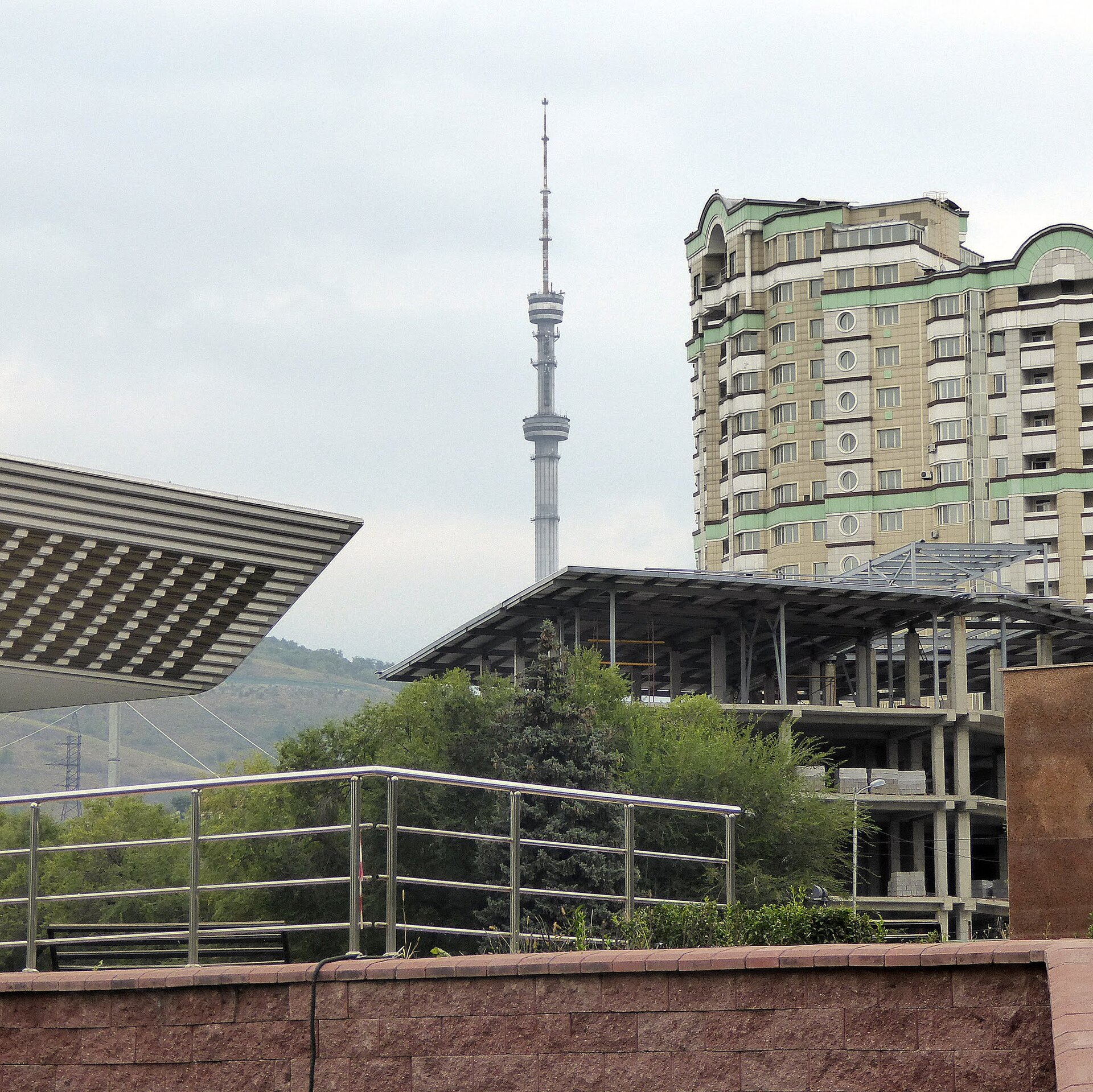
Independence Square in Konaev is one of those quiet urban spaces where the city seems to pause, offering a moment of reflection. It’s not a place overrun by tourists or flashy advertisements, but rather a spot where the rhythm of the town becomes tangible. Located in the heart of Konaev, the square serves as a natural starting point for exploring the city, bridging its past and present in a way that feels unforced and genuine.
The architecture here is understated yet deliberate. There’s no grandiosity or excessive ornamentation, common in many post-Soviet central squares. Instead, the design prioritizes function and symbolism. At its center stands a modest stele crowned with a figure representing Kazakhstan’s independence. It’s not towering, but its silhouette is unmistakable from various points in the city. Around it, flowerbeds bloom in summer and fade under snow in winter, adding a touch of color to the otherwise muted tones of the surrounding buildings.
Independence Square is more than just a monument—it’s a living part of the city’s social fabric. Locals gather here for holidays, Independence Day celebrations, concerts, and public events. In warmer months, children ride bicycles along the paths while elderly residents stroll through the alleys. When winter arrives, the square transforms into a festive hub with a decorated New Year’s tree, drawing families and friends together. Despite Konaev’s modest size, the square plays a central role in community life, bringing different generations into the same space.
The history of the square is intertwined with that of the city itself. Konaev, formerly known as Kapchagay, began as a small settlement that grew around the construction of the Kapchagay Hydroelectric Power Station and its reservoir. During the Soviet era, the town developed its own identity, and the square, like many public spaces of that time, reflected the values and aesthetics of the period. After Kazakhstan gained independence, the city was renamed in honor of Dinmukhamed Kunaev, a prominent political figure, and the square took on its current name, marking a new chapter in the region’s story.
Today, Konaev is a city in transition, and Independence Square is where these changes are most visible. Soviet-era buildings stand alongside modern cafes and shopping centers, while worn asphalt paths gradually give way to well-maintained walkways. The square embodies the uncertainty of a place still shaping its future, yet actively moving forward. It’s a space where the old and the new coexist, sometimes awkwardly, but always with a sense of possibility.
For visitors, the square might seem like just another urban plaza, but for locals, it holds deeper meaning. It’s where school reunions take place, where wedding photos are shot, and where friends meet to catch up. In this way, Independence Square isn’t just an architectural landmark—it’s a living part of the city’s culture, absorbing the stories and moods of the people who pass through it.
Konaev doesn’t aspire to be a tourist hotspot, and Independence Square isn’t a must-see attraction. That’s part of its charm. There’s no pressure to perform or meet expectations; the square simply exists as a natural extension of the city’s daily life. It doesn’t demand attention but quietly invites those who take the time to notice it.
If you ever find yourself in Konaev, don’t rush past the square. Take a moment to sit on one of the benches, observe the details, and listen to the conversations around you. In a place like this, the essence of the city reveals itself not in grand gestures, but in the small, everyday moments that define life in a small Kazakh town. Konaev won’t overwhelm you with dramatic history, but it might just offer a quiet understanding of how places like this live, change, and endure.