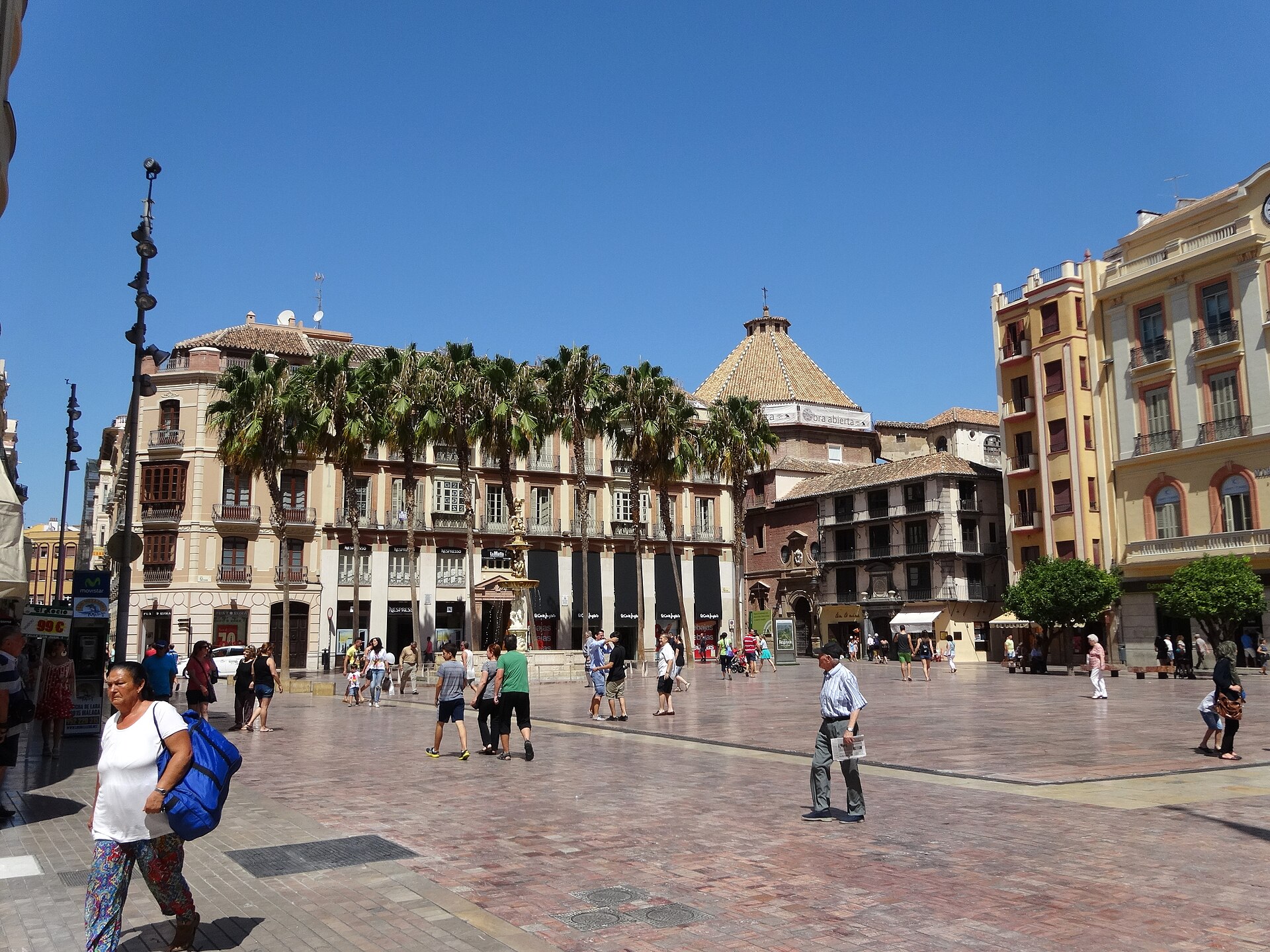
Plaza de la Constitución is one of those rare places in Málaga where the city reveals itself without pretense, as if laying bare its very essence. There are no grand monuments here, no attractions that draw crowds of tourists with their flashy promises. Instead, what you find is something far more compelling: the pulse of everyday life, the layers of history woven into the present, and that unmistakable atmosphere that makes people return to Málaga again and again. Tucked into the heart of the historic center, the square feels like a world apart when you step onto it from the narrow streets that lead here. It’s lively, colorful, and somehow intimate all at once, a place where the city’s energy is both palpable and welcoming.
The history of this square stretches back centuries, its roots tangled in the city’s past. In medieval times, it was the site of an Arab market, a bustling hub of trade and daily life. After the Reconquista, it became the focal point of Christian Málaga, evolving over time into the vibrant public space it is today. The square has worn many names—Plaza Mayor in the 16th century, Plaza de la Constitución in the 19th, when Spain adopted its first constitution. That name still lingers, a quiet reminder of the country’s turbulent journey toward democracy, though the square itself has long since shed its role as a stage for protests and political rallies. Now, it’s simply a place where life unfolds: people sip coffee, stroll, meet friends, and carry on traditions that have been passed down through generations of malagueños.
The architecture of Plaza de la Constitución is a physical chronicle of the city’s evolution. The buildings that line the square are a patchwork of styles, from the restrained elegance of Andalusian Baroque to the cleaner lines of later neoclassical influences. The town hall, built in the early 20th century, stands out with its imposing portal and wrought-iron balconies, but the real magic of the square lies not in any single structure but in how they all come together. The facades, with their weathered stone and faded paint, create a harmonious whole, each element complementing the next. Even the modern cafés and shops that occupy the ground floors feel like they’ve always been there, seamlessly blending into the scene rather than disrupting it.
At the center of the square, a modest but graceful fountain serves as its unofficial emblem. Water cascades gently from one shallow basin to another, its soft murmur mingling with the sounds of footsteps, conversations, and the occasional clatter of a passing tram. The fountain has stood here since the 19th century, and little has changed since then—except, perhaps, the tourists who now gather around it, trying to capture the perfect photograph. For locals, it’s just part of the scenery: some pause to rest on its edge, others walk by without a second glance, as if it’s always been there, as unremarkable as the air they breathe.
Plaza de la Constitución is more than just an architectural landmark; it’s a place where Málaga reveals itself in all its complexity. Here, you can witness the city’s daily rhythms in their most unfiltered form. Mornings begin quietly, with cafés opening their doors and chairs being set out on terraces. The first customers arrive, ordering coffee and churros, their voices blending with the hum of the waking city. By midday, the square is alive with activity: tourists snap photos by the fountain, children dart between the crowds, and street musicians tune their guitars. As evening falls, the atmosphere shifts again. The square fills with laughter and music drifting from nearby bars, the air thick with the scent of grilled seafood and fresh bread.
The square takes on a special energy during Málaga’s festivals. In February, when the city celebrates its famous Carnival, Plaza de la Constitución becomes one of the main stages for the festivities. Concerts, dances, and costume contests spill out onto the cobblestones, while the surrounding streets teem with people in vibrant outfits. In December, the square transforms once more, this time into a winter wonderland. A towering Christmas tree appears, strings of lights crisscross overhead, and festive markets offer everything from handmade ornaments to warm cups of chocolate. Even if you visit outside of these celebrations, the square never feels dull. There’s always something to see, whether it’s the changing light on the old buildings or the steady flow of people going about their day.
For those who want to linger, the square offers plenty of ways to pass the time. You can duck into one of the historic cafés, where the menu features traditional Andalusian dishes like espetos de sardinas or salmorejo, or simply find a bench and watch the world go by. The streets radiating from the square are lined with small shops selling everything from local delicacies to handcrafted souvenirs. A short walk away, the Mercado de Atarazanas beckons with its stalls of fresh fish, olives, and fruit, while the city’s many museums—including the Picasso Museum, born just blocks from here—offer a deeper dive into Málaga’s cultural heritage.
What makes Plaza de la Constitución so special is its authenticity. There’s nothing staged or artificial about it; it’s just life as it’s always been lived in Málaga. The noise of the street, the aroma of coffee, the slightly worn beauty of the old buildings—it all feels real, unpolished, and deeply human. This is a place where you can sense the city’s heartbeat, where you begin to understand why people fall in love with Málaga. Whether you’re here for a day or a week, the square will always be waiting, as lively and welcoming as the city itself. It doesn’t demand your attention; it simply offers itself, a quiet invitation to step into the rhythm of Málaga and let the city work its magic.