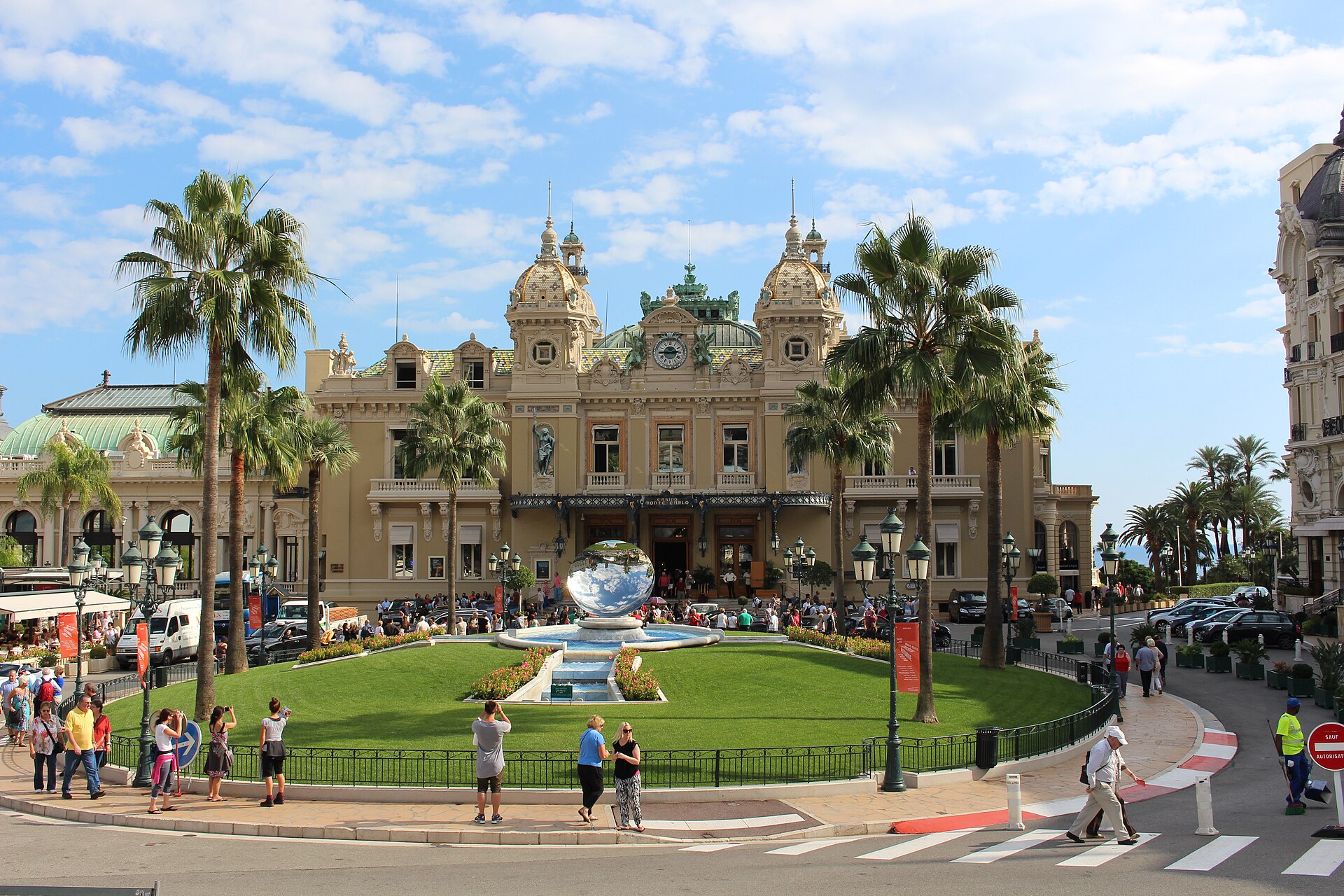
Monte Carlo’s Casino Square is one of those rare places where time seems to move differently, as if the air itself carries the weight of stories too extravagant for ordinary streets. It isn’t just the center of the city—it’s the stage where Monaco’s most enduring myths unfold, where the clink of champagne glasses and the murmur of high-stakes games blend into the rhythm of the evening. The square doesn’t announce its grandeur; it simply exists, effortlessly elegant, as if the very idea of excess had been refined into something tasteful. The buildings, the people, even the way the light catches the sea in the distance—everything here feels deliberate, as though each detail has been polished over decades to maintain a certain kind of magic.
The architecture is a love letter to the Belle Époque, an era when wealth wasn’t just displayed but celebrated with theatrical flair. The Casino de Monte-Carlo, the square’s undisputed centerpiece, is a masterpiece of the Beaux-Arts style, its façade a symphony of columns, statues, and intricate stonework. Inside, the opulence continues with marble floors, gilded ceilings, and chandeliers that seem to drip light. Next to it stands the Hôtel de Paris, its presence just as commanding, its history just as rich. Together, they form an ensemble that feels both timeless and slightly surreal, like a set from a film that never quite ended. These buildings weren’t just constructed; they were crafted to create an illusion—one that still holds up remarkably well.
The square’s history is inseparable from Monaco’s own. In the mid-19th century, the principality was on the brink of financial ruin. Prince Charles III, desperate to save his tiny nation, gambled on an audacious plan: he would turn Monaco into a playground for the world’s elite. The casino, opened in 1863, was the cornerstone of this strategy. Almost overnight, it transformed Monte Carlo from a sleepy coastal town into a destination for aristocrats, industrialists, and later, Hollywood stars. The square became the place where fortunes were made and lost, where Russian grand dukes played roulette alongside European nobility, and where the likes of Grace Kelly and Cary Grant strolled between takes. It wasn’t just a square; it was the epicenter of a new kind of glamour, one that would define Monaco for generations.
Today, Casino Square remains a living part of the city, not just a relic of the past. Mornings are quiet, the kind of quiet that comes with the absence of crowds—just the occasional local walking their dog or a tourist lingering over a coffee at one of the outdoor cafés. By midday, the square begins to stir. Visitors pose for photos in front of the fountain, their laughter mixing with the sound of the sea. Some wander into the casino’s gardens, a small but meticulously maintained oasis where the scent of jasmine lingers in the air. As evening falls, the square undergoes a transformation. The lights come on, the music from the casino spills onto the pavement, and the atmosphere shifts. There’s no rush here, no urgency—just the unhurried pace of a place that knows it doesn’t need to prove anything.
What makes Casino Square fascinating isn’t just its association with wealth or fame, but the way it functions as an open-air museum of Monaco’s cultural legacy. The Opéra de Monte-Carlo, adjacent to the casino, has hosted some of the greatest performers in history since its opening in 1879. Its interiors, adorned with frescoes and gold leaf, are a testament to the era’s obsession with beauty. Nearby, the Casino Gardens offer a quiet retreat, a place to sit and watch the Mediterranean shimmer under the sun. Even the smaller details—the wrought-iron lampposts, the cobblestones worn smooth by decades of footsteps—tell a story. This is a place where history isn’t confined to plaques or exhibits; it’s woven into the very fabric of the square.
For many, Casino Square represents the ultimate fantasy of luxury—a place where anything seems possible, from winning a fortune at the tables to rubbing shoulders with celebrities. But the real allure isn’t in the money or the fame; it’s in the atmosphere. There’s a sense of escapism here, a feeling that for a few hours, you can step into a world where the rules are different. It’s the same feeling that drew F. Scott Fitzgerald to the French Riviera, the same magic that made Monte Carlo a backdrop for countless films. The square doesn’t just invite you to observe; it invites you to participate, if only for an evening, in a story that’s been unfolding for over a century.
Yet Casino Square isn’t frozen in time. It remains a vital part of Monaco’s identity, a place where the past and present coexist without conflict. Modern events—concerts, film premieres, high-society gatherings—keep it relevant, but they never overshadow its history. The square hasn’t become a museum; it’s still a place where life happens, where the clatter of high heels on cobblestones mixes with the distant hum of a yacht’s engine. That balance is what makes it enduring. It doesn’t need to shout to be heard; it simply is, a quiet testament to the idea that some places are more than just locations—they’re experiences, waiting to be discovered.