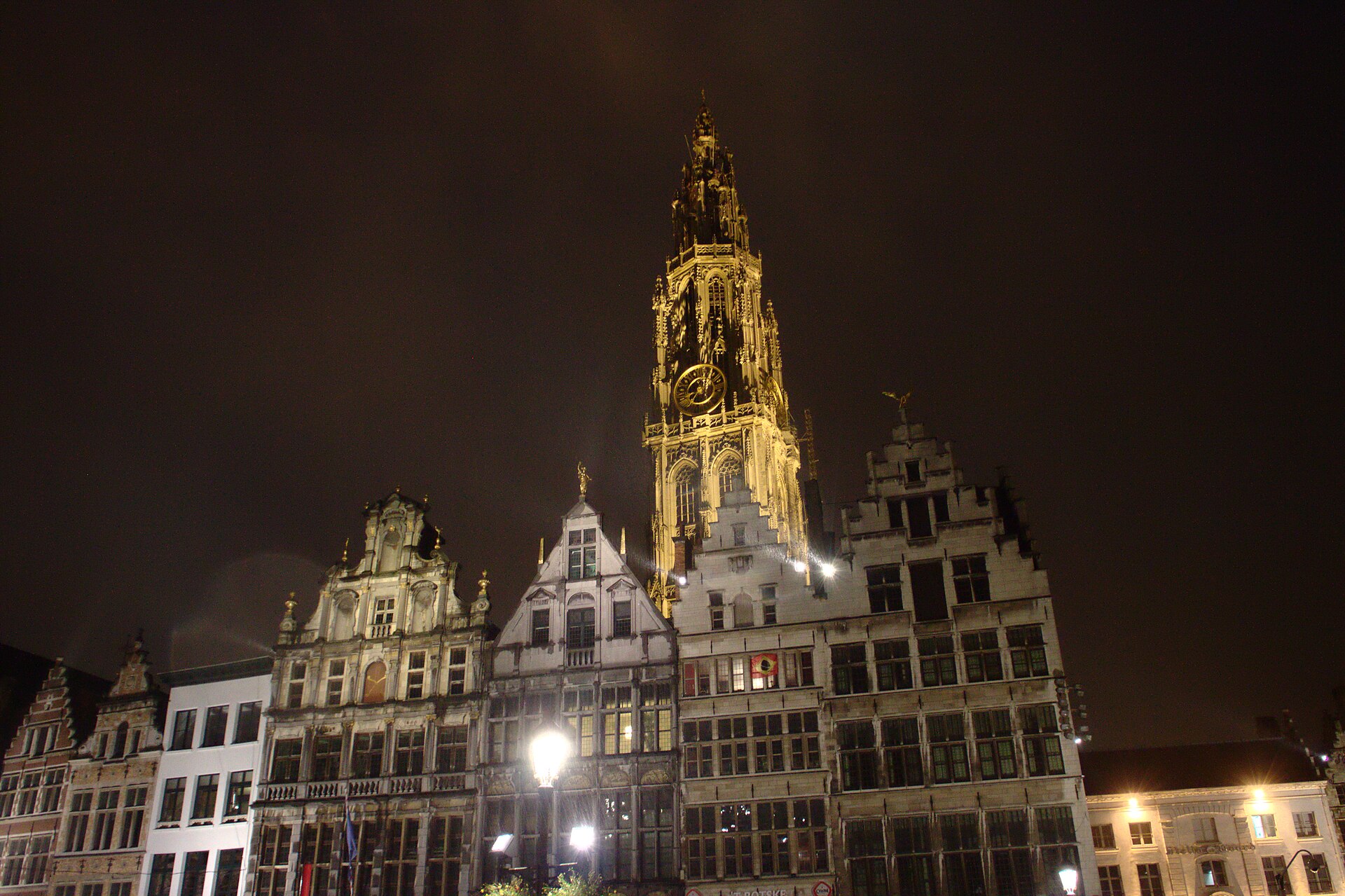
Grote Markt is the heart of Antwerp, a square that has witnessed centuries of the city’s life unfold. It sits at the center of the old town, surrounded by buildings that tell stories of trade, power, and art. The square’s name translates simply to "Great Market," and for much of its history, that’s exactly what it was—a bustling hub where merchants, guilds, and townspeople gathered to buy, sell, and socialize. Today, it remains a place where locals and visitors alike pause to soak in the atmosphere, whether over a coffee at one of the outdoor terraces or while admiring the ornate facades that line its edges.
The architecture here is a mix of styles, each layer revealing a different chapter of Antwerp’s past. The most striking feature is the Brabo Fountain, a bronze statue of a Roman soldier standing at the center of the square. According to legend, Brabo was a local hero who cut off the hand of a giant named Antigoon, who had been terrorizing the Scheldt River and demanding tolls from passing ships. The statue depicts Brabo hurling the giant’s hand into the river, a tale that gives Antwerp its name—"hand werpen," or "hand-throwing." The fountain itself is a 19th-century addition, but the story it represents is far older, woven into the city’s identity.
On the northern side of the square stands the Town Hall, a Renaissance masterpiece completed in the mid-16th century. Its facade is a striking example of Flemish architecture, with intricate stonework, gilded details, and statues of historical figures. The building has been the seat of local government for centuries, surviving wars, fires, and renovations. Inside, the grand halls and council chambers still bear the marks of Antwerp’s golden age, when the city was one of Europe’s most important trading centers. The Town Hall isn’t just a monument; it’s a living part of the city’s administration, though visitors can sometimes step inside to see its interiors.
Surrounding the square are the guildhalls, a collection of ornate buildings that once housed the city’s powerful trade guilds. Each one is unique, with facades adorned with gilded statues, elaborate carvings, and symbols of the trades they represented—brewers, butchers, fishmongers, and more. These guilds were the backbone of Antwerp’s economy during the Middle Ages and the Renaissance, and their halls were places of business, celebration, and sometimes conflict. Today, many of them have been repurposed as restaurants, cafes, or shops, but their exteriors remain as impressive as ever, offering a glimpse into the city’s mercantile past.
The square has always been a stage for public life. In the past, it hosted markets, executions, and festivals. During the annual Antwerp Summer Festival, Grote Markt transforms into an open-air venue for concerts, performances, and street theater. Even on ordinary days, the square is alive with activity—tourists snapping photos, locals chatting over drinks, and street musicians adding to the ambiance. The terraces of the cafes spill out onto the cobblestones, making it a perfect spot to people-watch or simply enjoy the rhythm of the city.
One of the most interesting things about Grote Markt is how it reflects Antwerp’s layered history. The square has seen the rise and fall of empires, the boom of the Golden Age, and the quiet periods in between. During World War II, parts of the old town were damaged, but the square and its surrounding buildings were carefully restored to their former glory. Walking through Grote Markt is like flipping through the pages of a history book, where each building and statue has a story to tell.
Beyond its historical significance, the square is also a place of everyday beauty. The cobblestones, worn smooth by centuries of footsteps, lead the eye toward the details—the way the light catches the gilded accents on the guildhalls, the way the Town Hall’s facade changes color in the afternoon sun, or the way the Brabo Fountain seems to watch over the square like a silent guardian. It’s a place where the past and present coexist, where a medieval legend feels as real as the people sitting at the cafe tables.
Grote Markt isn’t just a tourist attraction; it’s a living part of Antwerp. It’s where the city’s history is on full display, but it’s also where life happens—where a student might meet friends for a drink, where a couple might stroll after dinner, or where a visitor might sit and wonder about the stories hidden in the stones beneath their feet. There’s no grand spectacle here, just the quiet charm of a place that has been at the center of things for centuries. And that, perhaps, is what makes it so special.