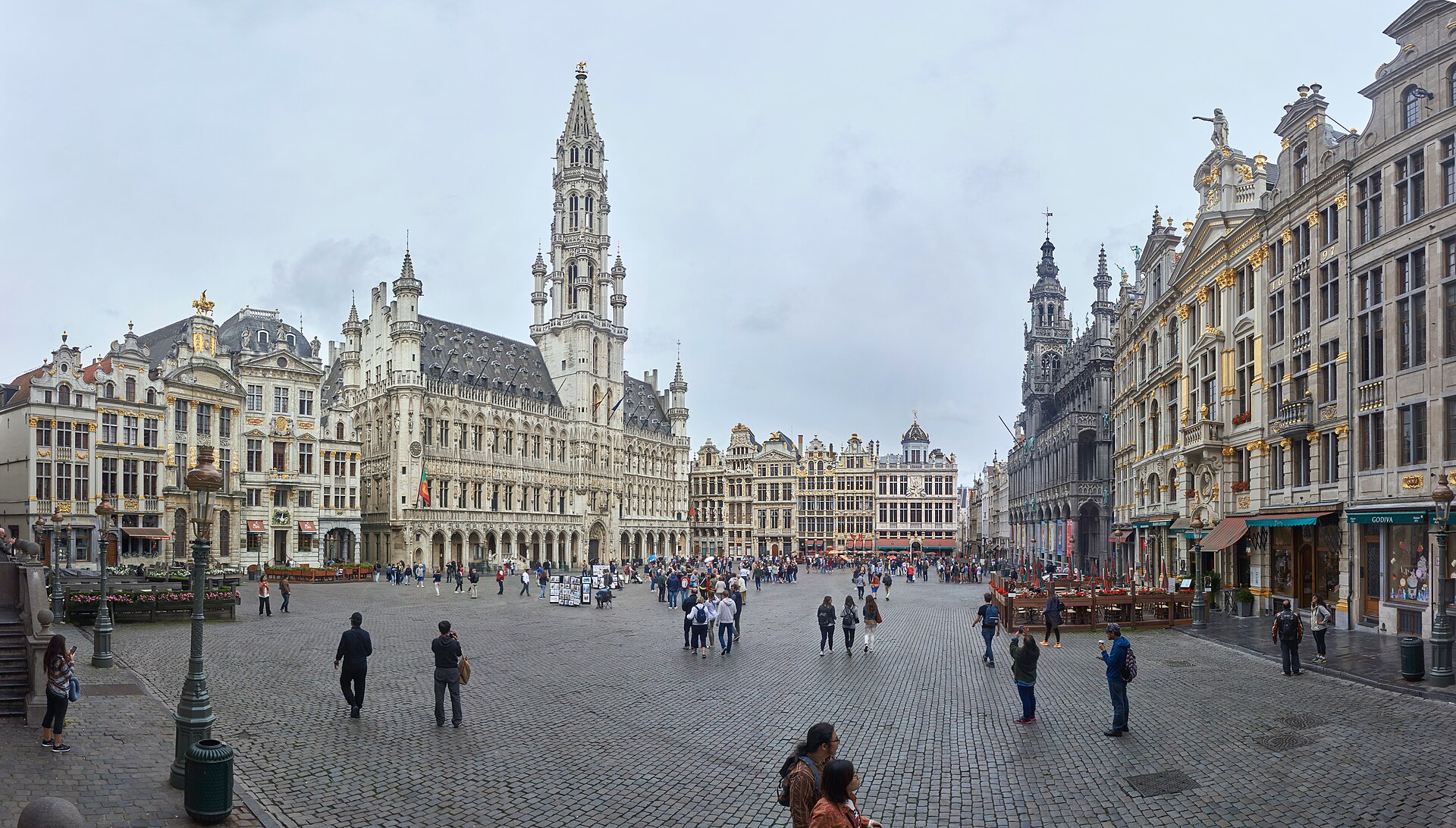
Grote Markt in Lier is one of those places where a town reveals itself without pretense. Unlike the crowded squares of Brussels or Bruges, this one moves at its own unhurried pace, where the past lingers in the details and life unfolds to the rhythm of the old town hall clock. The square is framed by low-rise buildings with Flemish Renaissance and Baroque facades, many of which have stood here since the 17th and 18th centuries. Their stepped gables, narrow windows, and carved wooden doors create the feeling of an open-air museum—except there are no ropes or plaques, just the quiet presence of history.
At the heart of the square stands the town hall, built in the early 19th century. Its facade is adorned with coats of arms and statues, while the clock above the entrance still marks time as it has for two hundred years. The building isn’t as grand as other Belgian town halls, but that’s part of its charm. Inside, exhibitions or city events occasionally take place, though more often than not, the hall simply watches over the square, a silent witness to the passage of time.
Next to the town hall rises the tower of Saint Gummarus, one of Lier’s most recognizable landmarks. At nearly eighty meters tall, it dominates the skyline and offers sweeping views of the town and surrounding countryside from its heights. The tower dates back to the 14th century and has endured wars, fires, and restorations. Today, it looks much as it did in the Middle Ages, though its internal mechanisms have been modernized. Still, the sound of its bells carries across the square, a reminder that some things endure.
Grote Markt isn’t just about architecture—it’s where everyday life unfolds. In the mornings, small cafés open their doors, serving coffee and fresh pastries, while locals browse the shops on the ground floors of the surrounding buildings. On weekends, the square comes alive with markets selling local cheeses, cured meats, beer, and even antiques. In summer, street musicians often perform, and in winter, a modest Christmas market appears, complete with mulled wine and gingerbread. None of it feels staged; it’s just the way things have always been here.
A fountain featuring a statue of Saint Gummarus, the town’s patron saint, occupies a special place on the square. The saint stands with a staff in hand, water cascading around him. The fountain was installed in the 19th century and has since become a fixture of the town’s landscape. Locals sometimes toss coins into the water, making wishes, though no one remembers the origin of the tradition. Perhaps it simply took root here, like so many other small customs.
The history of Grote Markt is intertwined with that of Lier itself. The town emerged in the Middle Ages as a trading hub along the Nete River, and the square has always been its heart. Markets were held here, townspeople gathered, and important decisions were made. In the 16th century, the square witnessed religious conflicts as Lier found itself caught between Catholics and Protestants. Later, during the world wars, the town was often on the front lines, yet the square survived, preserving its original character.
Today, Grote Markt is a place where you can simply sit on a bench and watch the town go by. There’s no rush, no need to be anywhere else. You might step into a café, order a glass of local beer, and spend an hour listening to conversations at nearby tables. Or you could wander the narrow streets leading away from the square, stumbling upon small shops selling handmade crafts. Lier doesn’t try to impress visitors with grandeur; it just exists, and Grote Markt is the best example of that.
In the evening, the square transforms. Lanterns cast a warm glow over the old facades, and the scent of mussels and fries drifts through the air. Small restaurants serve Flemish dishes, and if you’re lucky, you might hear an accordion or guitar playing in the background. At moments like these, it feels as though time has stood still, and Lier remains unchanged from a century—or two—ago.
Grote Markt isn’t just a landmark; it’s a living part of the town. It changes with Lier, yet remains constant in its essence. There’s nothing forced about it—just the quiet, unassuming rhythm of life. That’s why those who visit once often return, drawn back by the feeling of a place where time moves differently.