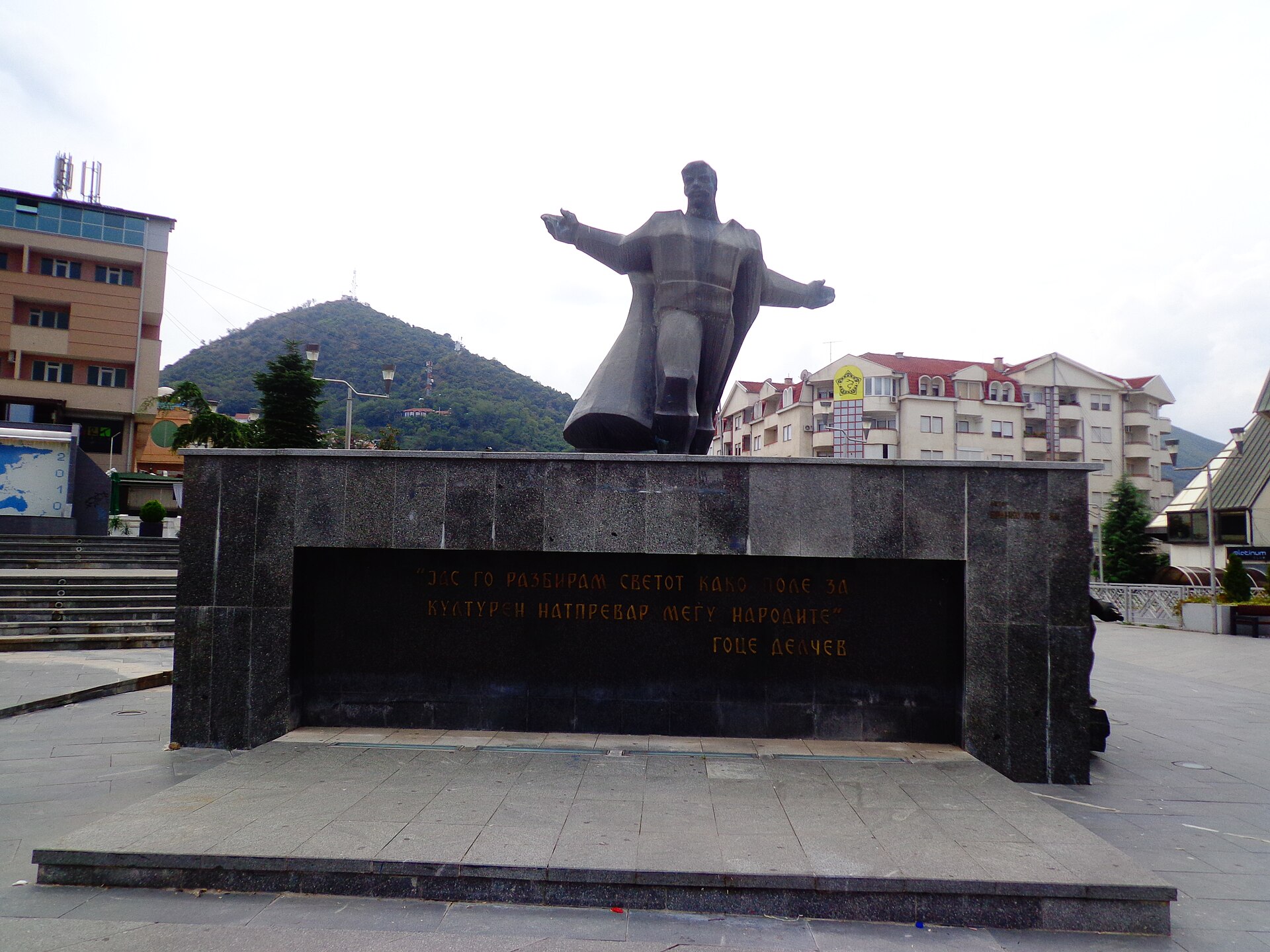
Strumica’s Goce Delčev Square is the kind of place where the city breathes at its own unhurried pace. It’s never empty—people rush to work, meet friends for coffee, or simply sit on a bench watching the world go by. The square isn’t large, but its modest size gives it an intimate, almost familial feel. Surrounded by cafés, small shops, and municipal buildings, it doesn’t just sit at the center of town; it feels like the heart of it.
The square takes its name from Goce Delčev, one of the most revered figures in Balkan history. A revolutionary who fought for Macedonia’s independence from Ottoman rule, Delčev remains a unifying symbol across generations. His bronze statue stands in the middle of the square, unassuming yet impossible to miss. The figure gazes into the distance, as if still keeping watch over the land he helped shape. For locals, the name isn’t just a label on a sign—it’s a reminder of resilience and shared identity.
The architecture around the square tells its own story, a patchwork of eras that’s typical of many Balkan towns. Early 20th-century buildings stand alongside more modern structures, yet somehow the mix feels natural. The most striking is the municipal building, with its classical lines and tall windows, constructed between the world wars when Strumica was part of Yugoslavia. Nearby, the old market stalls have been repurposed into cafés and small shops, their past life as a bustling bazaar still lingering in the air.
This isn’t just a place to pass through—it’s where the city gathers. Festivals, concerts, and even the occasional political rally take over the square throughout the year. In December, a Christmas tree transforms it into a hub of holiday cheer, while summer brings live music and impromptu dancing in the streets. But even on ordinary days, there’s a sense of celebration here, as if the square itself encourages people to slow down and take notice.
Strumica has a layered history, and Goce Delčev Square is where much of it comes into focus. Over the centuries, it has witnessed revolutions, wars, and quiet moments of change. During the Ottoman era, it was home to a busy market where goods from across the empire changed hands. Later, under Yugoslavia, it became an administrative center. Since Macedonia’s independence, it has taken on a new role as a symbol of the country’s modern identity. Yet despite its historical weight, the square never feels like a museum. It’s alive, evolving with the city around it.
What makes the square special isn’t grand monuments or ornate facades, but its authenticity. Locals don’t come here for Instagram photos—they come because it’s part of their daily rhythm. For visitors, it’s an ideal starting point to understand Strumica’s character: warm, unpretentious, and steeped in history without being stuck in it. The square doesn’t try to impress; it simply exists, and that’s enough.
As evening falls, the square takes on a different mood. Streetlights glow, cafés spill onto the pavement, and the scent of coffee and fresh bread fills the air. Summer nights bring the hum of conversation and the strum of a guitar somewhere in the distance. In winter, the square becomes a cozy refuge, with twinkling lights and steaming cups of tea making the cold feel less sharp. It’s a place where time slows down, where the past and present coexist without fuss.
Goce Delčev Square isn’t just a spot on a map. It’s where Strumica’s stories unfold—where the footsteps of revolutionaries, merchants, and everyday people have left their mark. There’s nothing forced or theatrical about it. The square is exactly what it needs to be: a quiet witness to life, as it has been for generations. And perhaps that’s why it feels so right.