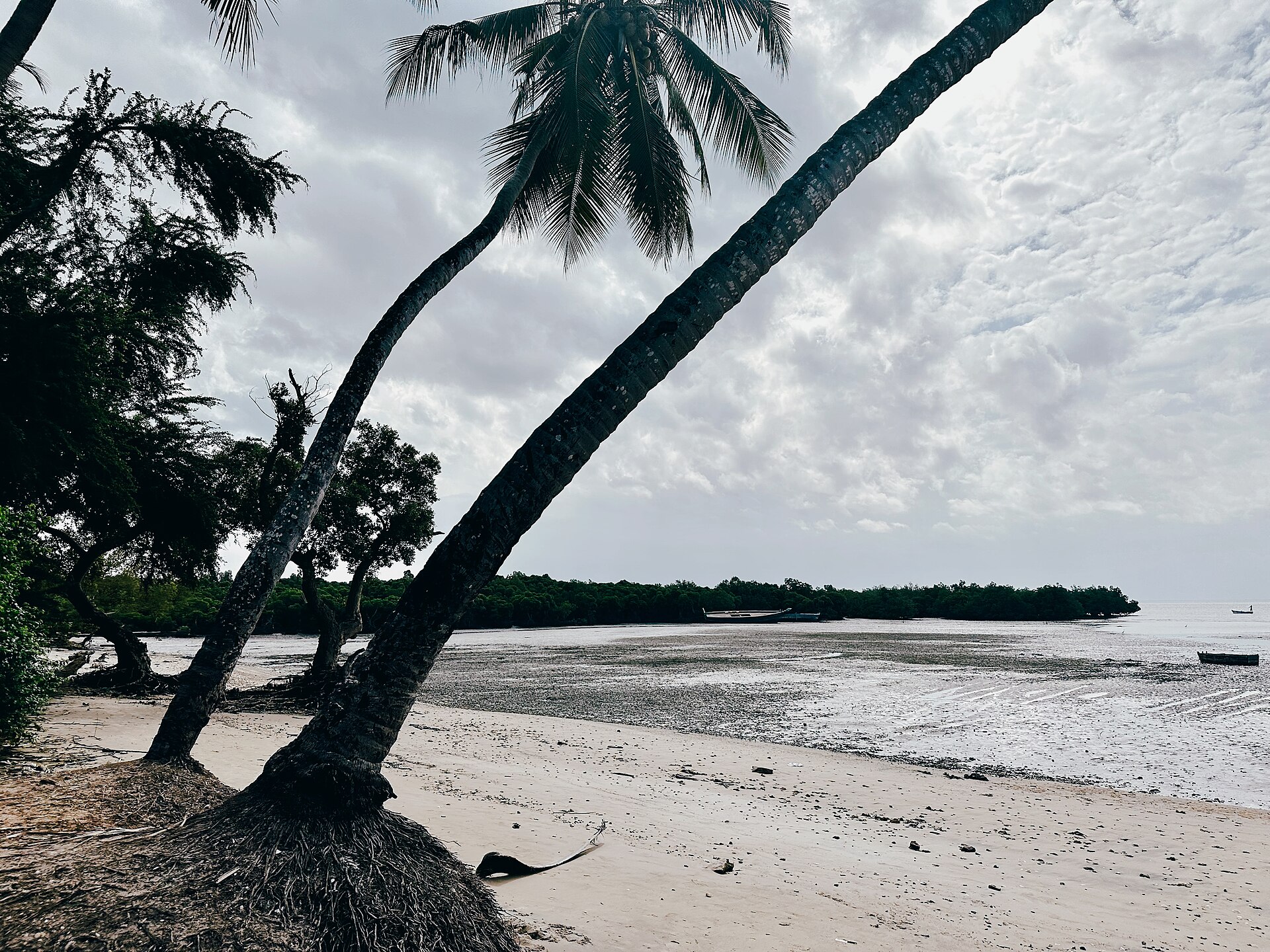
Tanga’s coastline is one of those places where the Indian Ocean feels almost too vast to take in all at once. The beaches here stretch in long, quiet arcs, their sand a pale gold that softens underfoot as the tide recedes. Unlike the more famous shores further south, Tanga’s beaches don’t draw crowds. There are no beachfront resorts with infinity pools or rows of sunbeds under thatched umbrellas. Instead, the rhythm of life moves to the sound of waves breaking against the reef, the occasional call of a fisherman hauling in his nets, and the distant chatter of women sorting through the morning’s catch.
The town of Tanga itself sits just a short distance from the water, its low-slung buildings and crumbling colonial facades hinting at a past that feels both recent and distant. Founded as a trading post in the 19th century, it was once a key port for the export of sisal, a fibrous plant that shaped the region’s economy for decades. The sisal plantations are still visible in the surrounding countryside, their orderly rows of spiky green plants stretching toward the horizon. But the industry has faded, and Tanga now exists in a quieter register, its port still active but no longer the bustling hub it once was.
The beaches near Tanga are part of a larger coastal ecosystem that has remained remarkably intact. The waters here are protected by a fringing reef, which creates a natural barrier against the open ocean. At low tide, the reef exposes shallow pools where small fish dart between coral heads, and children from nearby villages wade through the warm water, collecting shells or chasing crabs. The reef also means that the waves are gentler here than on other parts of Tanzania’s coast, making the beaches ideal for swimming, though the currents can still be unpredictable.
One of the most striking things about Tanga’s beaches is how little they’ve changed over the years. There are no high-rise hotels blocking the view of the ocean, no beach vendors aggressively hawking souvenirs. Instead, the shoreline is dotted with simple thatched huts where fishermen mend their nets or take shelter from the midday sun. In the early morning, the beach comes alive with activity as boats are launched into the water, their hulls painted in bright blues and reds. By afternoon, the same stretch of sand is nearly deserted, save for the occasional goat grazing on the dune grass or a lone figure walking along the water’s edge.
The lack of development doesn’t mean the beaches are empty of life, though. On weekends, families from Tanga and the surrounding villages come to picnic under the casuarina trees, their branches swaying in the sea breeze. Children build sandcastles or play football near the water, while the adults sit on woven mats, sharing food and stories. In the evenings, the beach takes on a different mood, the setting sun casting long shadows across the sand. Fishermen return with their catch, and the air fills with the smell of woodsmoke as fires are lit for cooking.
For those who venture beyond the main beach, there are quieter stretches of coastline to explore. To the north, near the village of Mwambani, the shore curves around a small bay where the water is so clear it’s possible to see the seabed even at high tide. The beach here is narrower, backed by low cliffs covered in scrubby vegetation. It’s a good place to spot seabirds—terns diving for fish, or herons standing motionless in the shallows. Further south, near the mouth of the Pangani River, the landscape shifts again, the sand giving way to mangrove swamps where the water is brackish and the air hums with the sound of insects.
The history of Tanga’s beaches is intertwined with the broader story of the Swahili Coast. For centuries, this stretch of shoreline was part of a network of trade routes that connected East Africa with the Arabian Peninsula, India, and beyond. Dhows, the traditional wooden sailing vessels, would have passed these very waters, carrying goods like ivory, spices, and slaves. The influence of that era is still visible in the architecture of Tanga’s old town, where coral stone buildings with intricately carved doors stand alongside more modest structures. Even the language spoken here, Swahili, is a testament to that history, its vocabulary a blend of Bantu, Arabic, and Persian words.
Today, the beaches of Tanga offer a glimpse of a coastal life that has remained largely unchanged for generations. There are no grand attractions or must-see landmarks, just the quiet beauty of the ocean meeting the land. The pace here is slow, dictated by the tides and the seasons rather than the demands of tourism. It’s a place where the days unfold without urgency, where the most memorable moments often come from simply sitting on the sand and watching the world go by. For those willing to look beyond the more obvious destinations, Tanga’s beaches reveal a side of Tanzania that is as authentic as it is understated.