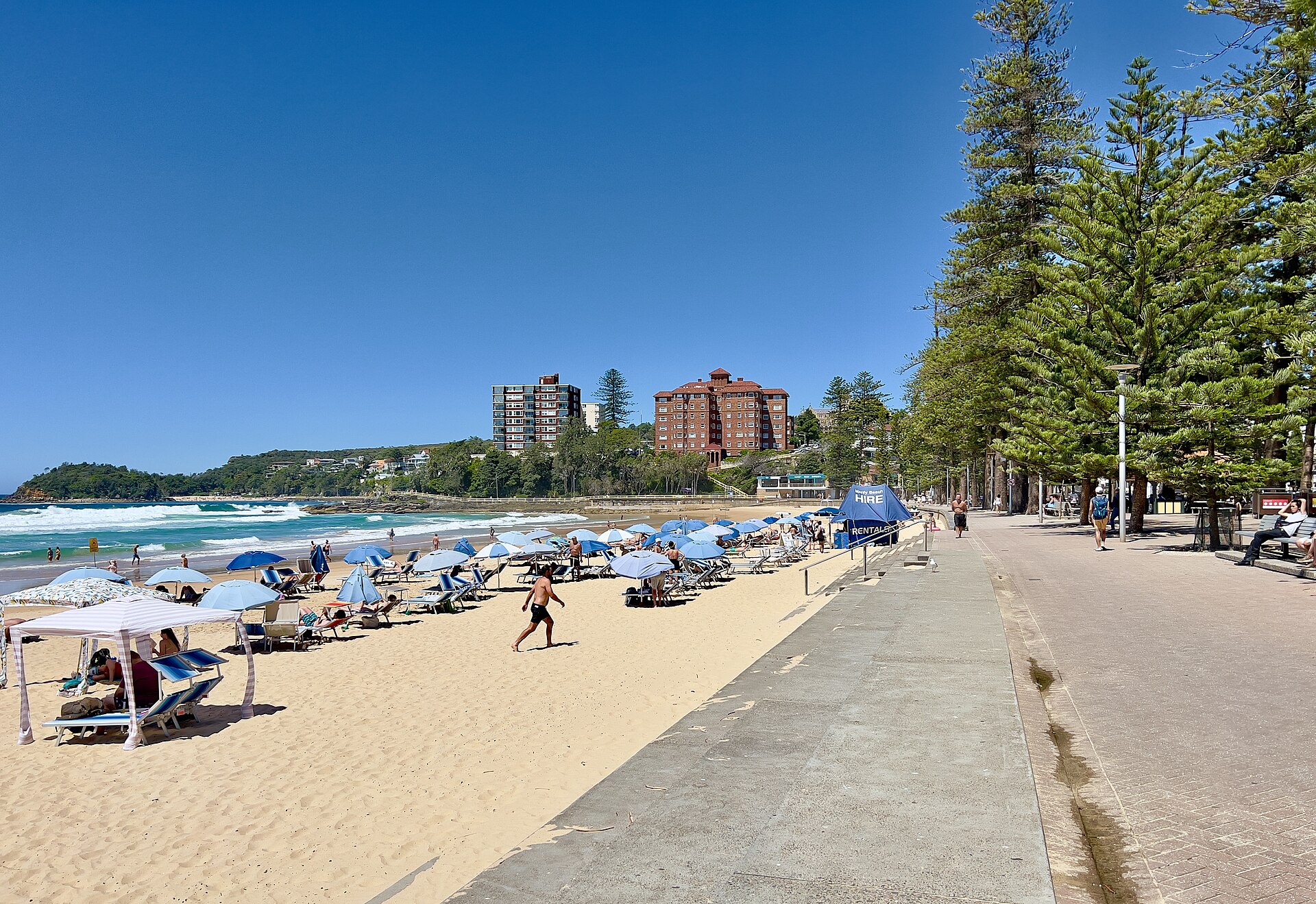
Manly isn’t just a beach—it’s a different side of Sydney, where the city’s energy dissolves into the rhythm of the ocean. A short ferry ride from the central harbour, it sits on the northern shore, far enough from the skyscrapers to feel like another world. The air carries the salt of the Pacific, and the pace slows to match the tides rather than the clock. This is where Sydney remembers it’s a coastal city, not just a metropolis.
Long before European settlers arrived, the land belonged to the Gamaraigal people, who called it Cadigal. For them, these shores were sacred, a place of sustenance and ceremony. When colonists claimed the area in the late 1700s, Manly quickly became a retreat for city dwellers seeking escape. By the 19th century, it had its first ocean baths and a promenade that still draws visitors today. The past lingers here—not as a relic, but as part of the place’s character, blending seamlessly with the present.
The beach stretches for over a kilometre, its pale sand meeting water that shifts from clear blue to turquoise depending on the light. Unlike Bondi, Manly feels less like a postcard and more like a local’s weekend spot. Families picnic under the Norfolk pines, surfers scan the horizon for waves, and dogs trot along the shore. The ocean can be gentle one day and wild the next, so lifeguards keep watch, though even they can’t predict its moods. It’s the kind of place where you learn to respect the water, not just admire it.
Behind the beach lies the town of Manly, small but lively. The Corso, its pedestrian heart, is a mix of old-school charm and modern energy. Cafés spill onto the pavement, surf shops sell wax and board shorts, and fishmongers display the day’s catch. In the afternoon, the scent of coffee and saltwater hangs in the air; by evening, the street hums with live music and the clink of glasses. It’s not polished or pretentious—just a place where people come to unwind, whether they’re locals grabbing a beer or visitors browsing for souvenirs.
But Manly isn’t just about the ocean side. On the harbour side of the peninsula, the water is calm, dotted with sailboats and kayaks. The promenade here offers views of Sydney Harbour Bridge and the city skyline, especially striking at sunset when the sky turns gold and pink. It’s quieter, a place for slow walks or sitting on a bench with a book, watching ferries glide past. The contrast between the two coasts—one wild, one serene—gives Manly its unique balance.
For those who want to stay active, there’s no shortage of options. You can rent a bike and ride along the coastal paths, hike through Sydney Harbour National Park, or try surfing. Local schools offer lessons for beginners, and even if you’ve never stood on a board, the instructors make it feel possible. If that’s too much, the bushwalking trails through eucalyptus forests lead to secluded coves where the only sounds are birds and waves. The national park is also home to parrots, flying foxes, and the occasional dolphin playing in the surf.
Wildlife is part of Manly’s appeal. Dolphins often swim close to shore, and during migration season, whales pass by in the distance. The area feels untamed in a way that’s rare so close to a major city. There are no towering fences or busy highways, just cliffs, beaches, and bushland. It’s a reminder that Sydney’s natural beauty isn’t confined to its famous landmarks—it’s woven into the landscape itself.
What makes Manly special is its lack of pretence. There are no luxury resorts or tourist traps, just small guesthouses, unassuming cafés, and a sense of being somewhere real. Locals come here to escape the city without leaving it, and visitors find a side of Sydney they didn’t expect. It’s not a place you see in a day. It’s a place you return to, each time noticing something new—the way the light hits the water in the morning, the laughter of kids playing in the shallows, or the quiet of the harbour at dusk. Manly doesn’t just show you Sydney; it lets you live it.