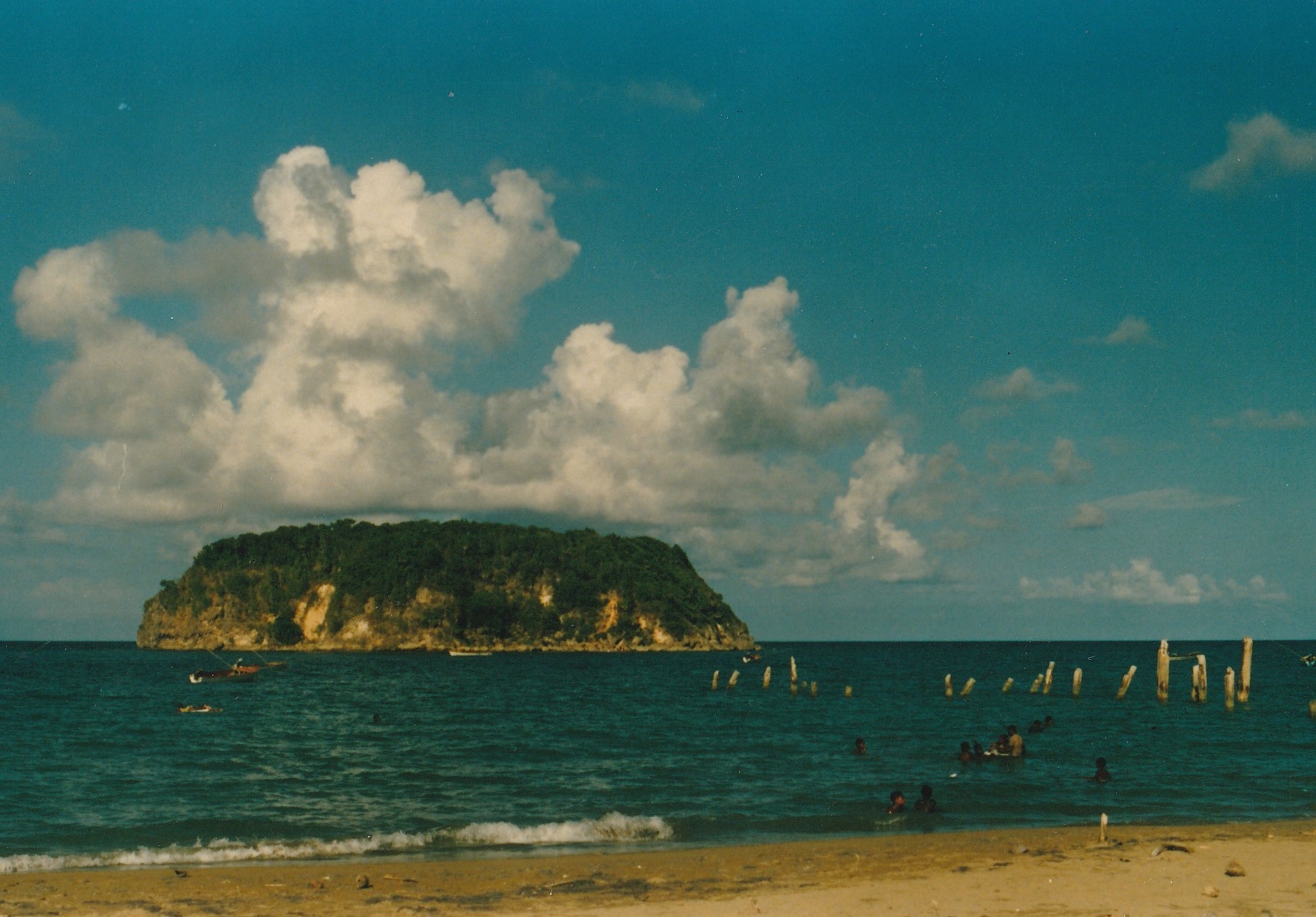
Port Maria’s Cabarita Beach is one of those quiet coastal spots that doesn’t announce itself with flashy signs or crowded boardwalks. Tucked along Jamaica’s northeastern shore, it sits just outside the town proper, where the road curves inland and the land softens into a stretch of sand framed by low hills and the steady rhythm of the Caribbean Sea. Unlike the more famous beaches to the west, Cabarita doesn’t draw the cruise ship crowds or the resort chains. Instead, it feels like a place where time moves a little slower, where the water is clear but not artificially turquoise, and where the only soundtrack is the wind through the sea grapes and the occasional laughter of locals pulling in their fishing boats.
The beach itself is narrow in some places, widening in others, with sand that shifts between pale gold and darker grains where the river meets the sea. That river, the Cabarita, gives the beach its name and adds a gentle current to the shoreline, making the water feel alive in a way that’s different from the still lagoons elsewhere on the island. The river mouth is shallow, good for wading, while further out the waves pick up enough to keep things interesting for swimmers who don’t mind a little movement. There are no lifeguards here, no rental umbrellas, just the natural ebb and flow of a working coastline.
What makes Cabarita feel distinct is how little it’s been altered by tourism. There are no high-rise hotels looming over the sand, no beach bars blasting reggae at full volume. Instead, a handful of small guesthouses and rum shops dot the edges of the beach, their wooden porches sagging slightly from years of salt air. Some have been here for generations, passed down through families who’ve fished these waters since long before Port Maria became a blip on any tourist map. The oldest of them, a weathered structure with a tin roof, still serves as a gathering spot where fishermen mend their nets and visitors can grab a cold Red Stripe or a plate of fried fish with festival bread.
The history of this stretch of coast is quieter than the stories of nearby Ocho Rios or Montego Bay, but it’s no less tied to Jamaica’s past. Port Maria was one of the island’s earliest Spanish settlements, and while the colonial era left few visible traces here, the land itself carries the weight of those centuries. The Cabarita River was once a route for small boats moving goods between the interior and the coast, and the beach would have been a landing point for everything from sugar to contraband. Later, during the era of banana and coconut plantations, the area became a hub for local trade, with schooners anchoring just offshore to load their cargo. Today, the only boats you’re likely to see are the small fishing canoes that come and go with the tides, their hulls patched and repatched over the years.
The vegetation along the beach tells its own story. Sea grapes grow in thick clusters, their broad leaves providing shade and their fruit, when in season, offering a tart snack that locals sometimes turn into jelly. Further back, coconut palms lean toward the water, their fronds rattling in the breeze. These aren’t the manicured palms of a resort beach; they’re wild, some of them bent nearly horizontal by years of storms. After a hurricane, the beach can look dramatically different, with debris washed up and the dunes reshaped, but the trees always seem to recover, their roots gripping the sand like they’ve done for decades.
For most of the year, Cabarita is a place where you might have the beach to yourself, especially on weekdays. The weekends bring a few more people—families from Port Maria setting up picnics, teenagers daring each other to jump from the low cliffs at the river mouth, the occasional traveler who’s wandered off the beaten path. There’s no pressure to do anything in particular here. You can walk the length of the beach in about twenty minutes, or you can sit under a sea grape tree and watch the pelicans dive for fish. The water is warm enough to stay in for hours, and if you’re lucky, you might spot a stingray gliding through the shallows or a school of tiny silver fish scattering at your approach.
The light at Cabarita has a way of making everything feel softer, especially in the late afternoon when the sun slants low over the water. The hills to the west catch the last of the daylight, turning from green to gold, while the sea takes on a deeper blue. It’s the kind of light that makes you want to linger, even after the air turns cool and the first stars appear. There are no fireworks here, no beach parties, just the quiet satisfaction of a day spent in a place that hasn’t been packaged for visitors. That’s not to say it’s untouched—Jamaica’s coasts have seen their share of change—but Cabarita retains a sense of authenticity that’s harder to find in more developed areas.
If you do decide to stay awhile, the options are simple. A few small inns offer basic rooms with fans instead of air conditioning, and the food is whatever’s fresh that day—lobster if the fishermen had a good morning, jerk chicken cooked over pimento wood, or callaloo stew with saltfish. The rum is always cheap and always strong, served in glasses that have seen better days. There’s no nightlife to speak of, just the sound of the waves and the occasional strum of a guitar from one of the rum shops. For some, that might feel like too little; for others, it’s exactly enough.
Cabarita Beach isn’t the kind of place that makes it onto postcards or travel brochures. It doesn’t have the dramatic cliffs of Negril or the powdery sand of Doctor’s Cave, and it’s not where you go if you’re looking for luxury. But that’s precisely why it feels worth visiting. It’s a reminder that Jamaica’s coast isn’t just a backdrop for resorts and excursions—it’s a living, breathing place where people work, where the land and sea shape daily life, and where the rhythm of the waves still sets the pace. If you’re willing to trade crowds for quiet, and polished perfection for something real, Cabarita might be the kind of beach you remember long after you’ve left.