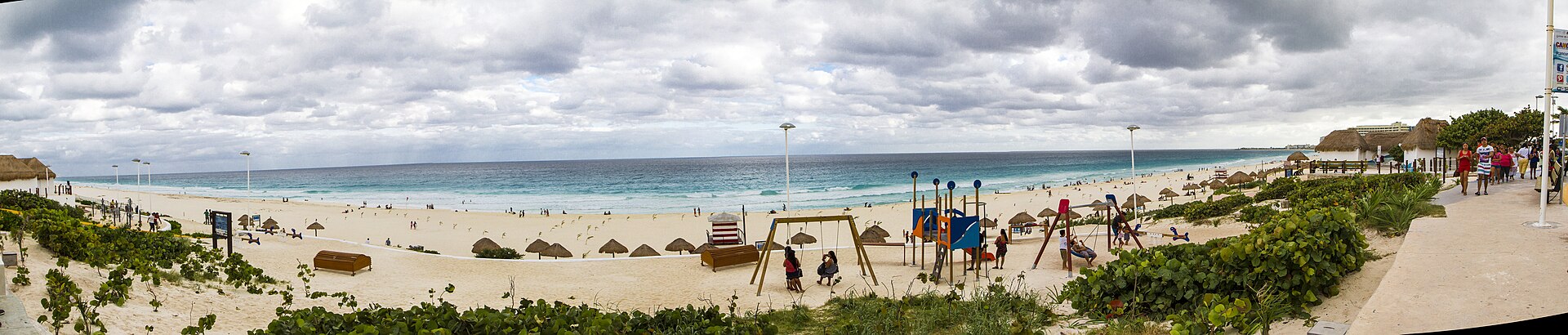
Playa Delfines is one of those rare spots in Cancún where the real Mexico still feels within reach—unfiltered, unpolished, and far from the glossy brochures. There are no rows of sunbeds under rented umbrellas, no blaring music, no crowds jostling for space. Instead, the beach stretches wide and quiet, its powdery white sand giving way to the Caribbean’s shifting shades of turquoise. A line of palms sways in the breeze, their fronds whispering against the salt air. The name means "of the dolphins," though sightings are rare—just the occasional flash of fins on the horizon. What lingers here is something older than Cancún’s reputation as a tourist hub: the sense of a place that hasn’t yet been swallowed by development, where the coastline still dictates its own rhythm.
Located at the southern edge of Cancún’s hotel zone, Delfines marks the point where the city’s energy begins to fade. The beach is easily accessible by bus or taxi, but many choose to walk along the shore from the livelier areas, watching as the scenery shifts from polished resorts to untamed sand. The shoreline runs for kilometers, and even in peak season, it’s possible to find a stretch of sand all to yourself. The water is clear, though the waves can be stronger here than on the calmer, more sheltered beaches closer to the lagoon. The sea isn’t always gentle, especially in the afternoons when the wind picks up, but that only adds to the feeling of being somewhere wild and untamed.
The beach’s most recognizable landmark isn’t a monument or a building, but a simple wooden sign perched on a low dune near the water. The large, weathered letters spell out *Playa Delfines*, and behind them, the view opens up to the endless sweep of sand and sea. It’s become an unofficial symbol of the place, a favorite backdrop for photos—especially at sunset, when the sky turns shades of amber and rose. Around the sign, a few vendors set up small stands selling cold drinks and souvenirs, but they’re unobtrusive, more a part of the scenery than a distraction. The sign itself has a way of drawing people in, as if it’s not just marking a location, but inviting them to pause and take in the view.
Delfines has a quiet history, one that mirrors Cancún’s transformation from a sleepy fishing village to a world-famous destination. In the mid-20th century, this stretch of coast was little more than an empty ribbon of sand separating Nichupté Lagoon from the sea. Back then, Cancún was just a handful of houses and a few fishing boats, with tourism still a distant idea. Everything changed in the 1970s, when the Mexican government launched an ambitious plan to turn the region into a premier vacation spot. Hotels, roads, and infrastructure sprang up almost overnight, and within decades, Cancún became one of the Caribbean’s most visited destinations. Yet Delfines remained largely untouched. Maybe it was the uneven shoreline that deterred developers, or perhaps the beach simply didn’t fit into their vision. Whatever the reason, it retained its natural character, becoming a quiet counterpoint to the city’s relentless growth.
There’s no grand architecture here—just sand, sea, and sky. But if you look closely, the landscape tells its own story. To the north, the beach narrows as the first hotels of the hotel zone come into view, their towers rising behind the palms. To the south, the shore widens, and the vegetation grows denser. Small dunes, covered in sea grass and scrub, create a buffer against the wind, giving the area a slightly rugged feel. In places, you can still spot remnants of the mangroves that once covered much of the Yucatán coast, a reminder that this land existed long before any resort was built. The mangroves are mostly gone now, but their presence lingers in the way the light filters through the trees and the way the air smells of salt and damp earth.
Delfines isn’t just a beach—it’s a place where the pace of life slows to match the rhythm of the waves. In the mornings, fishermen prepare their boats for the day’s work, their voices carrying across the sand. On weekends, families and groups of friends gather for picnics, setting up makeshift grills or playing volleyball in the shallows. There are no jet skis for rent, no organized tours, no hawkers pushing water sports. Instead, there’s the simple pleasure of stretching out on a towel and letting the hours drift by. That’s not to say there’s no service at all—small cafés and stalls dot the beach, selling fresh fruit, cold beer, and local snacks like *ceviche* or *elote*. But everything feels organic, as if the beach itself decides how much activity it can handle.
For many visitors, Delfines is a revelation—a place where the Caribbean feels real again. There are no infinity pools or resort entertainers here, just open space, silence, and the kind of freedom that’s hard to find in a world of curated experiences. The water is cooler than in the lagoon, but cleaner, and the sand stays warm underfoot even on cloudy days. In the evenings, as the sun dips below the horizon and the sky turns shades of violet and gold, the beach empties out. Only a few people remain, those who came not for entertainment, but for the quiet. It’s in these moments that time seems to slow, and it’s easy to sit there, listening to the waves, and realize how little it takes to feel content.
Of course, Delfines isn’t for everyone. If you’re looking for luxury amenities, nonstop activities, or the convenience of a beachfront resort, this isn’t the place. There are no showers, no changing rooms, no rows of sunbeds—just sand, sea, and the occasional vendor. The nearest hotels are a few kilometers away, and the only sounds are the wind, the waves, and the occasional laughter of a family playing in the surf. But that’s precisely what makes it special. Here, you can be alone with the elements without feeling cut off from the world. The center of Cancún is just a half-hour bus ride away, and the airport is a little over an hour. If you want to explore Mayan ruins, wander through bustling markets, or sample Yucatán’s famous cuisine, it’s all within reach. Yet many find themselves returning to Delfines, drawn back by that elusive sense of space and stillness that’s so hard to come by these days.