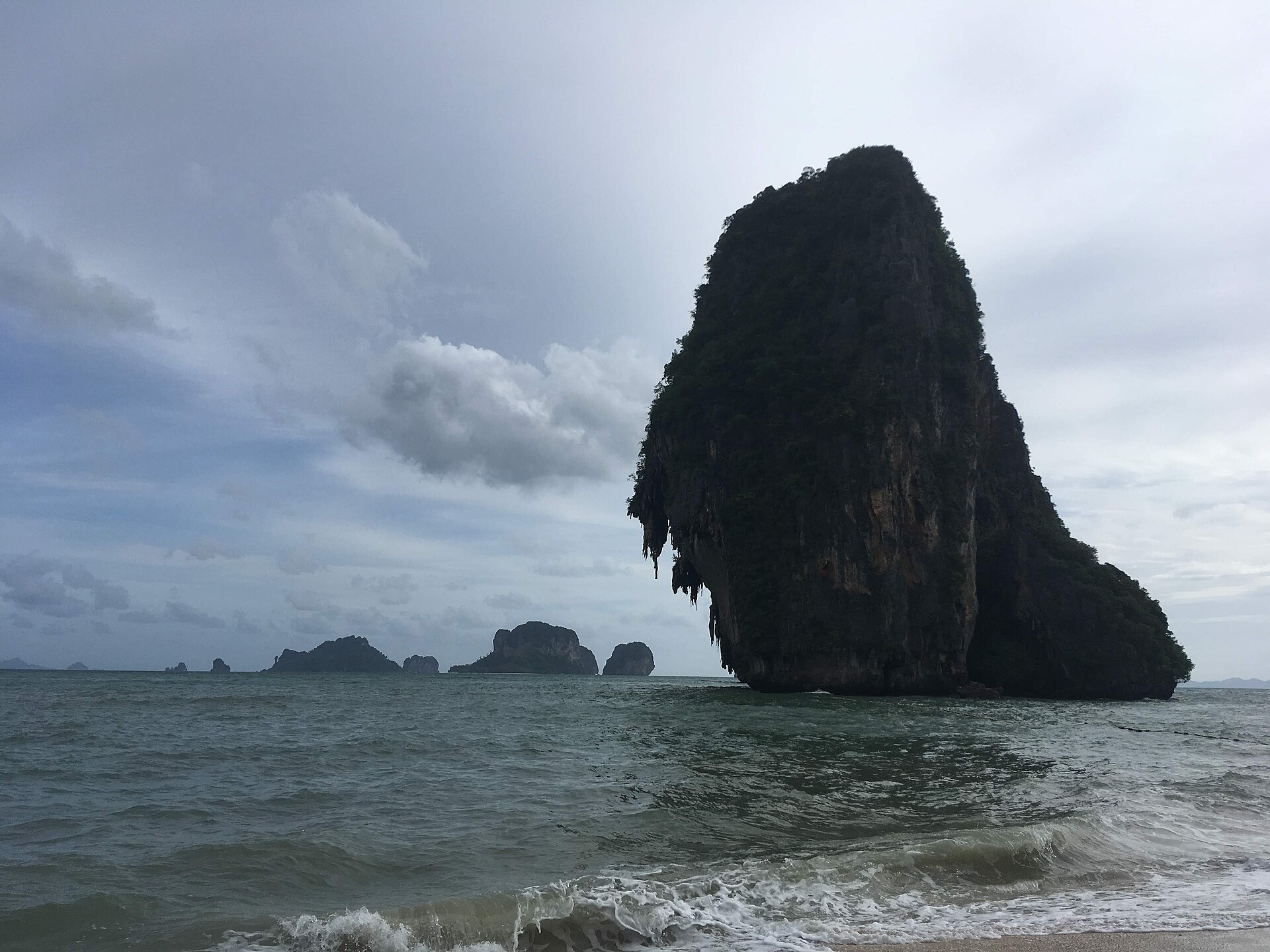
Ao Nang Beach is one of those rare places where nature seems to have gathered its finest elements in one spot. Tucked along the coast of Krabi, it’s framed by towering limestone cliffs that rise dramatically from the sea, their jagged edges softened by dense tropical greenery. These formations don’t just create a breathtaking backdrop—they also shelter the beach from strong winds, making it feel secluded even when the monsoon season stirs the waters beyond. The sand here is powdery and pale, almost silky underfoot, while the water shifts between turquoise and emerald depending on the light. At sunset, the cliffs glow golden, and the whole scene takes on a quiet, almost dreamlike quality.
Not so long ago, Ao Nang was little more than a quiet bay known only to local fishermen and a handful of travelers seeking solitude. That changed in the 1980s, when Thailand began opening its doors to tourism, and Krabi emerged as a destination for those looking to escape the crowds of more developed resorts. Today, the beach strikes a balance between accessibility and untouched beauty. There are beachfront restaurants serving fresh seafood, dive shops offering gear for exploring the reefs, and small boutiques selling handmade crafts and lightweight clothing. Yet despite the activity, Ao Nang hasn’t lost its laid-back charm—most of the businesses are low-key, blending into the landscape rather than overwhelming it.
The beach is split into two distinct halves by a rocky headland. On one side, you’ll find the livelier stretch, where sun loungers line the shore and longtail boats bob in the shallows, ready to whisk visitors to nearby islands. This is where most of the action happens—kayak rentals, beachside massages, and the occasional group of travelers setting off on a snorkeling trip. The other side feels wilder, with fewer people and more untouched shoreline. A narrow trail connects the two, winding up to a viewpoint that rewards the short climb with a sweeping panorama of the bay. The path isn’t difficult, but it’s uneven, and after rain, the rocks can be slippery. Still, the view from the top—cliffs, sea, and jungle merging into one—makes it worth the effort.
Beyond its shores, Ao Nang is a gateway to the underwater world of the Andaman Sea. The water stays warm year-round, and visibility often exceeds 20 meters, making it ideal for snorkeling and diving. While the coral reefs have suffered from climate change and heavy tourism, they still teem with life—clownfish darting between anemones, sea turtles gliding through the currents, and, if you’re lucky, the occasional reef shark or manta ray. For those who prefer to stay dry, glass-bottom boats offer a glimpse of the marine life below. And after dark, the water sometimes shimmers with bioluminescent plankton, a natural light show that feels almost magical.
Just a short walk from the beach lies the sacred Phra Nang Cave, a place steeped in local legend. According to folklore, the cave is home to the spirit of a princess who drowned at sea, and many Thais believe it holds protective powers. The entrance is framed by towering cliffs, and inside, the air is cool and damp. Stalactites and stalagmites create eerie formations, some resembling figures or faces, while deeper in the cave, a freshwater pool never runs dry. Visitors often leave offerings—flowers, coins, or incense—hoping to bring good fortune. The cave’s atmosphere is quiet and reflective, a stark contrast to the lively beach just beyond.
Ao Nang also serves as a perfect base for exploring the surrounding area. From here, it’s easy to arrange a boat trip to the famous Phi Phi Islands, where limestone cliffs plunge into turquoise waters, or to the Hong Islands, a national park with pristine beaches and hidden lagoons. Closer to shore, the Tiger Cave Temple offers a challenging climb up 1,237 steps carved into the rock, leading to a viewpoint with sweeping views of the coastline. Many travelers spend a day on the water, hopping between secluded coves, swimming in hidden pools, or enjoying a seafood lunch prepared on the boat. During the rainy season, from May to October, the sea can be rough, but the landscape transforms—lush greenery covers the hills, and waterfalls in the area swell with fresh water.
Evenings at Ao Nang have a rhythm of their own. As the heat of the day fades, the beachfront comes alive with the scent of grilled seafood, coconut curries, and fresh fruit. Soft lighting from lanterns and string lights creates a warm glow, while the sound of waves blends with the occasional strum of a guitar or the gentle notes of a traditional Thai instrument. There’s no rush here—just the slow pace of people unwinding, whether they’re sipping a cocktail, watching the sunset paint the cliffs in shades of pink and orange, or simply listening to the tide roll in. It’s a place where time seems to slow down, and the outside world feels far away.
Of course, Ao Nang isn’t without its drawbacks. During peak season, the beach can get crowded, and prices for accommodations and tours tend to rise. But even then, it’s possible to find a quiet spot—just walk a little farther along the shore or climb one of the nearby viewpoints. The key is to take your time and let the place reveal itself gradually. Ao Nang isn’t just a beach; it’s a starting point for adventure, a place to relax, or simply a spot to sit and watch the world go by. Whether you’re here for the diving, the hiking, or the chance to do nothing at all, it has a way of making itself feel like home.