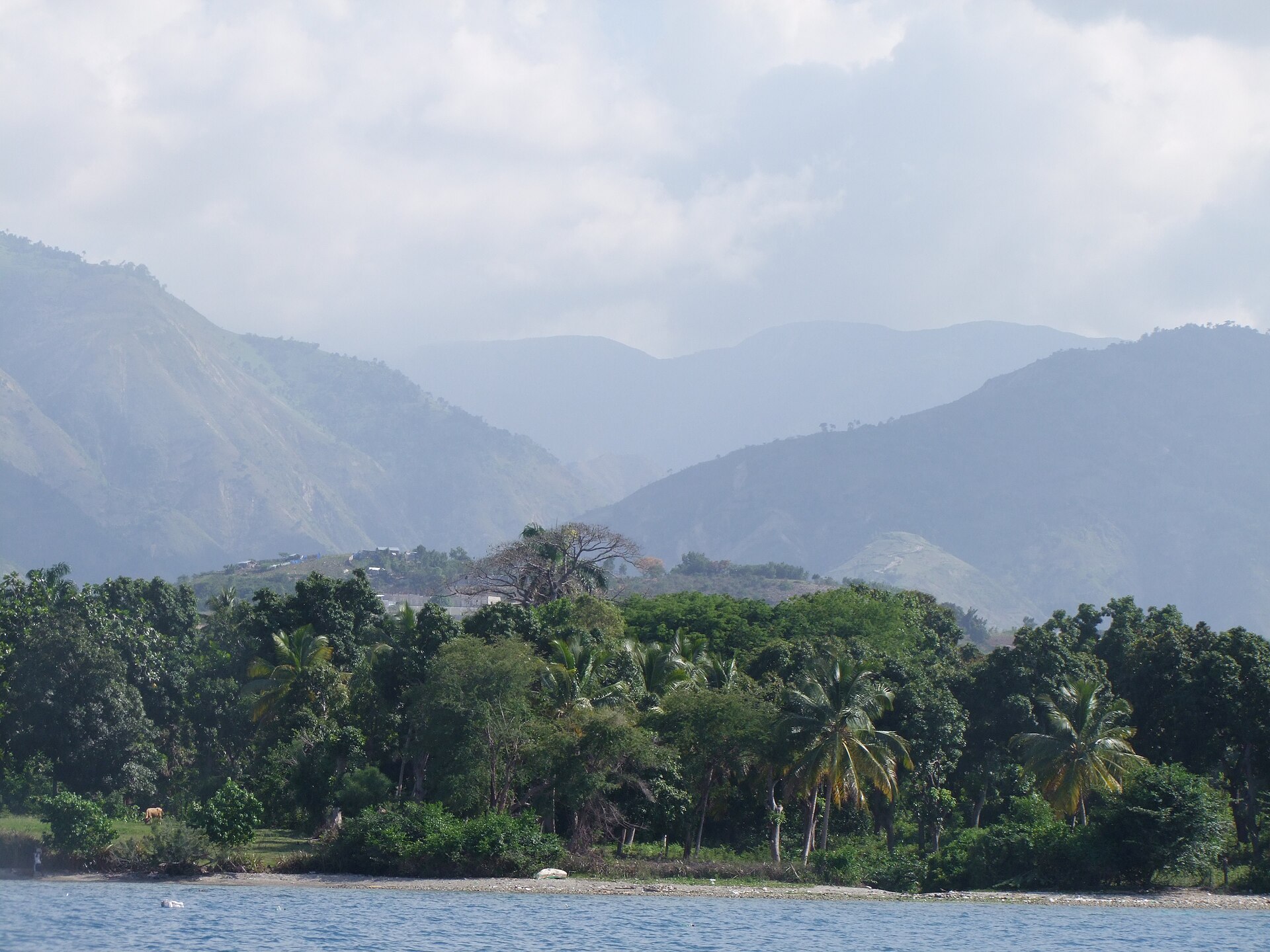
Anse-à-Veau is one of those rare places in Haiti where time seems to have paused, leaving the landscape almost untouched by the modern world. Tucked away on the southern coast near the quiet town of Les Chardonnières, it feels far removed from the usual tourist trails. There are no crowded beaches here, no rows of sun loungers or blaring music from beach bars. Instead, a long stretch of soft white sand meets the gentle waves of the Caribbean, lined with swaying coconut palms and an unhurried rhythm that makes the hours feel lighter.
The shoreline runs for several miles, but even on the sunniest days, solitude is easy to find. The sand is fine and powdery, almost like sugar underfoot, while the water in the bay shimmers with a faint turquoise hue. At low tide, the shallow waters reveal small fish darting between rocks and crabs scuttling along the sand. Locals sometimes come to fish, but more often than not, the beach remains empty, the only sounds the rustle of the waves and the distant cries of seabirds.
This stretch of coast carries the weight of Haiti’s history in its quiet corners. During the colonial era, the southern part of the island was a hub of plantation agriculture, where sugar cane and coffee were grown under brutal conditions. Enslaved Africans worked these lands, and it was here that early sparks of resistance began to flare. After Haiti declared independence in 1804—the first Black-led republic in the world—many plantations fell into disuse, and nature slowly reclaimed the land. Anse-à-Veau was never the site of major battles or historic events, but the past lingers in the salt-tinged breeze, the mangroves that still fringe the shore, and the stories that have faded into the landscape.
There’s little in the way of architecture here, just a handful of simple fishing huts made from wood and palm leaves scattered along the beach. They’re built without pretension, their weathered frames blending into the surroundings. Some serve as temporary shelters for locals, while others stand empty, slowly surrendering to the humid coastal climate. Beyond the beach, low hills rise, covered in dense tropical greenery, and in the distance, the mountains form a hazy barrier against the horizon. On clear days, the outline of Île de la Gonâve appears like a mirage, floating just above the water.
This isn’t the kind of beach that fits the glossy postcard image of paradise. There are no resorts, no amenities, no distractions—just the raw, unfiltered beauty of the place. It’s a spot for those who value atmosphere over comfort, where the pace of life slows to match the rhythm of the tides. Mornings often begin with a thin mist hanging over the water, burning off by midday to reveal the full intensity of the sun. By evening, the wind picks up, and the waves crash against the shore with a wild, untamed energy. In those moments, the beach feels like the edge of the world, a place where time moves differently.
For the people who live nearby, Anse-à-Veau is more than just a place to relax—it’s woven into the fabric of their lives. They come here to fish, to gather shells, to share meals with family under the shade of the palms. Tourists are rare, and those who do make the journey usually arrive for the day from nearby towns or stay in modest guesthouses in Les Chardonnières. The trip isn’t an easy one: it starts with a drive from Port-au-Prince, followed by hours on winding mountain roads that often turn to rough dirt tracks. But those who make the effort seldom regret it.
Haiti is often reduced to headlines about crises and hardship, and while those struggles are real, they don’t define the entire country. Places like Anse-à-Veau offer a different perspective—one of quiet resilience and natural beauty. There are no luxury hotels or fine-dining restaurants here, but there is something far more precious: a sense of authenticity that’s increasingly hard to find. The beach doesn’t demand anything from its visitors; it simply exists, unchanged by time or trends.
If you find yourself here, take your time. Walk along the shore, listen to the waves, watch the sunset paint the sky in shades of orange and violet. Maybe then you’ll understand why Haiti is called the land of mountains and sea—not just for its geography, but for the way the landscape seems to hold its breath, waiting for those who are willing to slow down and truly see it. Anse-à-Veau won’t change your life, but it might remind you of the quiet power of a place that has remained, against all odds, exactly as it was meant to be.