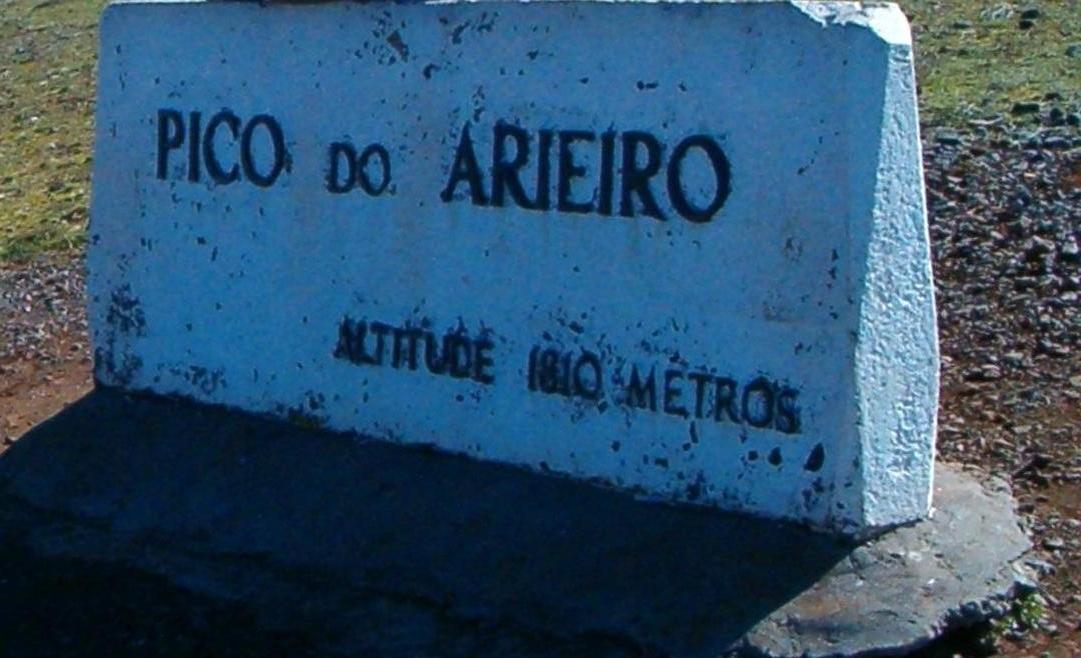
Pico do Arieiro stands as one of Madeira’s most dramatic natural landmarks, a place where the island’s raw beauty reveals itself in full. Rising to 1,818 meters above sea level, the peak often hovers above a sea of clouds, its slopes draped in a soft, shifting veil of white. The air here is thin and cool, carrying the faint scent of damp earth and wild herbs. From this height, the world below feels distant, almost unreal—the horizon stretches endlessly, blurring the line between land and sky. It’s not a place for rushing. Instead, it invites you to pause, to breathe deeply, and to let the vastness of the landscape settle into your bones.
The history of Pico do Arieiro is woven into the story of Madeira itself. When Portuguese settlers first arrived in the 15th century, the island’s towering peaks served as vital landmarks for sailors navigating the treacherous Atlantic waters. Over time, the mountain’s slopes became part of the island’s agricultural life, though farming here was never easy. The rocky terrain and unpredictable weather made cultivation difficult, but generations of Madeirans carved terraces into the hillsides, coaxing crops from the stubborn soil. Some of these terraces still cling to the mountainside, a quiet testament to the islanders’ determination.
Reaching the summit is an experience in itself. The most rewarding way is on foot, following a winding trail that cuts through laurel forests and across jagged rock formations. The hike takes about two hours, with sections where the path narrows and steepens, requiring careful footing and the occasional grip on metal railings. The effort is worth it—halfway up, the first sweeping views appear, and by the time you reach the top, the sense of accomplishment is matched only by the sheer scale of the scenery. For those who prefer not to walk, a narrow, winding road leads to the summit by car, though the drive demands caution. The road clings to the mountainside, with sharp turns and sheer drops that make it as thrilling as it is nerve-wracking.
The architecture at Pico do Arieiro is simple and unobtrusive, designed to blend into the landscape rather than dominate it. A small viewing platform, built from local stone, offers a place to stand and take in the view without distraction. Nearby, a modest café serves hot drinks—coffee, tea, or the island’s famous poncha—to ward off the chill that lingers even in summer. In winter, temperatures can drop below freezing, and the peak occasionally dusts itself with frost or even snow, a rare sight on an island better known for its subtropical climate. On those days, locals and visitors alike gather to witness the unusual spectacle of a winter wonderland framed by the endless blue of the Atlantic.
One of the mountain’s greatest draws is its connection to Madeira’s most famous hiking route. From Pico do Arieiro, a challenging trail leads to Pico Ruivo, the island’s highest peak. The path winds along narrow ridges, through tunnels carved into the rock, and across bridges suspended over deep ravines. The views are breathtaking—literally, at times—but the hike is not for the faint-hearted. It demands stamina, a head for heights, and a willingness to embrace the unexpected. Those who complete it often describe it as one of the most memorable experiences of their time on the island.
The atmosphere at the summit is unlike anywhere else on Madeira. There’s no hum of traffic, no bustle of crowds—just the wind rustling through the sparse grass, the occasional call of a bird, and the murmur of other travelers sharing the space. On clear days, the ocean stretches out in every direction, its surface shimmering under the sunlight. As evening approaches, the sky transforms, painting itself in shades of pink, gold, and violet. The light plays across the clouds and the distant peaks, creating a spectacle that lingers in the memory long after you’ve descended.
Pico do Arieiro is more than just a high point on a map. It’s a symbol of Madeira’s rugged beauty and resilience, a place where the island’s volcanic origins are still palpable. The mountain’s steep slopes and sharp ridges tell a story of fire and time, of an island forged by forces far greater than human hands. Standing here, it’s impossible not to feel the weight of that history—the way the land has shaped the people who call it home, and how they, in turn, have shaped the land. It’s a place that draws not just hikers and sightseers, but anyone seeking a moment of quiet reflection, a reminder of the world’s vastness and our small place within it.