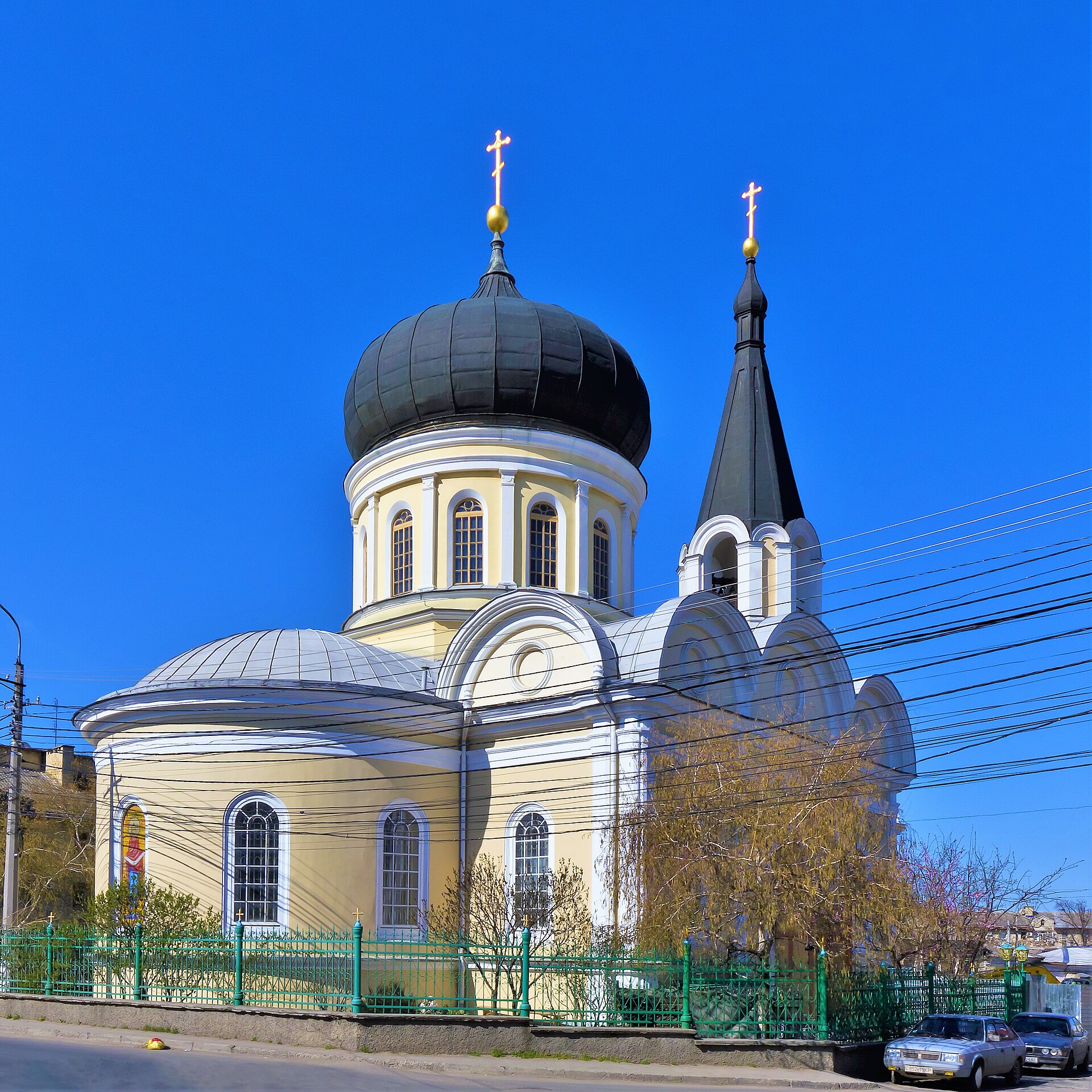
Petropavlovsky Cathedral in Simferopol doesn’t immediately demand attention. Tucked away at the intersection of Pushkin and Karl Marx streets, it blends into the city’s fabric like an old book on a shelf—unassuming until you take a closer look. The building’s quiet presence tells a story that unfolds only when you pause to notice the details.
Construction began in the mid-19th century, a time when Simferopol was growing into the administrative heart of the Taurida Governorate. The project was entrusted to architect Ivan Kolodin, who designed the cathedral in a restrained neoclassical style with subtle romantic touches. The facade is marked by clean lines, symmetrical windows, and a modest portico, reflecting the architectural tastes of the era. It took several years to complete, and the cathedral was consecrated in 1870. Originally intended as the city’s main cathedral, that role later passed to the Alexander Nevsky Cathedral after the revolution.
Inside, the space feels intimate rather than grand. There are no gilded iconostases or dazzling mosaics—just simple frescoes on the walls and icons painted in a traditional style. Light filters through tall windows, softening the atmosphere. The most striking feature is the carved wooden iconostasis, a testament to the skill of local craftsmen.
The cathedral’s history has not been easy. During the Soviet era, it was closed and repurposed as a warehouse. Stories suggest it stored grain and even hosted gym classes. Frescoes were painted over, icons vanished, and the building fell into disrepair. It wasn’t until the 1990s that the cathedral was returned to the faithful. Restoration took years, with walls repaired, vaults repainted, and lost decorative elements carefully recreated. Today, it stands much as it did a century and a half ago.
This place has witnessed the rhythms of Simferopol’s life. Couples were married here, children baptized, and the departed mourned. During wars, it offered refuge; in peacetime, it served as a gathering place for the parish. Even when the cathedral was closed in Soviet times, locals still came—some to sit on benches in the courtyard, others to leave notes at the boarded-up doors.
Now, the cathedral carries on as it always has. Parishioners attend morning services, candles and icons are sold at the entrance on weekdays, and children play in the courtyard on Sundays. Baptisms, weddings, and funerals take place here, and occasionally, the sound of an old choir fills the air.
The architecture reflects the layers of time. Kolodin’s original design was rooted in neoclassicism, but later Soviet modifications—like the shortened bell tower and removed decorative elements—left their mark. Yet these changes didn’t disrupt the building’s harmony. The cathedral fits naturally into the cityscape, a quiet counterpoint to Simferopol’s busier streets.
For those curious about Crimea’s history, the cathedral offers a different kind of discovery. It lacks the fame of Livadia Palace or the Khan’s Palace, but that’s part of its charm. There are no crowds, no souvenir stalls, no guided tours—just silence, old walls, and the sense that time moves more slowly here.
You might visit on a weekday when the courtyard is empty, sit on a bench, and watch the life of the cathedral unfold. Simferopol is a city where eras and cultures intertwine, and Petropavlovsky Cathedral is one of those rare places where that mix feels tangible. There’s no need to search for masterpieces. Sometimes, all it takes is standing still and letting the past and present meet.