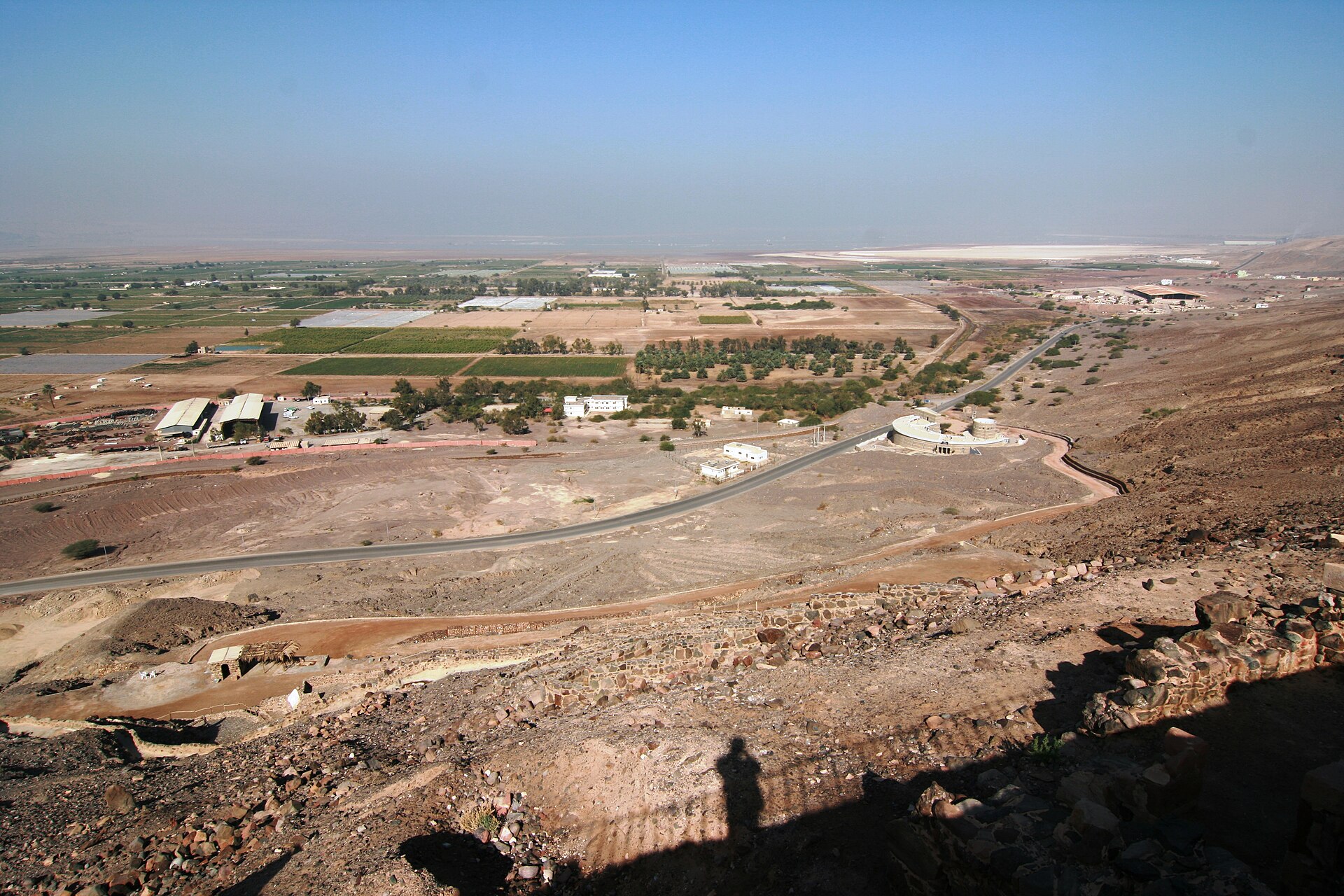
Nestled in the quiet hills east of Bethlehem, near the Palestinian town of Al-Ubeidiya, lies a place where time seems to stand still. The Cave of Lot is one of those rare sites where history, legend, and the land itself converge in a way that feels almost tangible. According to tradition, this unassuming cavern sheltered Lot and his daughters after the destruction of Sodom and Gomorrah, a story that has drawn pilgrims and curious travelers for centuries. While archaeology may not always align perfectly with biblical accounts, the cave carries an undeniable weight of the past, as if the very air inside holds echoes of ancient prayers and whispered conversations.
The landscape around the cave is stark and beautiful in its simplicity. Dry, rocky slopes stretch toward the horizon, dotted with olive groves and the occasional cluster of wild herbs. The entrance to the cave is modest, barely noticeable at first glance, but once inside, the space opens into a small chamber. The walls bear the marks of countless years—darkened patches from long-extinguished fires, rough indentations where hands once rested, and faint traces of stone partitions that may have divided the space into crude living quarters. Over time, the cave has served many purposes: a refuge for hermits seeking solitude, a shelter during times of conflict, and a place of quiet contemplation. Even now, it retains an atmosphere of stillness, broken only by the soft crunch of gravel underfoot or the murmur of visitors.
There is no grand architecture here, no ornate carvings or towering columns. The cave’s power lies in its raw, unadorned nature. The few remnants of human intervention—a low stone wall, a niche that might have held a lamp—are subtle, almost blending into the rock itself. Some believe the cave was also used to store food or supplies, a practical necessity in a region where survival often depended on ingenuity. Others suggest it was a hiding place during raids, a reminder of how people have always sought safety in the earth’s embrace. Whatever its exact history, the cave feels like a living archive, a place where the past is not just remembered but still present.
For those who follow the Abrahamic traditions, the Cave of Lot holds deep spiritual significance. The biblical account of Lot’s flight from Sodom and his time in the mountains has made this site a point of pilgrimage for Jews and Christians alike. Over the centuries, travelers have come here to walk in the footsteps of the story, to touch the same stone that sheltered a man and his family in their darkest hour. Today, the cave attracts not only the faithful but also historians, archaeologists, and anyone drawn to the layers of meaning embedded in such places. It serves as a quiet counterpoint to the more famous sites of the Holy Land, offering a different kind of connection to the past—one that is intimate rather than monumental.
The surrounding countryside is a world away from the bustle of Jerusalem or the tourist crowds of Bethlehem. Here, life moves at a slower pace. Olive trees stretch across the hillsides, their gnarled trunks bearing witness to generations of harvests. Vineyards cling to the slopes, and in the distance, the occasional shepherd guides a flock of sheep along a dusty path. The villages nearby, like Al-Ubeidiya itself, are built from the same golden stone as the cave, their houses blending seamlessly into the landscape. Locals often greet visitors with warmth, offering fresh bread, olive oil, or a cup of herbal tea. There’s a sense of timelessness here, as if the rhythms of rural life have changed little over the centuries.
Visiting the Cave of Lot is not about ticking off a tourist attraction. It’s about stepping into a space where the boundaries between history and myth, faith and doubt, feel thinner than usual. There are no grand monuments here, no guided tours with scripted narratives. Instead, the cave invites you to sit quietly, to listen to the silence, and to let your imagination fill in the gaps. What must it have been like to seek shelter in this place, to huddle by a fire as the world outside burned? How many others have stood where you stand now, looking for answers or simply a moment of peace? The cave doesn’t offer easy explanations, but it does offer something rarer—a chance to reflect on the enduring human need for refuge, both physical and spiritual.
Getting here is part of the experience. The drive from Bethlehem takes about half an hour, winding through hills that grow increasingly quiet as you leave the city behind. There are few signs along the way, and the roads can be confusing if you’re unfamiliar with the area. It’s not uncommon for travelers to stop and ask for directions, and locals are usually happy to help, often sharing stories about the cave that you won’t find in any guidebook. Some might even offer to walk with you, pointing out details you might otherwise miss—the way the light falls at certain times of day, the best spot to sit and take in the view. The journey itself feels like a pilgrimage, a slow unfolding of the landscape until you arrive at a place that has been waiting for you all along.
The Cave of Lot is one of those places that lingers in the memory long after you’ve left. It’s not the kind of site that dazzles with spectacle, but rather one that seeps into your thoughts gradually, like the quiet persistence of the land itself. Whether you come as a believer, a historian, or simply a traveler in search of something real, the cave has a way of making you pause. In a world that often feels too loud and too fast, it offers a reminder of the value of stillness, of the stories etched into stone, and of the quiet resilience of those who have come before us. You leave with more questions than answers, but perhaps that’s the point. Some places are meant to be felt, not just seen.