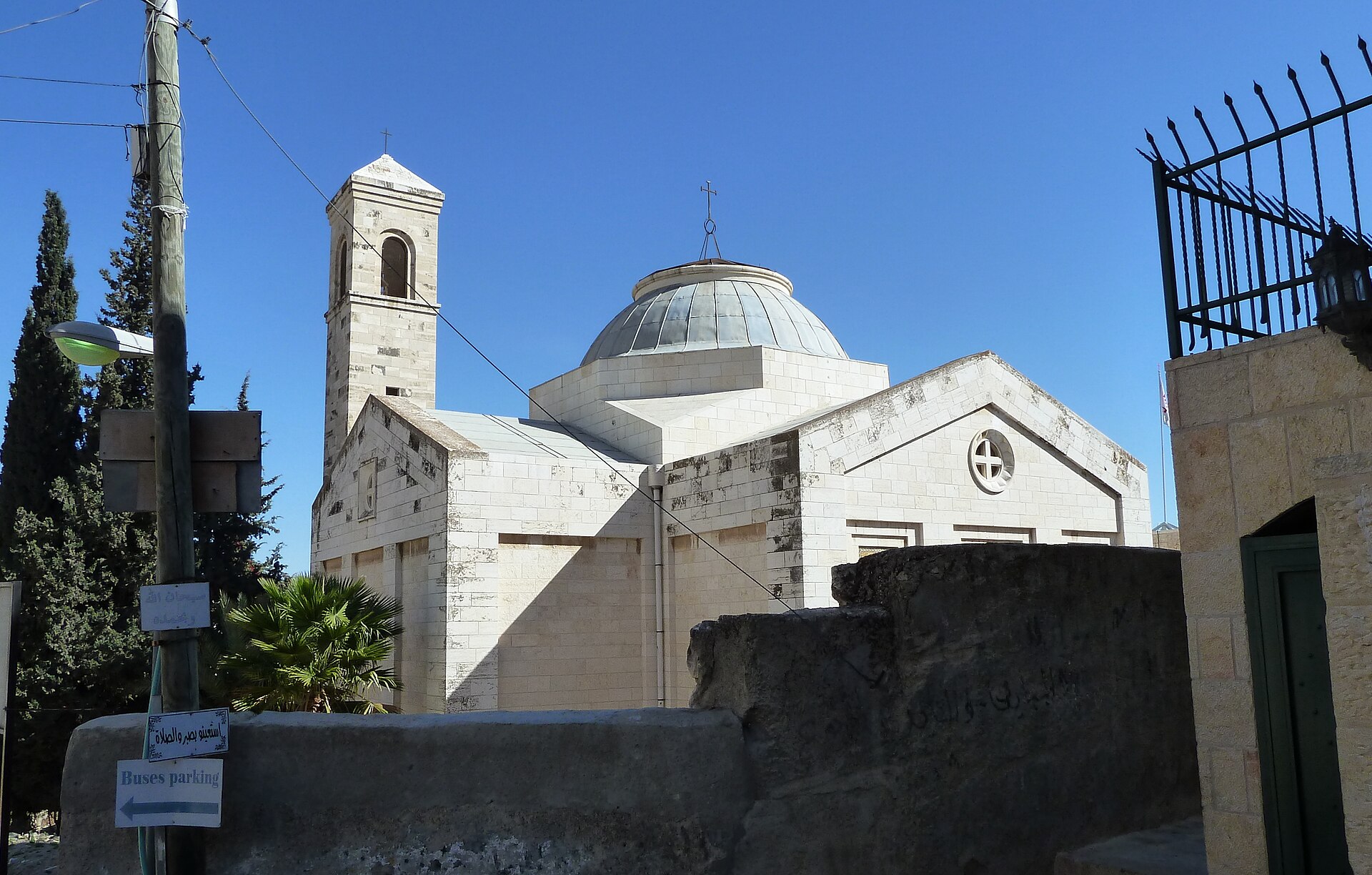
Bethany, a quiet Palestinian town just east of Jerusalem, carries a weight of history in its very name. Known in Arabic as Al-Eizariya, it derives from the name Lazarus, the man brought back to life by Jesus in one of the most striking miracles recounted in the Gospel of John. The town itself feels suspended in time, its narrow streets lined with stone houses that have stood for generations, their weathered facades bearing silent witness to centuries of faith and pilgrimage.
The Cave of Lazarus lies on the edge of town, at the foot of a hill where an ancient settlement once thrived. The entrance is unassuming, little more than a low arch set into the rock, yet this modest opening has drawn visitors for nearly two thousand years. According to tradition, this is where Lazarus was laid to rest before Jesus called him forth from death. The cave itself is a simple chamber carved into the limestone, its low ceiling supported by natural rock formations. Inside, the air is cool and still, the walls darkened in places by the soot of countless candles lit over the centuries. Niches in the stone, once used for burials, remain visible, their purpose unchanged by time.
The architecture of the cave reflects the practical needs of its original purpose. A narrow passage leads into a slightly wider space, the floor uneven underfoot, laid with rough stone slabs. Toward the back, a shallow depression marks the spot where Lazarus is said to have lain. Visitors often leave small notes here—prayers, requests, or personal reflections—pressed into the crevices of the rock. The atmosphere is one of quiet reverence, the only sounds the soft shuffle of footsteps and the occasional murmur of voices.
For Christians, the cave is a place of profound significance, but its importance extends beyond a single faith. In Islam, Lazarus is also revered as a righteous figure, and his story is acknowledged in the Quran. Over the centuries, the site has seen periods of neglect and even destruction, yet it has always been restored, a testament to its enduring spiritual pull. Byzantine monks once built a church above the cave, though little remains of it today beyond scattered ruins. Still, these fragments serve as a reminder of how deeply this place has resonated across different eras and beliefs.
Bethany itself is far from a relic of the past. The town hums with everyday life, its streets filled with the scent of fresh herbs and spices from local stalls. Residents go about their routines, offering warm greetings to visitors who come not just as pilgrims but as curious travelers seeking a connection to history. Olive groves stretch across the surrounding hills, their gnarled trunks a living link to the land as it was in biblical times. From the higher ground, the view encompasses the Judean hills, a landscape that has changed little since Lazarus walked these paths.
What makes the cave remarkable is its lack of grandeur. There are no ornate mosaics or towering arches, just the raw, unadorned stone that has absorbed the hopes and prayers of generations. The simplicity of the place invites reflection, making it easy to imagine the voices of early Christians echoing in the chamber, or the footsteps of medieval pilgrims seeking solace. It is not a monument to architectural splendor but to something more intangible—the persistence of faith and the way stories shape human experience.
For many, the Cave of Lazarus is a stop on a larger journey through the Holy Land, less famous than Bethlehem or Jerusalem but no less powerful in its quiet way. Unlike the grand cathedrals where rituals dominate, the cave retains an intimacy, a sense of direct connection to the past. There are no crowds here, just those who come with purpose, drawn by something deeper than curiosity. It is a place where the boundaries between then and now blur, where the act of stepping inside feels like joining a conversation that has been unfolding for centuries.
Bethany and its cave exist in the present as much as in the past. The town carries on with its daily rhythms, while the cave remains a place where people still seek answers, comfort, or simply a moment of stillness. Legends and traditions have grown around it, but the true wonder of the site lies in its ability to bridge divides—between faiths, between eras, between the ordinary and the miraculous. To enter the cave is to step into a story that began long ago and continues, unbroken, with every visitor who crosses its threshold.