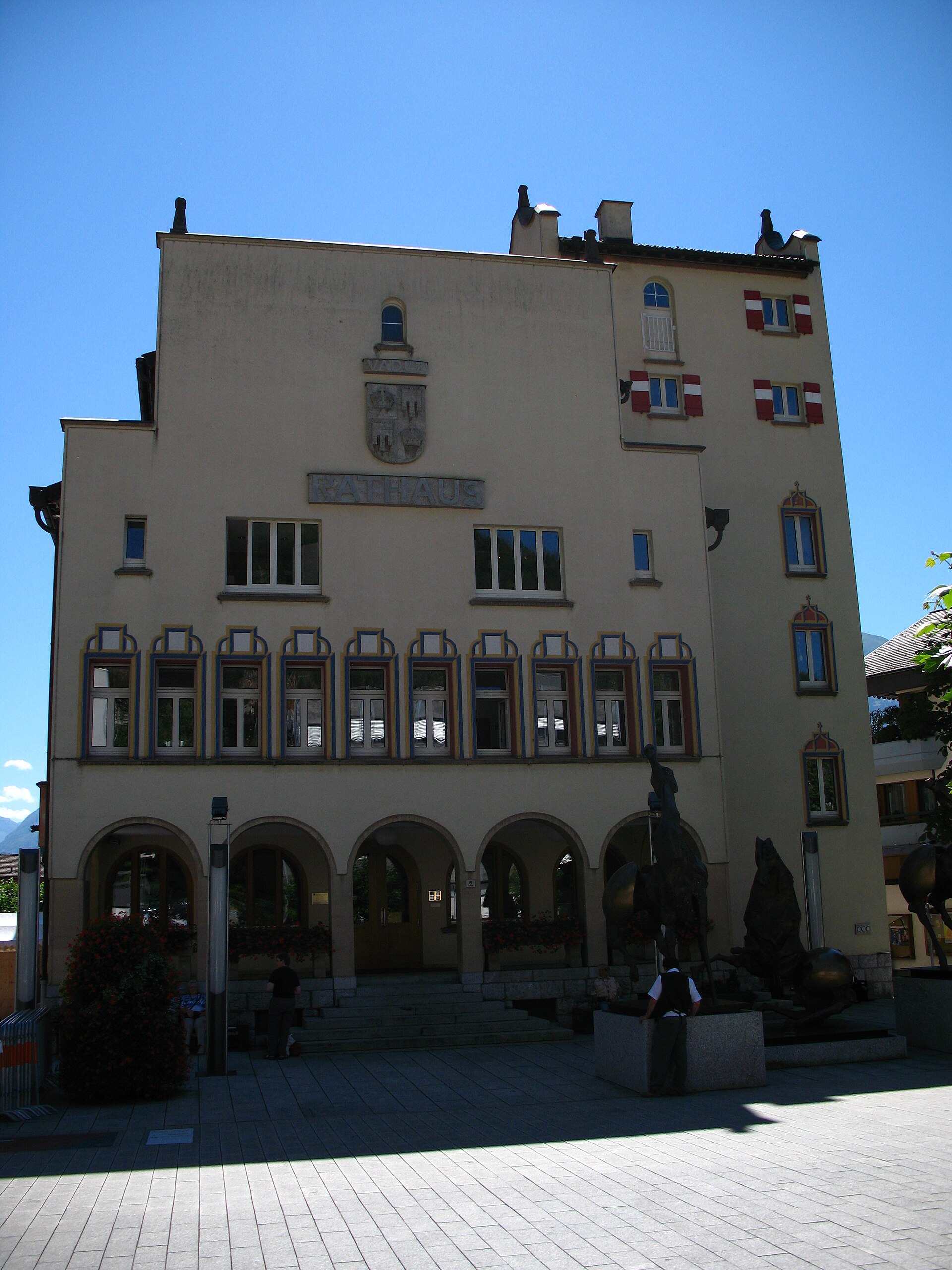
Vaduz’s Städtle pedestrian zone is the kind of place where the quiet rhythm of a small capital feels just right. It stretches along the main street, a narrow ribbon of cobblestones that curves gently between low-rise buildings, most of them no taller than three or four storeys. There are no skyscrapers here, no neon signs competing for attention—just the steady presence of the castle on the hill above, watching over the town like it has for centuries. The street is lined with shops, cafés, and small offices, their facades painted in soft pastels or left in the natural tones of stone and wood. It’s not a place built for crowds, but rather for the unhurried pace of daily life, where people know each other by sight and a conversation with a shopkeeper can stretch longer than expected.
The architecture here tells a story of modest prosperity, shaped by the constraints of a tiny country squeezed between mountains and larger neighbours. Many of the buildings date back to the 19th and early 20th centuries, when Vaduz was little more than a village with a castle and a handful of farms. The style is unpretentious—simple gabled roofs, arched doorways, and windows framed in wood or stone. Some facades have been restored with care, while others retain the patina of age, their walls slightly uneven, their shutters a little crooked. The result is a streetscape that feels authentic, not polished for tourists. Even the newer additions, like the modern art gallery or the sleek wine bars, blend in without standing out, as if they’ve always been part of the scene.
What makes Städtle unusual is how it balances its role as both a local hub and a symbolic centre of the country. Liechtenstein is so small that Vaduz doesn’t need a grand boulevard or a monumental square to feel like a capital—this single street does the job. The government buildings, the post office, and the national bank are all here, tucked among the shops and cafés in a way that feels almost accidental. There’s no pomp or ceremony; the prime minister’s office, for instance, is housed in a building that looks like any other on the street, its only distinction a discreet plaque by the door. This understated approach extends to the way the monarchy is represented. The princely family’s presence is felt more through tradition than display—the castle looms above, but the royal residence itself is private, and the only public reminder is the occasional glimpse of the prince’s car driving through town.
The street comes alive in its own quiet way. In the mornings, locals stop by the bakeries for fresh bread, their conversations mixing German and the local Alemannic dialect. By midday, the cafés fill up with office workers on lunch breaks, sipping coffee at outdoor tables shaded by awnings. In the afternoons, the pace slows again, and the street belongs to those who linger—tourists browsing the souvenir shops for Liechtenstein stamps or postcards, or older residents sitting on benches, watching the world go by. There’s a sense of timelessness here, as if the street has always existed in this form, even though its current shape is the result of careful planning in the 1970s, when Vaduz was redesigned to prioritise pedestrians over cars.
One of the most striking things about Städtle is how it reflects Liechtenstein’s identity as a place that values discretion. There are no grand monuments or flashy landmarks, just the steady accumulation of small details. The street lamps are unremarkable, the paving stones worn smooth by decades of footsteps, and the shop signs are understated, often just a name painted on a wooden board. Even the national museum, which sits at one end of the street, is housed in a building that looks more like a private home than a cultural institution. This restraint is deliberate; Liechtenstein has never sought to be a tourist destination in the conventional sense, and Städtle embodies that attitude. It’s a place where visitors are welcome, but not courted, where the experience is more about soaking in the atmosphere than ticking off sights.
The street also serves as a stage for the country’s cultural life, though in a low-key way. During the summer, open-air concerts are held in the small square near the town hall, drawing a mix of locals and visitors. In December, the Christmas market takes over the street, its stalls selling handmade crafts and mulled wine under strings of lights. These events are modest by the standards of larger cities, but they feel intimate, as if they’re happening in someone’s backyard rather than a public space. The same goes for the art installations that occasionally appear along the street—nothing grandiose, just small interventions that invite people to pause and look closer.
What Städtle lacks in dramatic scenery it makes up for in its connection to the landscape. The street runs parallel to the Rhine, just a short walk away, and the mountains rise abruptly at either end, framing the view. On clear days, the peaks are visible from every corner, a constant reminder of the country’s alpine setting. The castle, perched on its rocky outcrop, is never out of sight, its silhouette anchoring the street in history. This interplay between the built environment and the natural world is what gives Städtle its character. It’s not a place that tries to compete with the grandeur of the mountains, but rather one that exists in harmony with them.
Walking along Städtle, it’s easy to forget that Liechtenstein is one of the world’s smallest and wealthiest countries. There’s no ostentation here, no display of wealth—just the quiet confidence of a place that knows its own worth. The shops sell practical things: local wine, handmade chocolates, postcards with the princely crest. The cafés serve simple food, the kind that’s meant to be enjoyed slowly. Even the people move at a measured pace, as if they have all the time in the world. It’s a street that doesn’t demand attention, but rewards those who take the time to notice its details—the way the light falls on the cobblestones in the late afternoon, the sound of church bells ringing from the nearby parish, the faint scent of pine drifting down from the hills. In a world that often feels rushed, Städtle offers a reminder of what it means to live at a human scale.