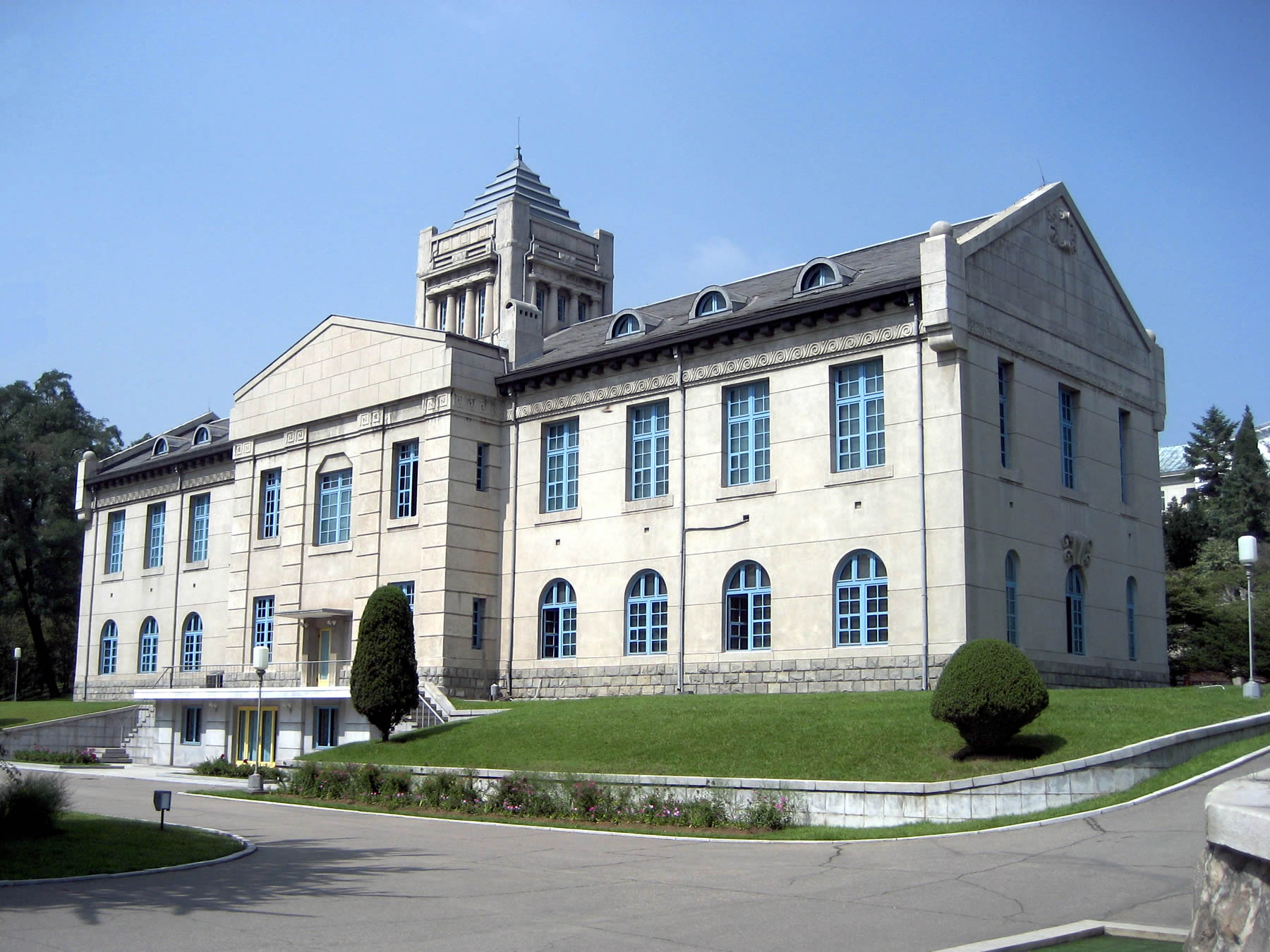
The Party Foundation Museum in Pyongyang is one of those places where North Korea’s official history is presented in its most distilled form. Housed in a monumental building constructed in the 1970s, the museum itself is a relic of an era when the personality cult surrounding Kim Il Sung reached its peak. The architecture is unmistakably North Korean—grand, symmetrical, and imposing, with towering columns, granite facades, and broad staircases leading to the entrance. Every detail, from the oversized portraits of the country’s leaders to the meticulously arranged exhibits, reinforces the narrative of unshakable authority and historical inevitability.
The museum traces the origins of the Workers’ Party of Korea, founded in 1945, and its central role in shaping the nation. Visitors encounter documents, photographs, and personal artifacts belonging to Kim Il Sung and other key figures, alongside dioramas depicting pivotal moments like the liberation from Japanese occupation and the Korean War. The exhibits emphasize the post-war reconstruction period, portraying the country’s recovery as a near-miraculous achievement under the party’s guidance. The displays are carefully curated to highlight the continuity of leadership, framing the transition from Kim Il Sung to Kim Jong Il and then to Kim Jong Un as an unbroken lineage of wisdom and strength.
One of the museum’s most revered sections is the hall housing the original founding document of the party. According to official accounts, it was signed in a modest mountain hut, now considered a sacred site in North Korean lore. The museum presents this moment as the dawn of a new era, when the people found their true leadership. Nearby, photographs of early party congresses and portraits of anti-Japanese resistance fighters line the walls, accompanied by engraved quotes from Kim Il Sung’s speeches. The atmosphere is one of solemn reverence, with every element designed to underscore the party’s foundational role in the nation’s identity.
A significant portion of the museum is dedicated to the ideology of *juche*, the self-reliance doctrine that underpins North Korea’s political philosophy. Exhibits explain how the party has embodied these principles—economic independence, loyalty to the leader, and resilience in the face of external pressures. Models of industrial plants, agricultural cooperatives, and even space programs are displayed as evidence of the country’s progress, all attributed to the party’s visionary leadership. The message is clear: despite sanctions and isolation, North Korea has built a thriving society through sheer determination and unity.
The museum is more than a repository of artifacts; it serves a vital ideological function. For North Koreans, it is a place of pilgrimage, reinforcing their commitment to the system. Tours follow a scripted narrative, emphasizing the party’s achievements and the wisdom of its leaders. For foreign visitors, the museum offers a rare glimpse into the mechanisms of propaganda that shape the worldview of the country’s citizens. The lighting, the arrangement of exhibits, even the tone of the guides—everything is carefully calibrated to convey absolute certainty in the official version of history.
The building itself is part of the experience. The interiors are lavish, with marble floors, intricate woodwork, and grand chandeliers casting a warm glow over the exhibits. The halls are adorned with national motifs, creating an atmosphere of grandeur and solemnity. Even without engaging with the content, the sheer scale and opulence of the space leave an impression—this is a place where history is not just told but performed.
For those interested in North Korea’s history, the museum provides insight into how the state constructs its identity. There are no alternative interpretations here, no room for doubt—only a single, meticulously edited version of the past. While some exhibits do reflect real historical events, their presentation is entirely subordinated to ideological goals. This duality makes the museum both a keeper of memory and a tool of propaganda, a place where history is shaped to serve the present.
Visiting the Party Foundation Museum is not just a tour; it’s an immersion into a world where history and politics are inseparable. Every detail, from the placement of exhibits to the wording of descriptions, is deliberate. For North Koreans, it reaffirms the righteousness of their path; for outsiders, it offers a window into a system that has shaped the minds of millions for decades. In that sense, the museum is more than a building—it’s a symbol of an entire era.