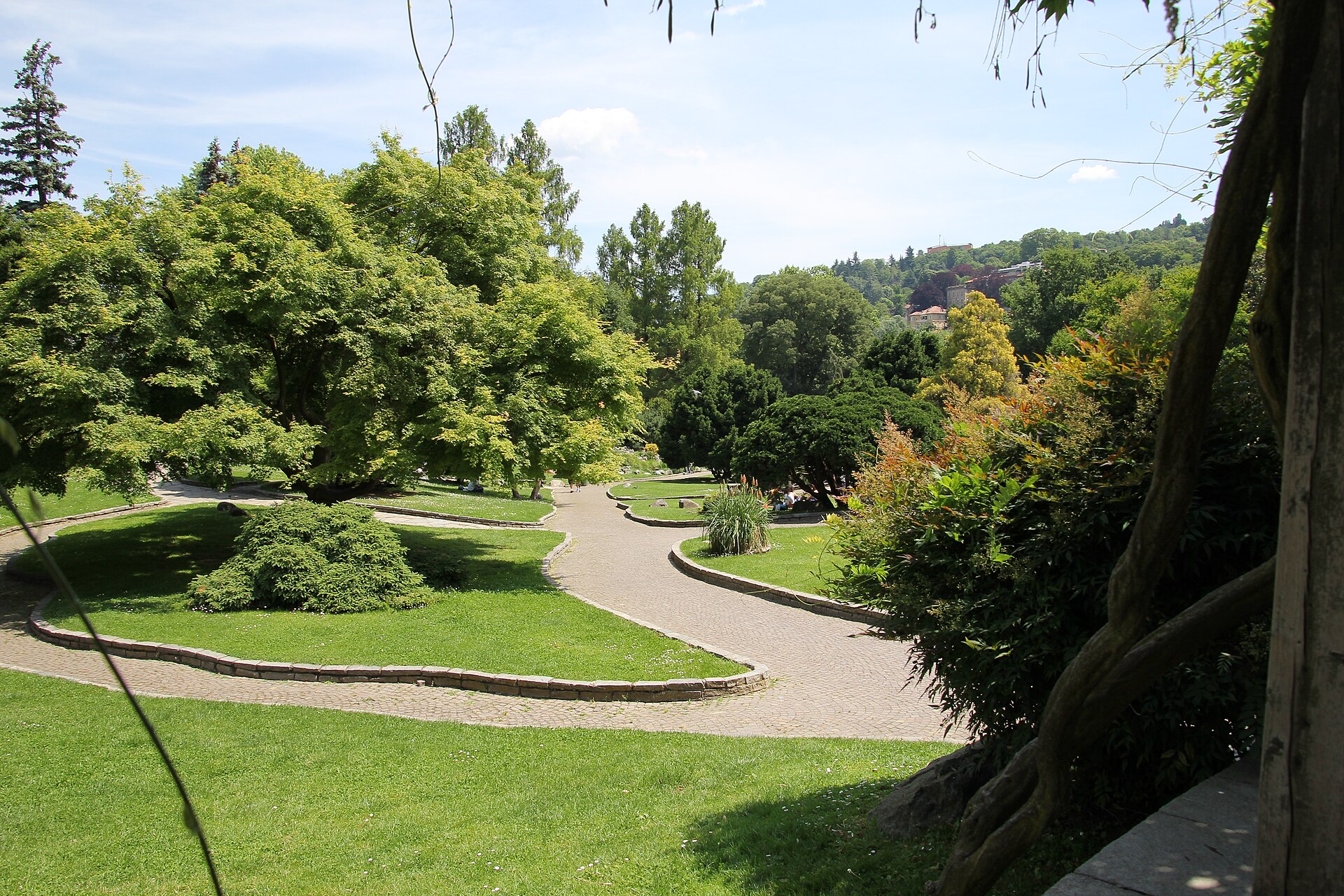
Turin’s Parco del Valentino is one of those rare places where the city seems to exhale, shedding its usual bustle for something quieter. Stretching along the banks of the Po River, it’s more than just a patch of green in the middle of the urban sprawl—it’s a living record of the city’s past, a playground for architectural whims, and a daily retreat for locals who know its rhythms better than any guidebook could.
The park’s story begins in the mid-19th century, when Turin was reinventing itself as a modern capital. In 1856, it hosted Italy’s first major industrial exhibition, and the park became its centerpiece. The idea was simple: create a public space where people could stroll, but also where art, science, and progress could be put on display. King Victor Emmanuel II championed the project, and by 1884, the park had already hosted an international exhibition, leaving behind a collection of pavilions that still shape its character today.
Architecturally, Valentino is a lesson in contrasts, a mix of styles that somehow feels cohesive. The most striking feature is the Castello del Valentino, a 17th-century palace modeled after French châteaux. Its reddish walls and pointed towers look like they’ve been lifted from a medieval tale, though in reality, it was a residence for the Savoy dukes. Now, it houses the architecture faculty of Turin’s Polytechnic University, and the sight of students hurrying to lectures gives the place a lived-in feel—far from the stiffness of a museum.
Nearby, the Borgo Medievale is a curious relic of the 1884 exhibition. It’s not a reconstruction of a real village but an imaginative interpretation of the Middle Ages, with every timber-framed house, arched bridge, and turret crafted to evoke a bygone era. Locals treat it like any other part of the park—some sit on benches by the river, others spread out picnics on the grass. It’s easy to forget that this "medieval" village is barely over a century old, but that’s part of its charm.
The Po River is the park’s quiet backbone. Unlike other urban waterfronts, its banks here are left mostly untamed, with reeds swaying and sandbars appearing when the water is low. In summer, boats drift along the current, while in winter, the river takes on a steely stillness. Cyclists and joggers follow the paths along the shore, and on weekends, the area buzzes with activity—families with strollers, groups of friends on rollerblades, children launching toy boats into the water.
Valentino isn’t just a place to walk through; it’s a stage for the city’s life. In summer, open-air film screenings draw crowds, while winter brings a Christmas market to the castle grounds. On festival days, the park hums with music, the scent of food, and laughter, but even then, it’s easy to slip away to a quiet corner. The balance between liveliness and tranquility is what makes it special.
Wildlife adds another layer to the park’s appeal. Ducks and swans glide across the river, while turtles sun themselves on the banks. Birds nest in the trees, and if you’re lucky, you might spot a hedgehog in the undergrowth. For many Turinese, Valentino is a second home—some come every morning with their dogs, others use it as a backdrop for first dates, and some just sit on a bench, watching the world go by.
There’s nothing forced about Valentino. It doesn’t try to impress or entertain; it simply exists, offering whatever you need in the moment. You could spend hours wandering its paths, or just stop by for a quick coffee at one of the park’s cafés. Either way, it leaves you with the sense that the city has, for a little while, let you off the hook.